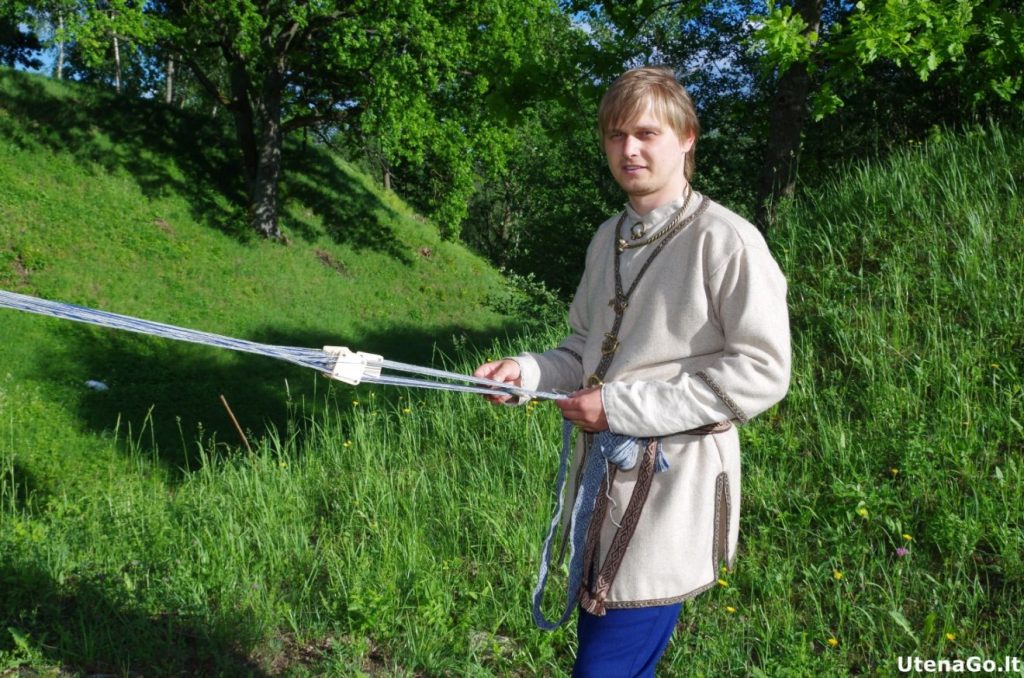
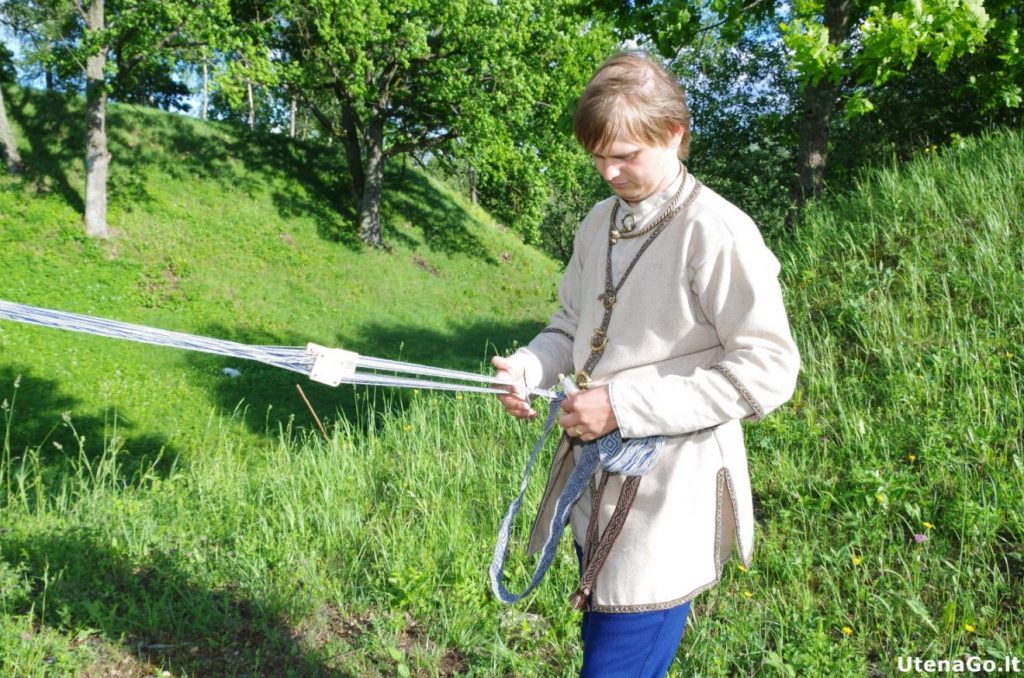
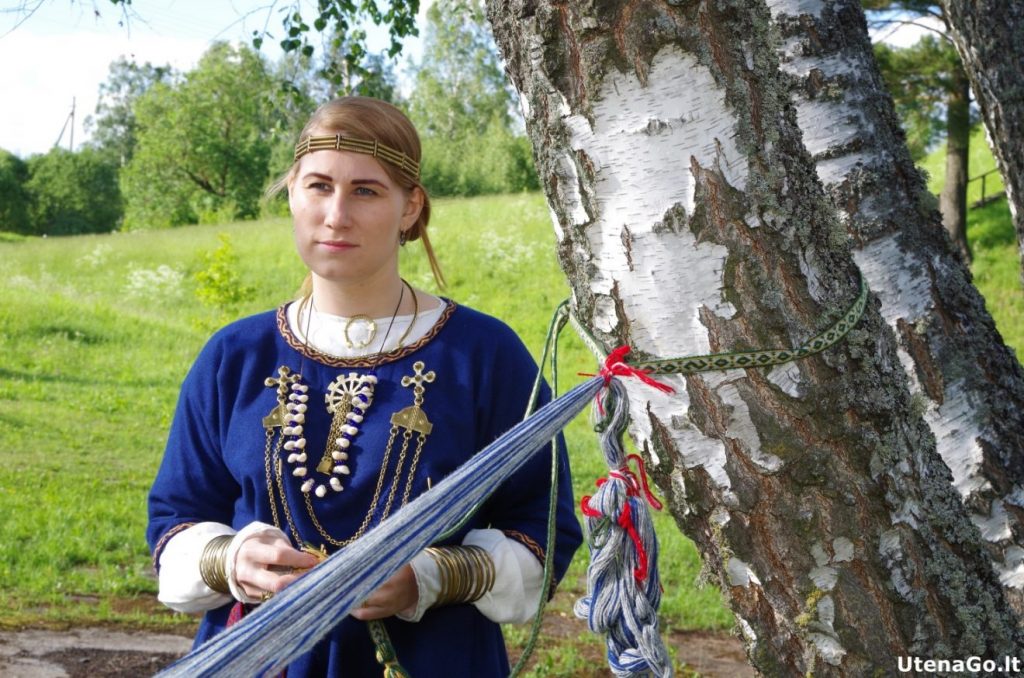
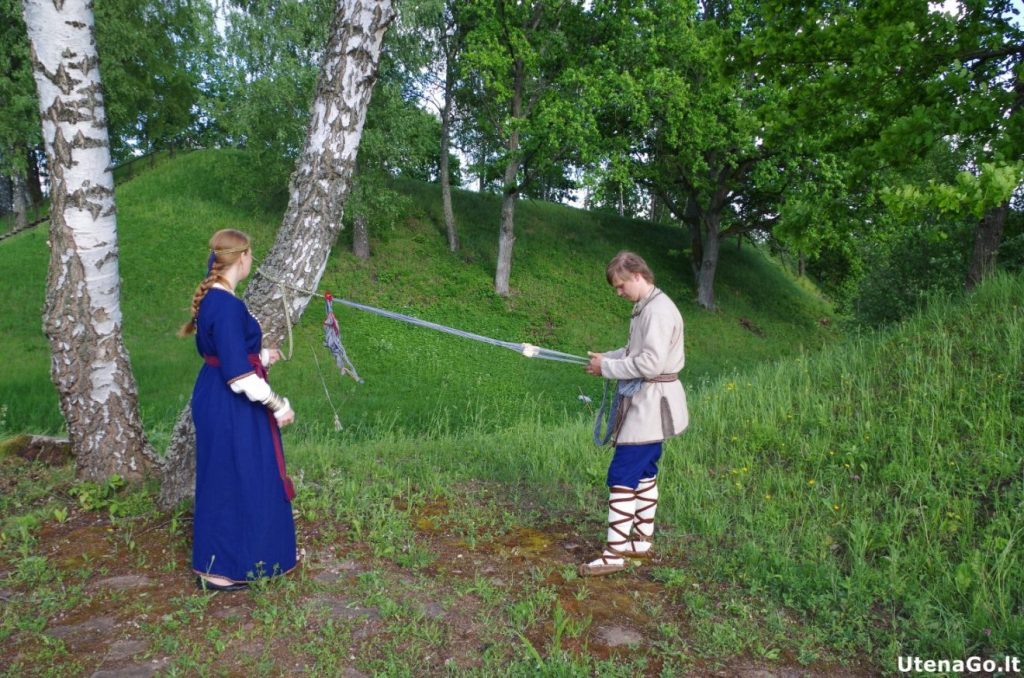
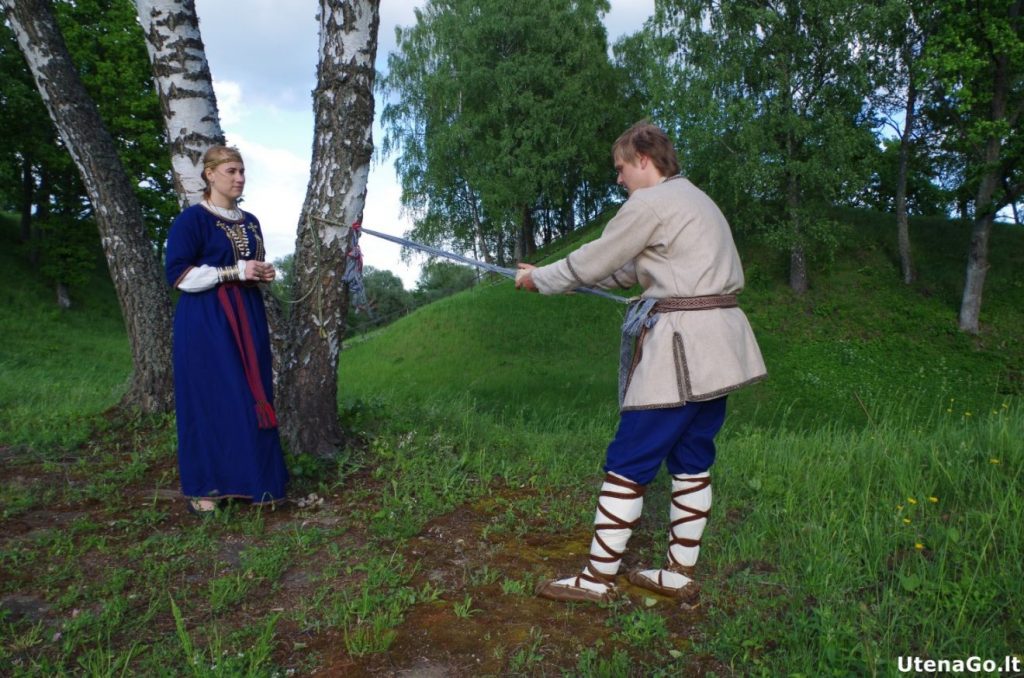
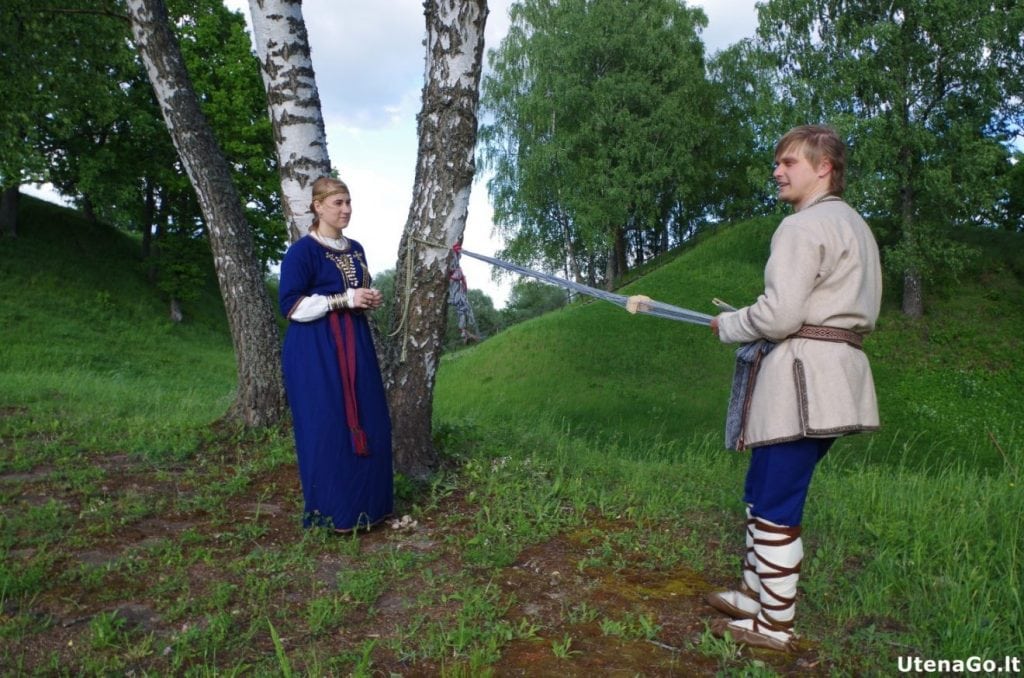
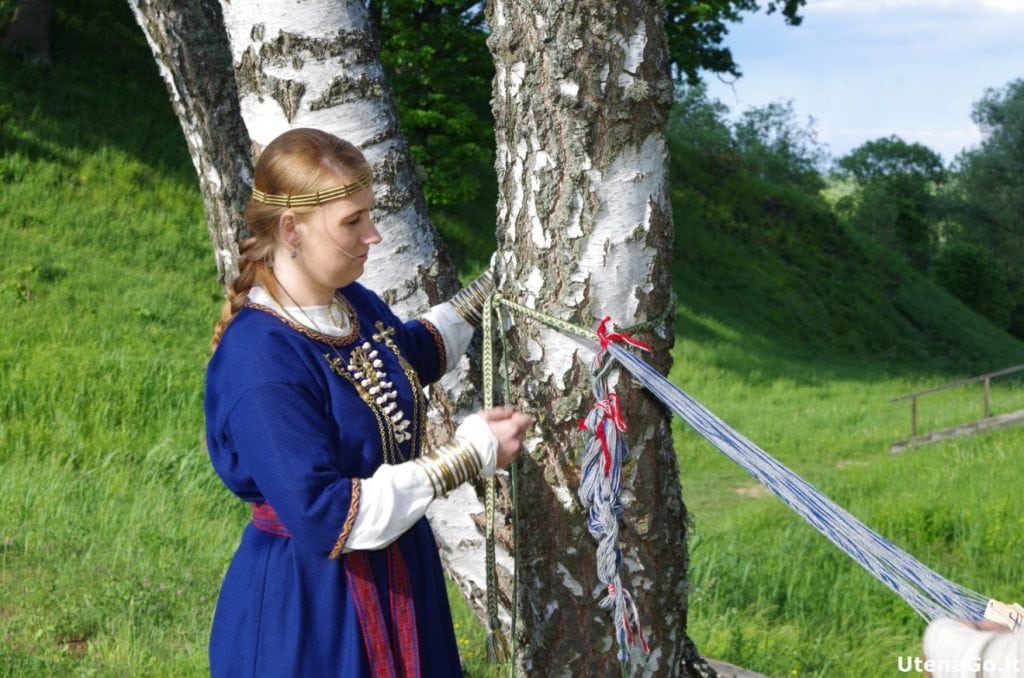
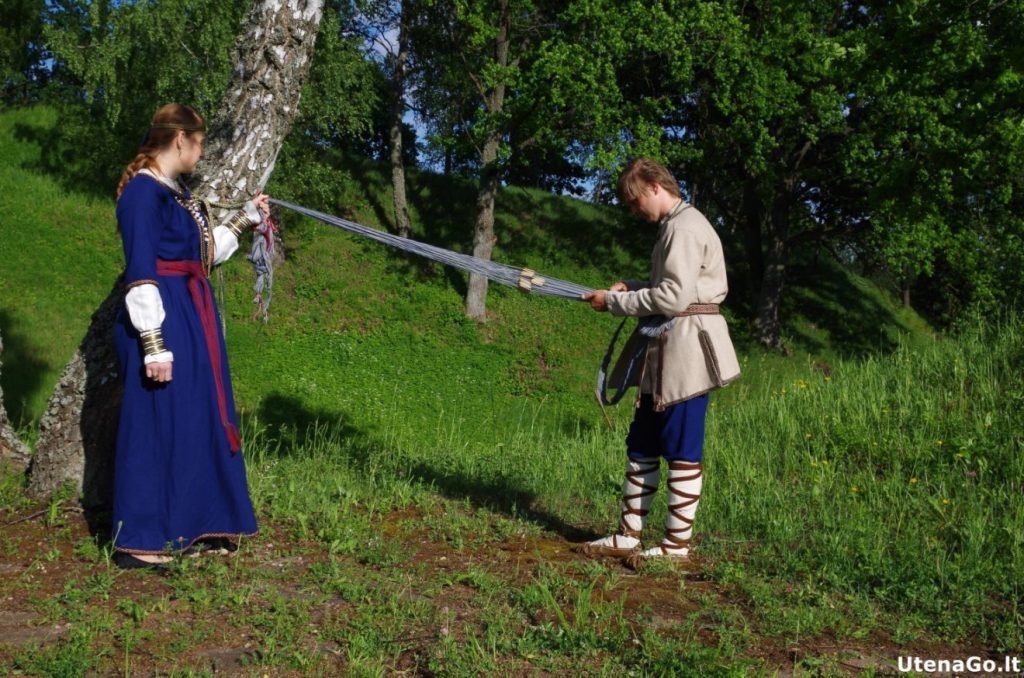
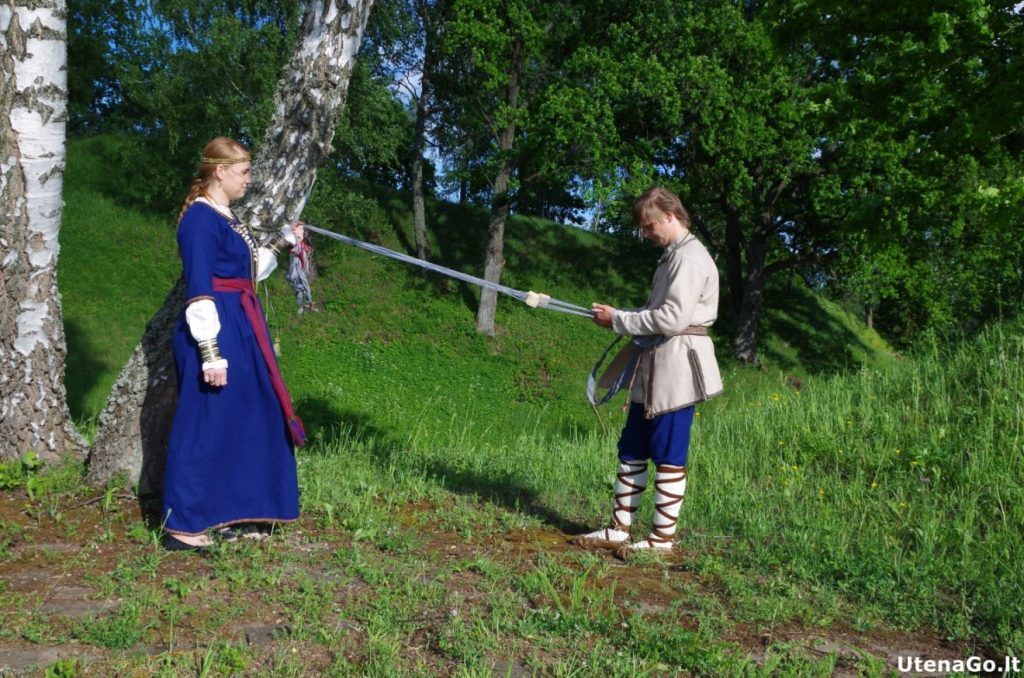
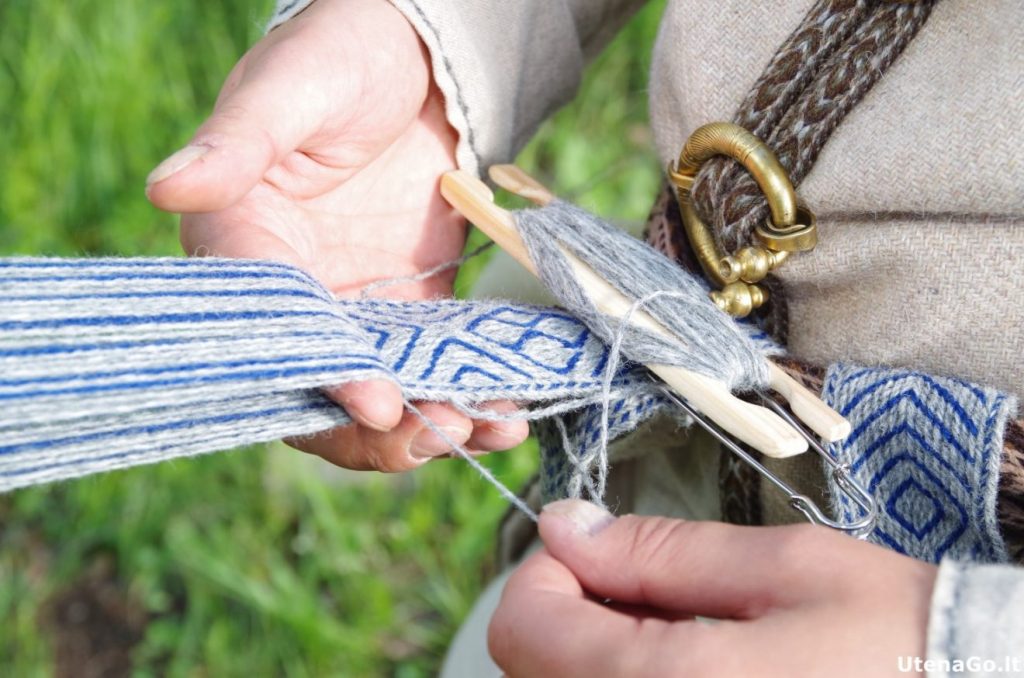
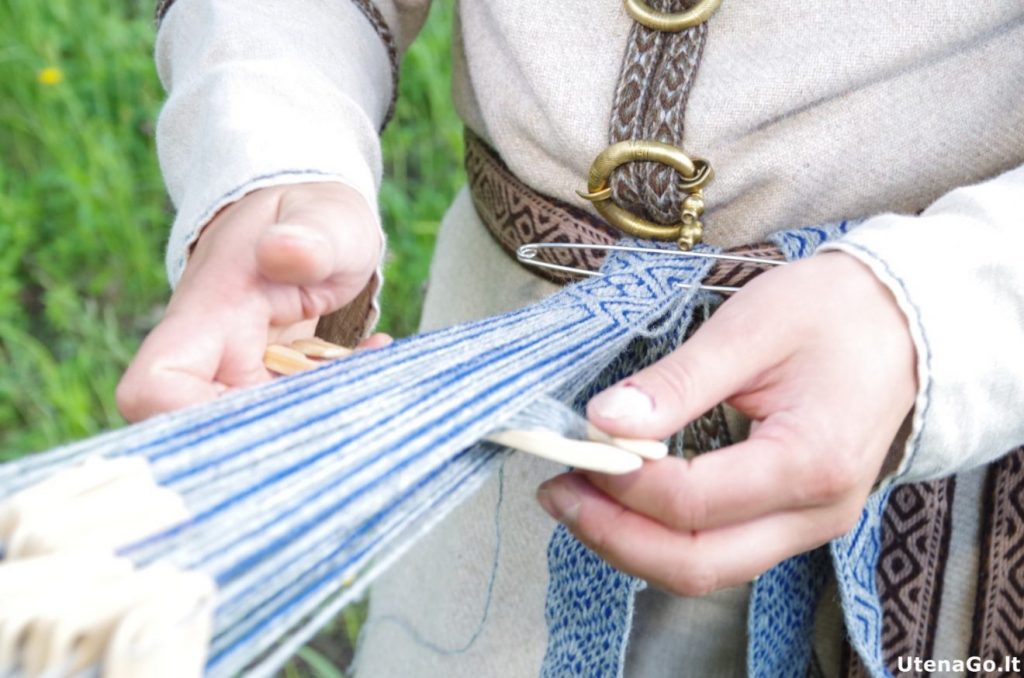
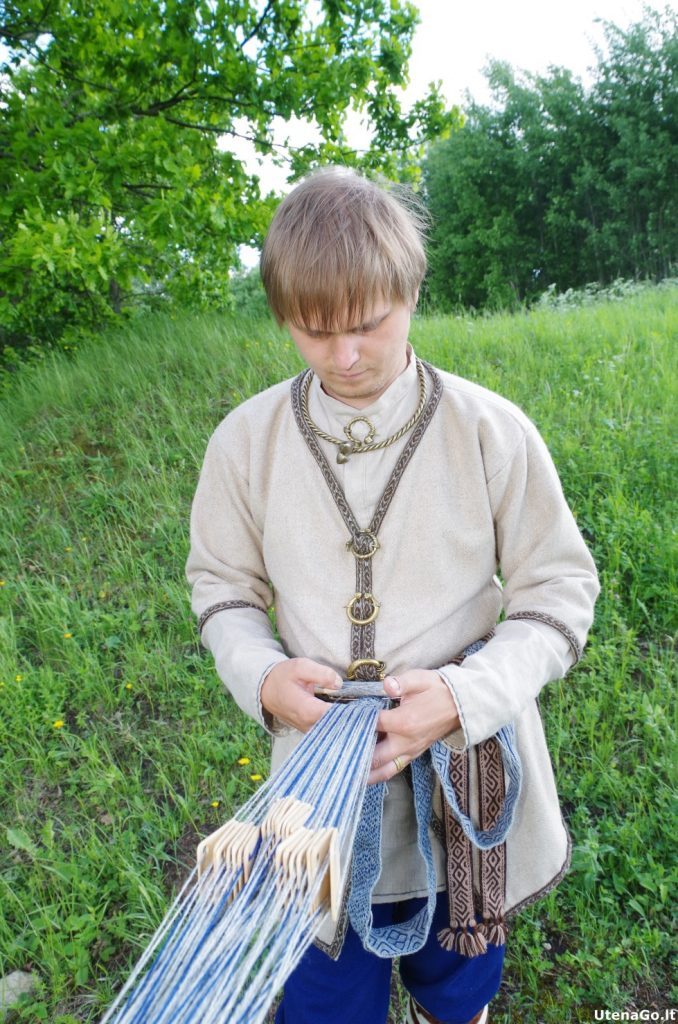
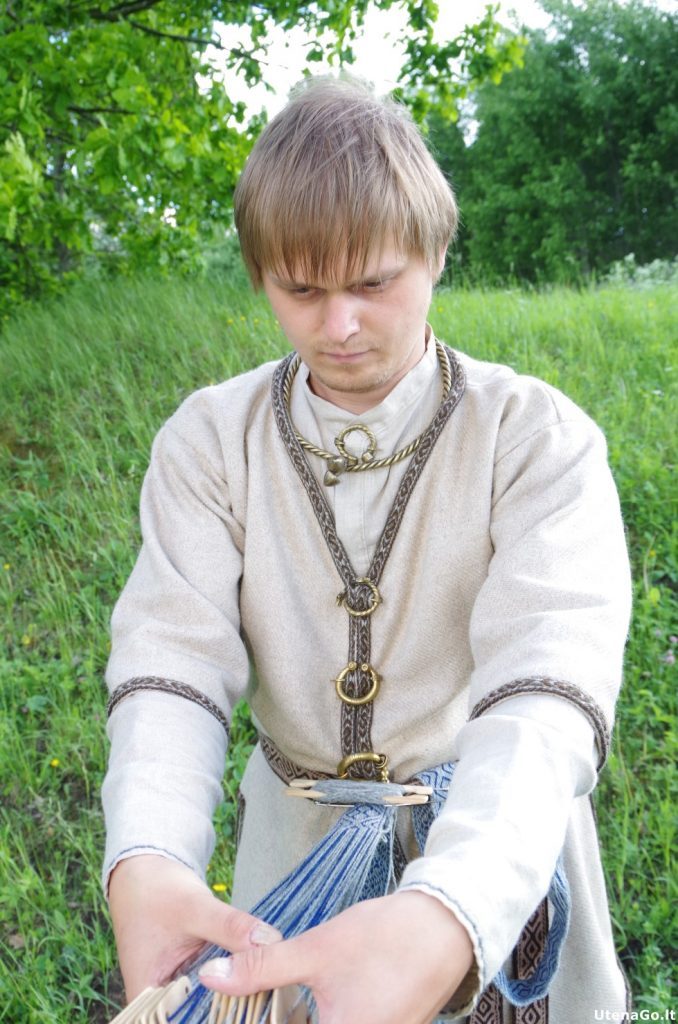
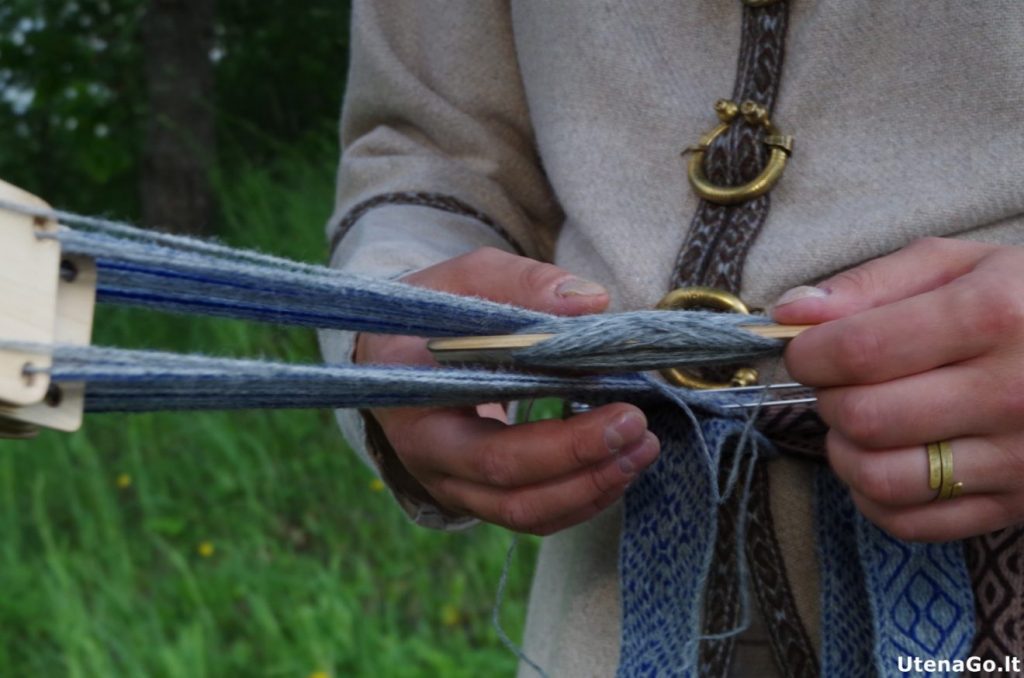
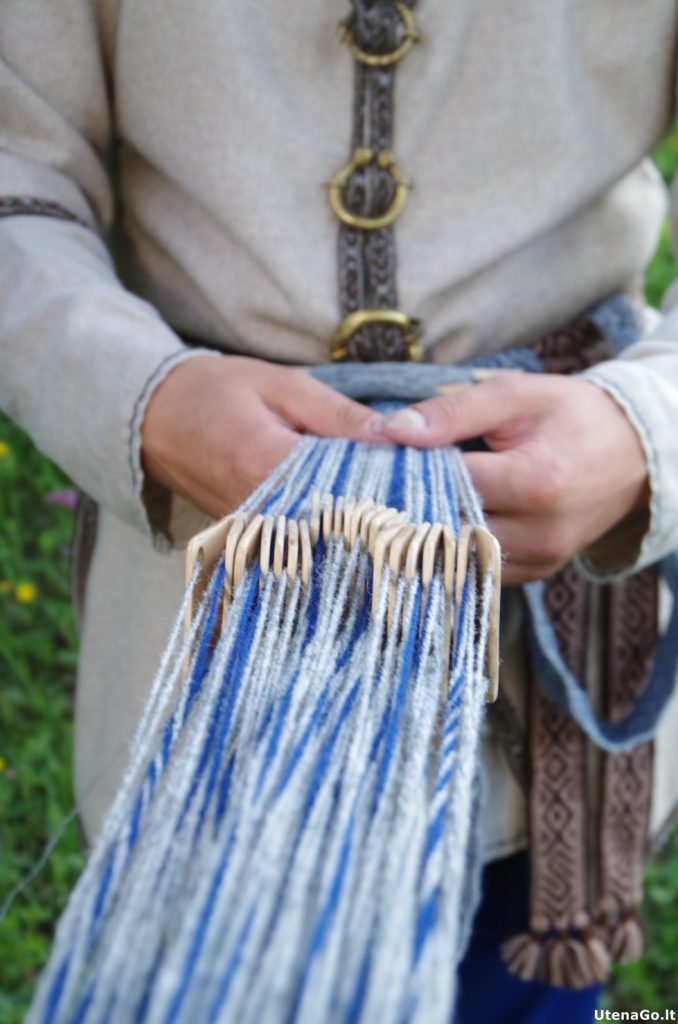
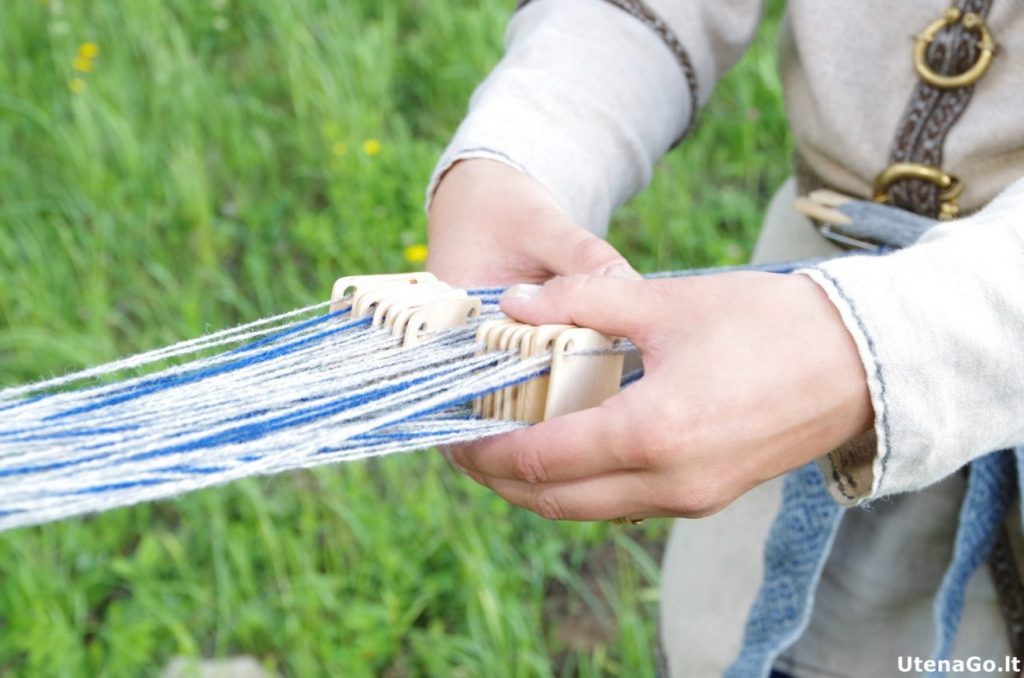
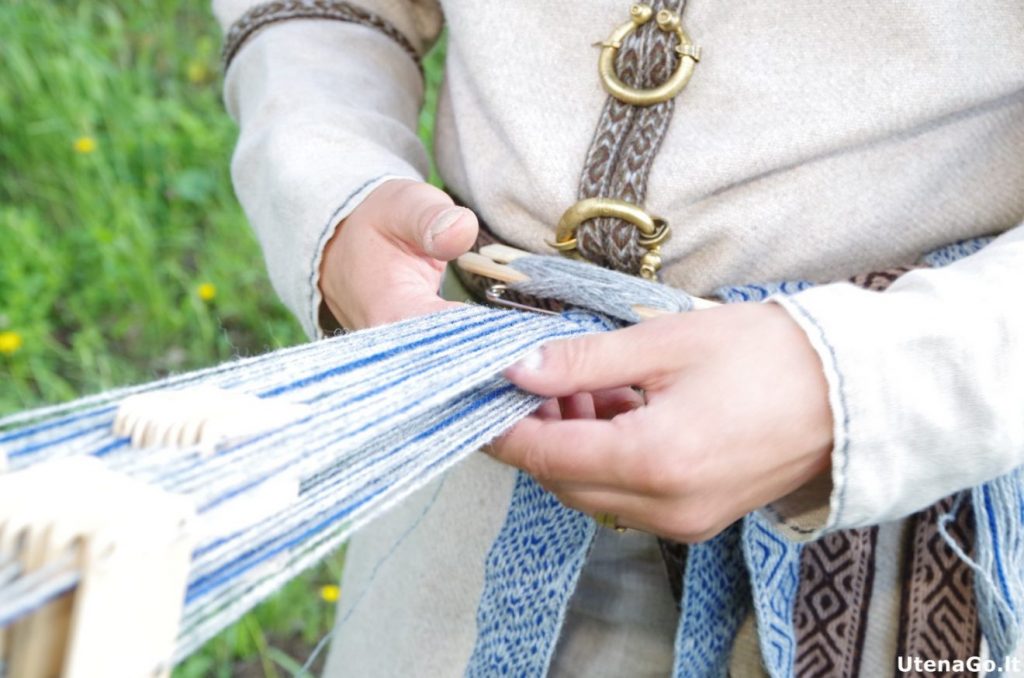
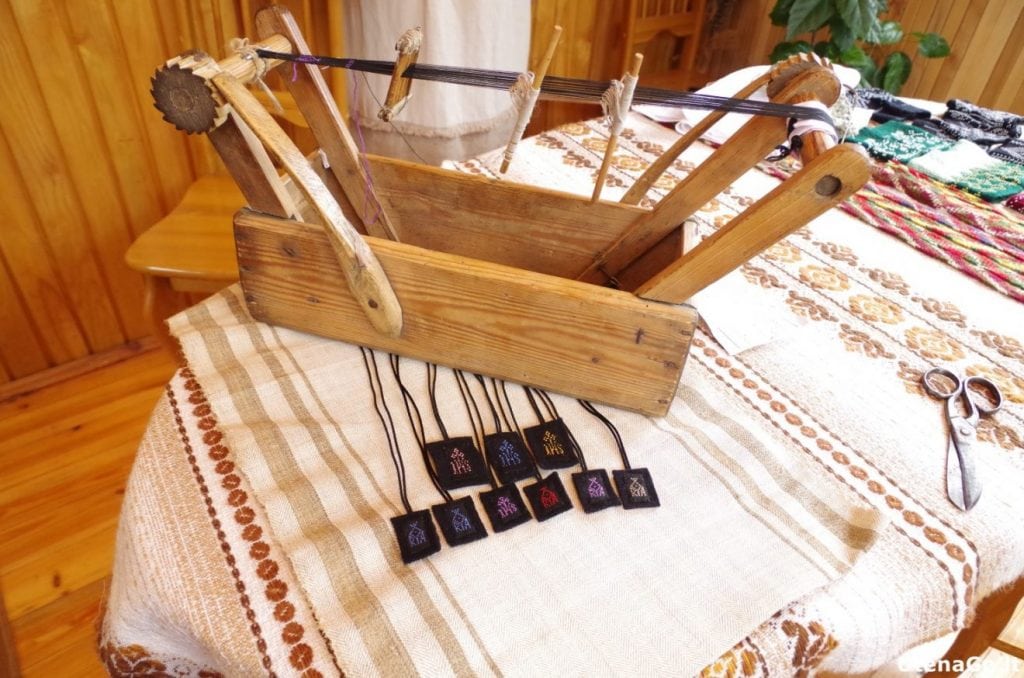
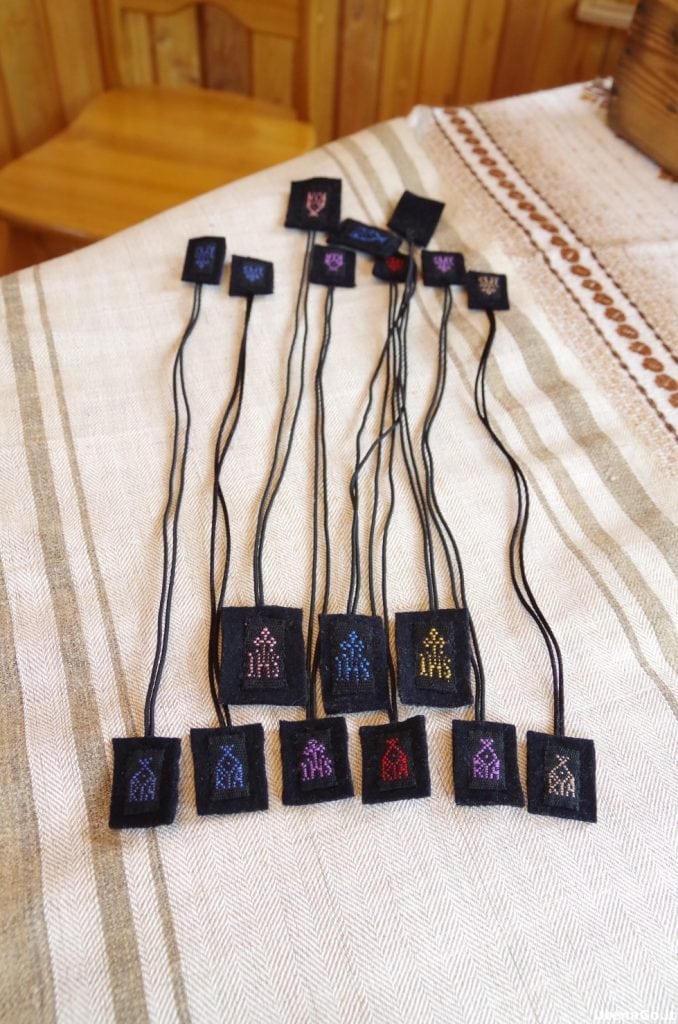
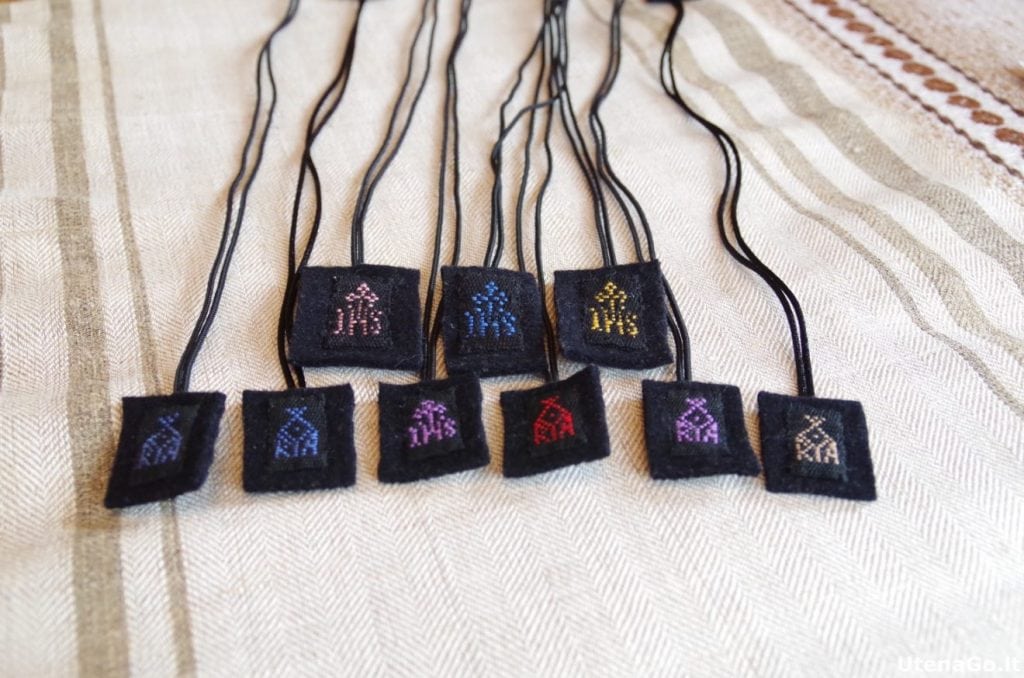
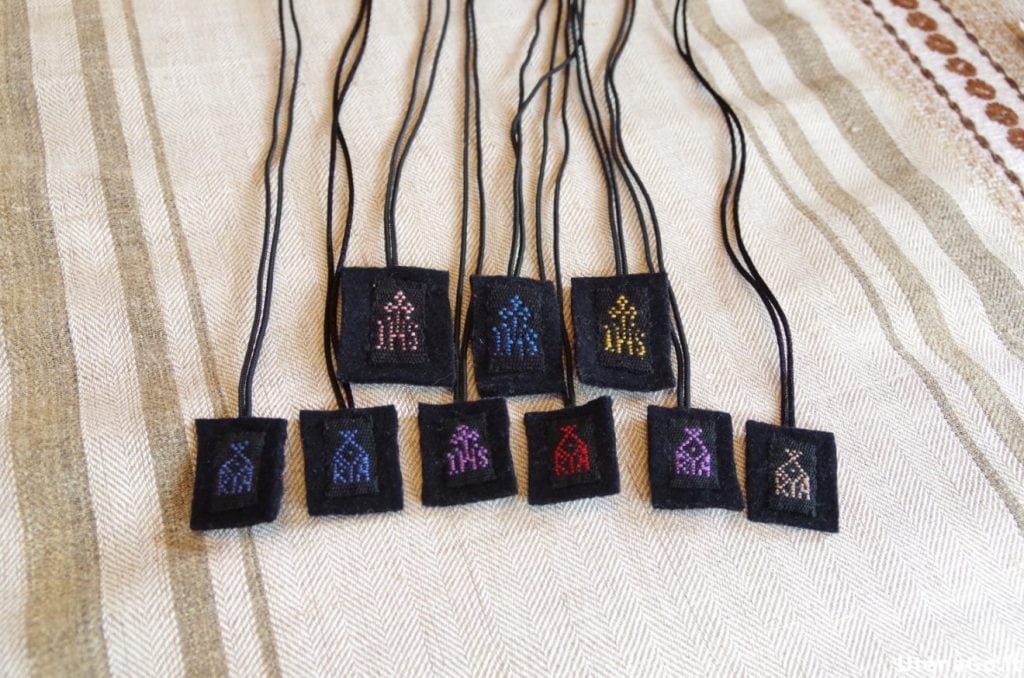
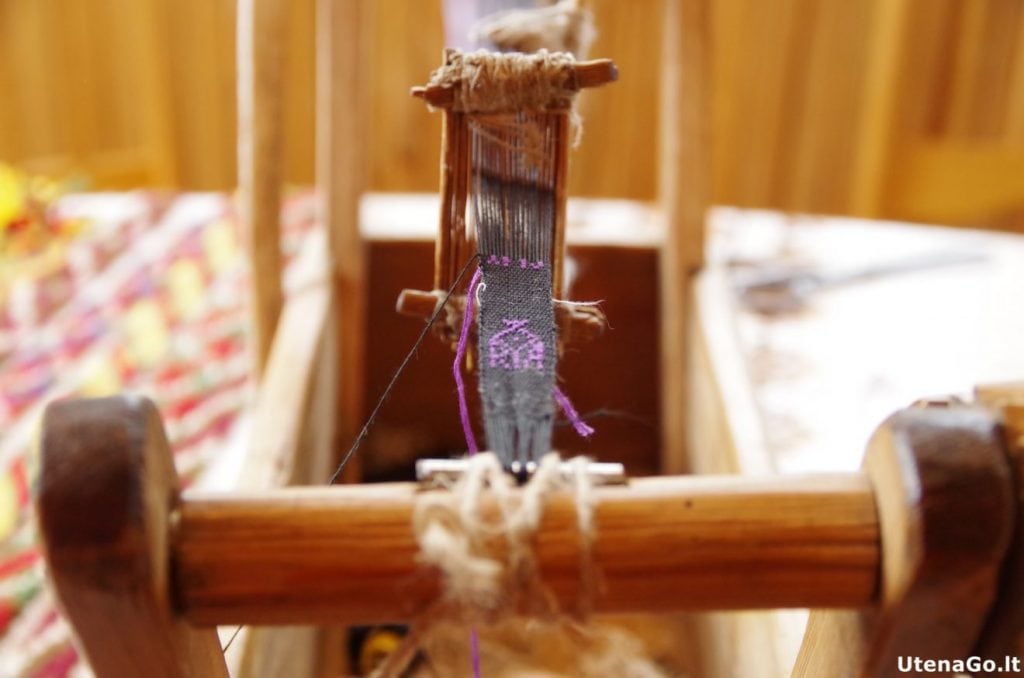
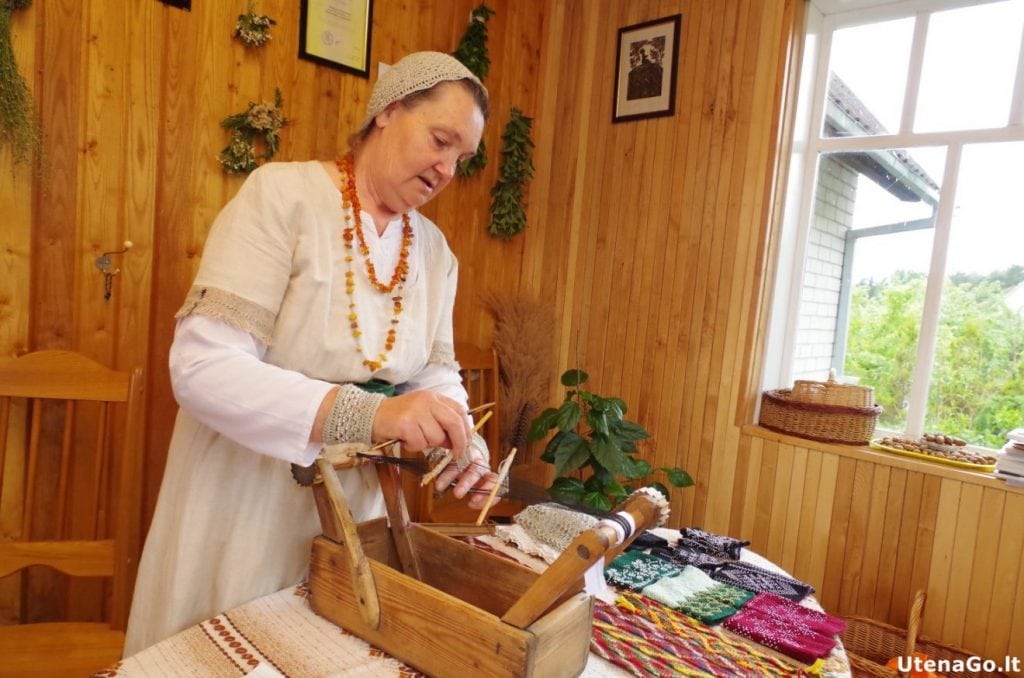
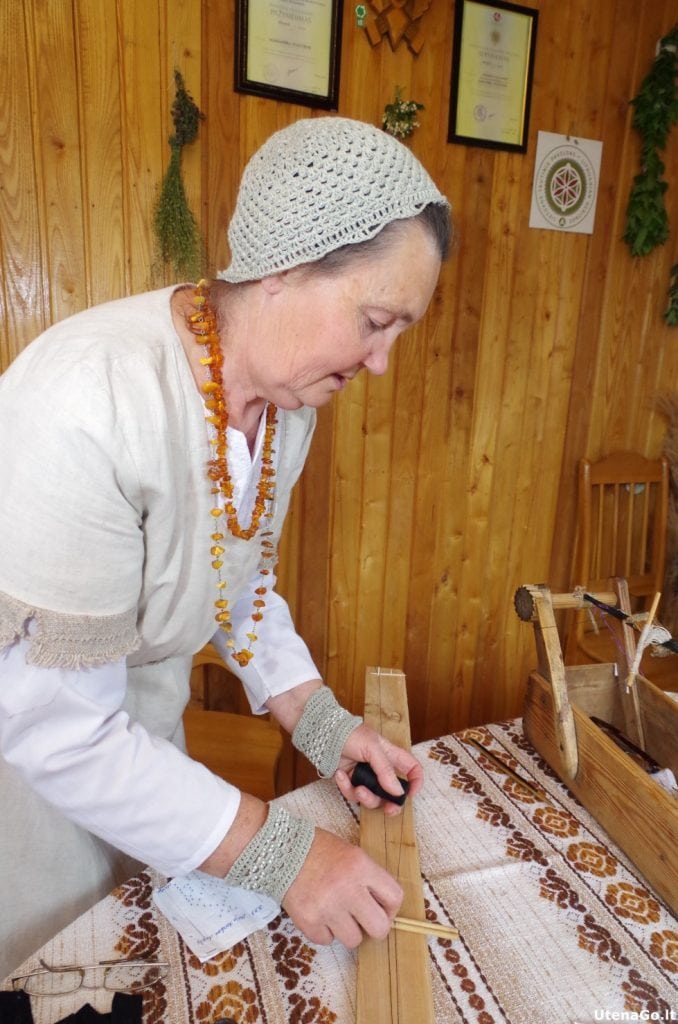
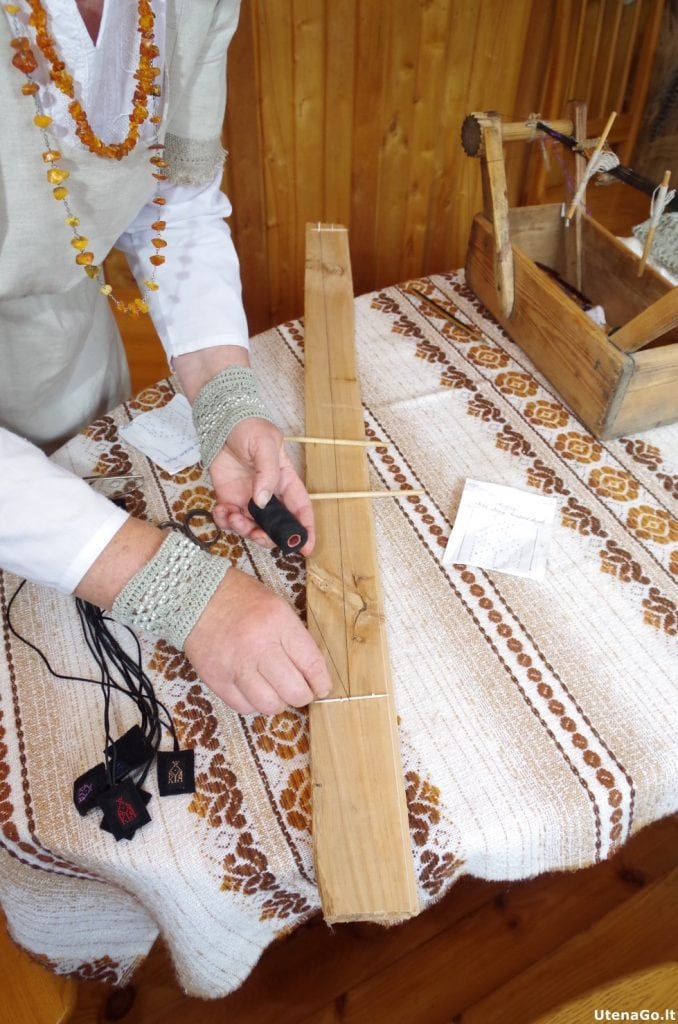
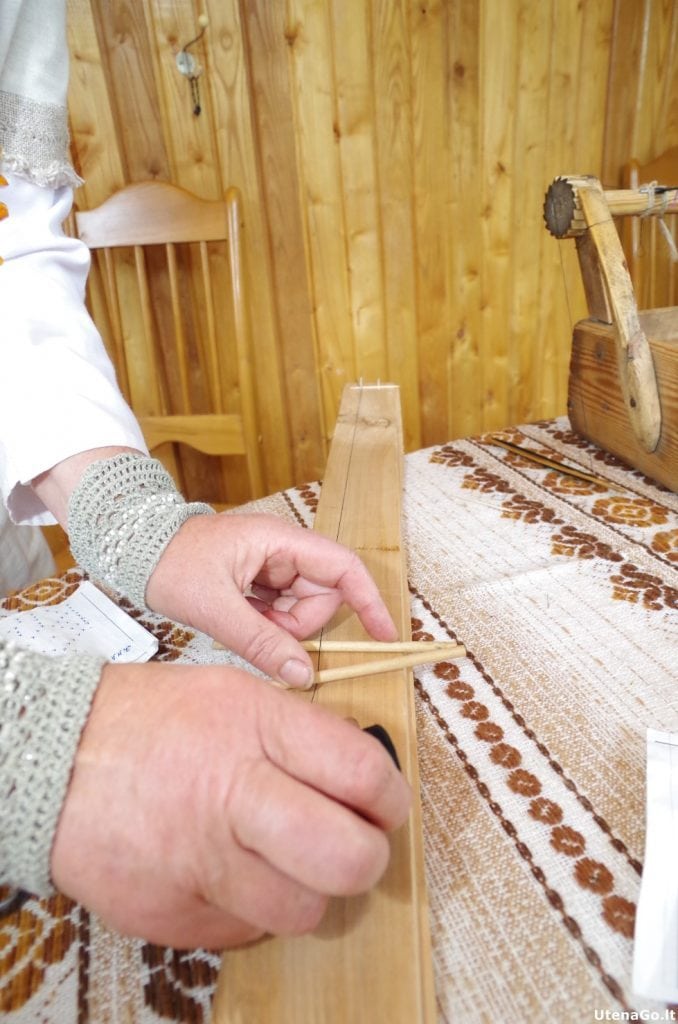
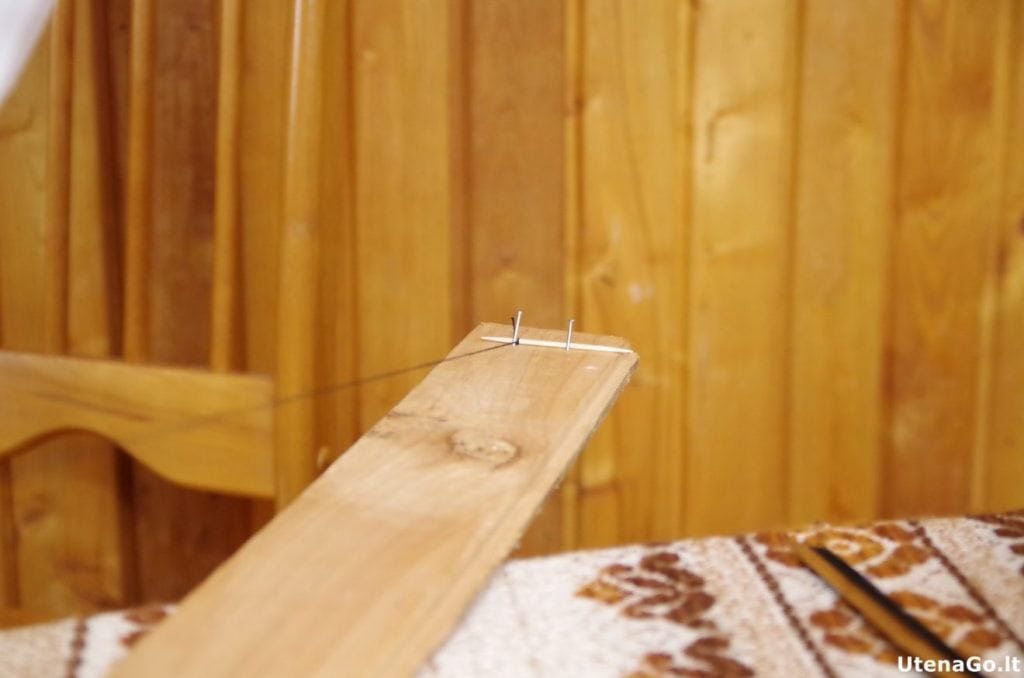
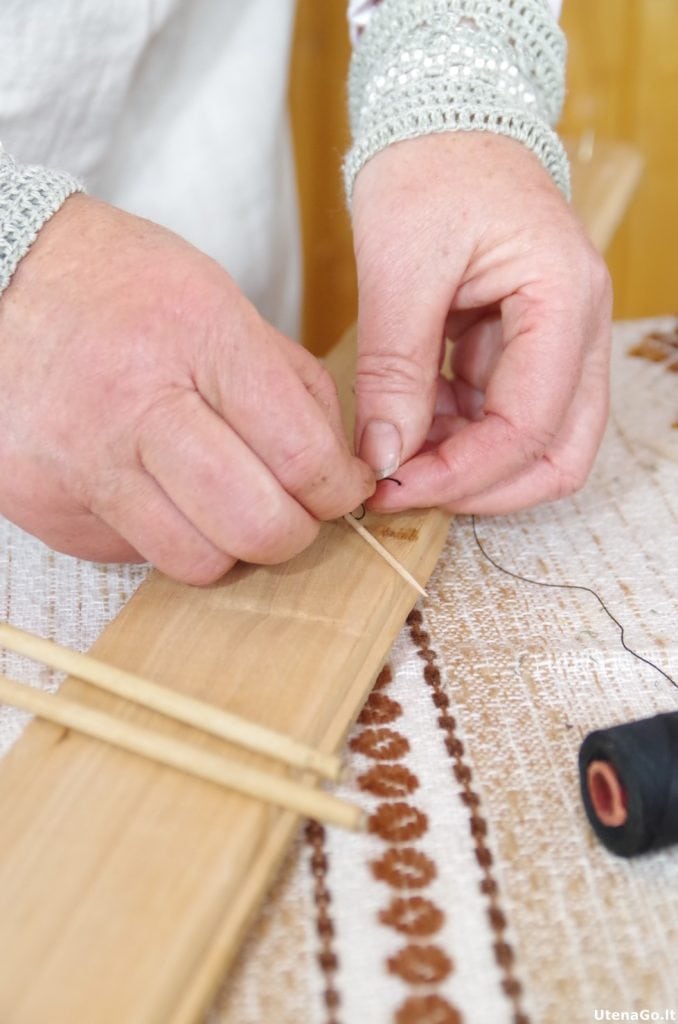
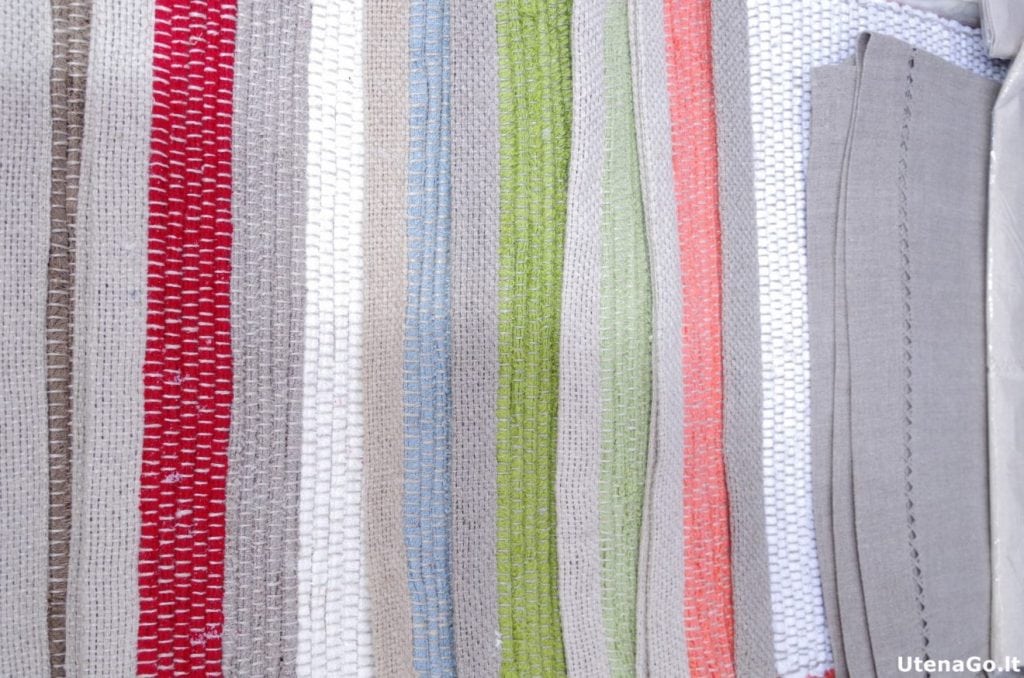
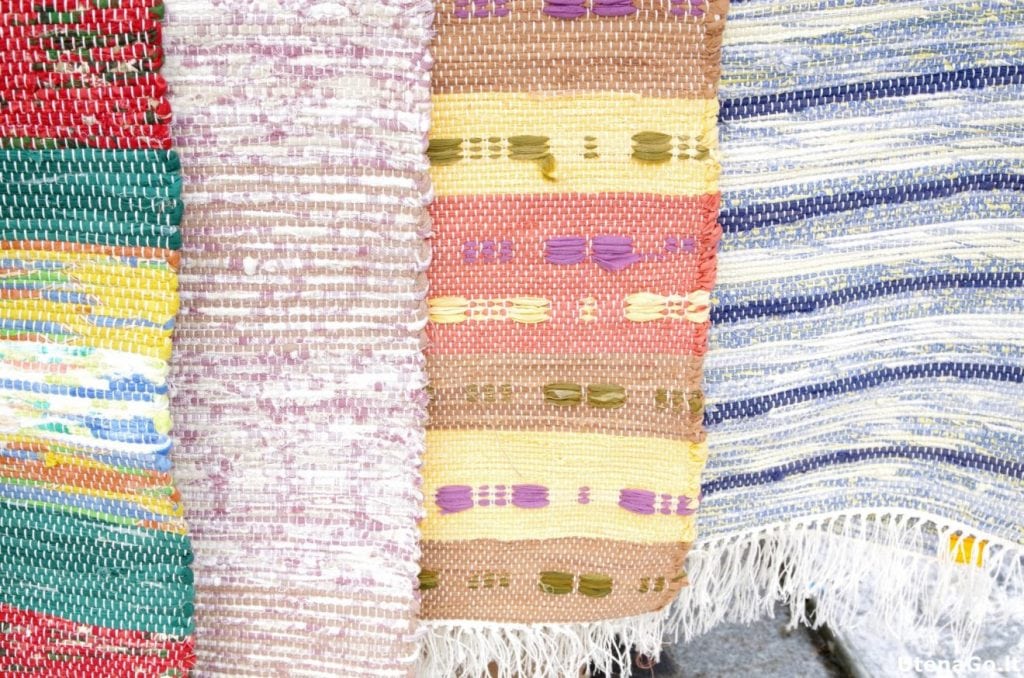
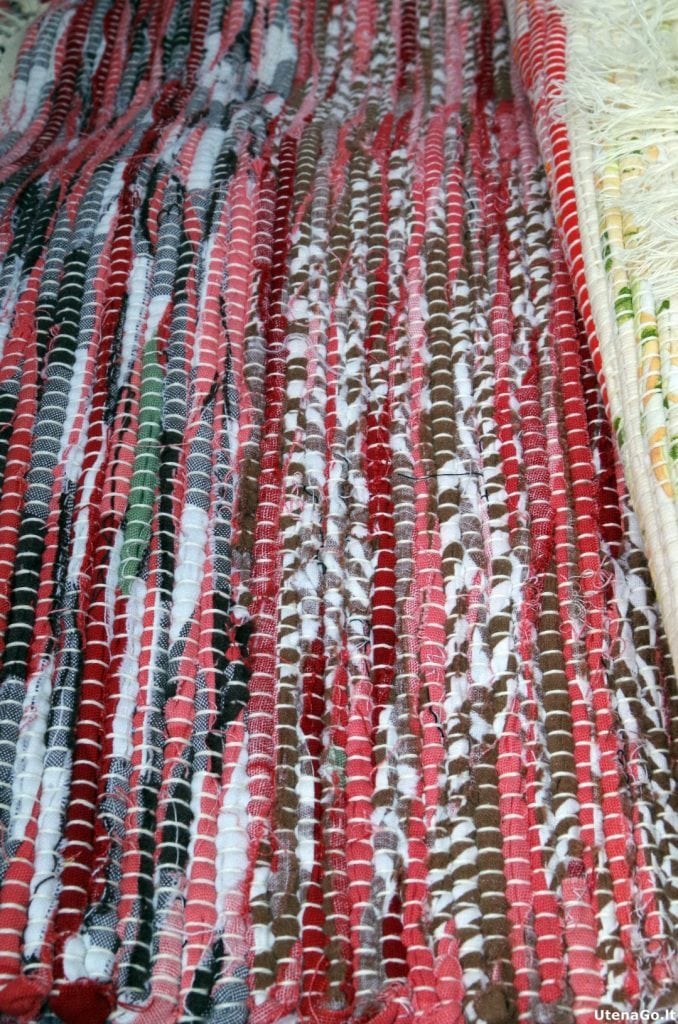
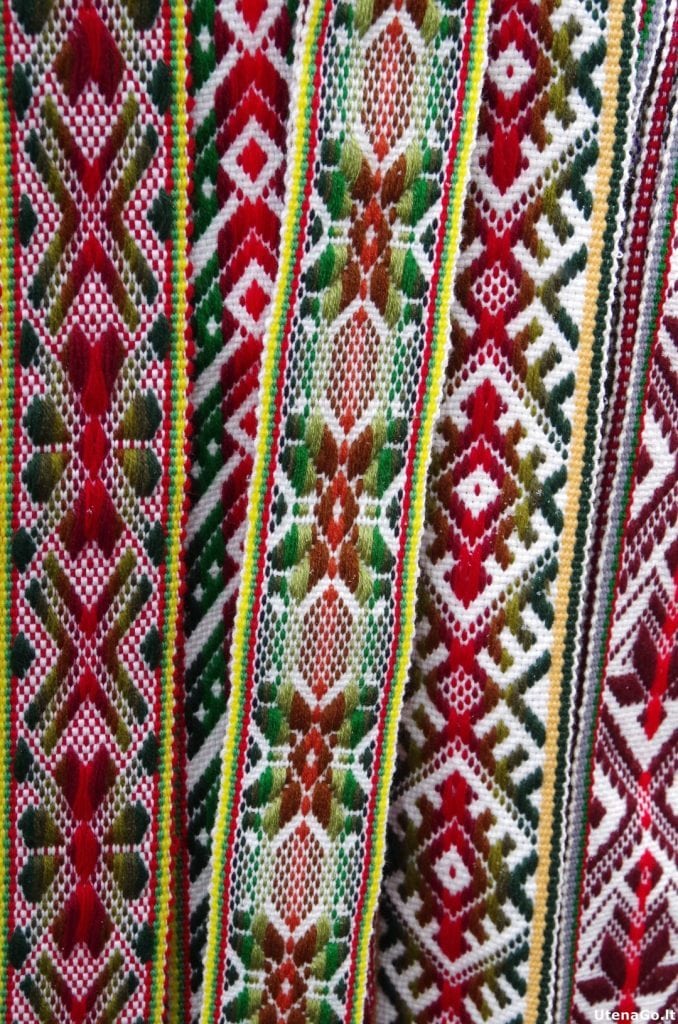
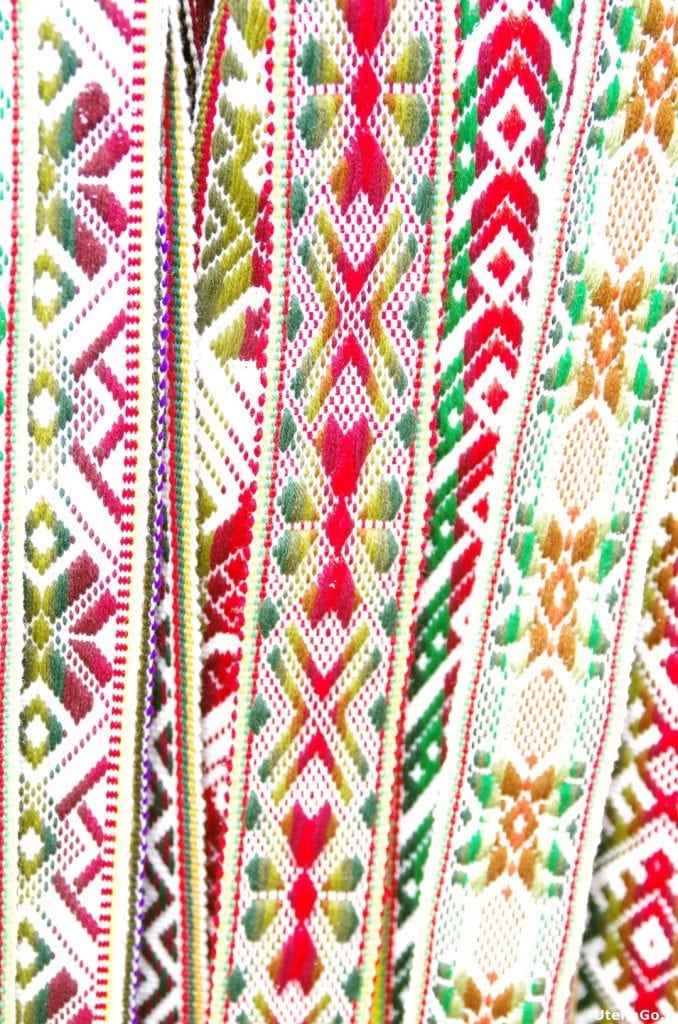
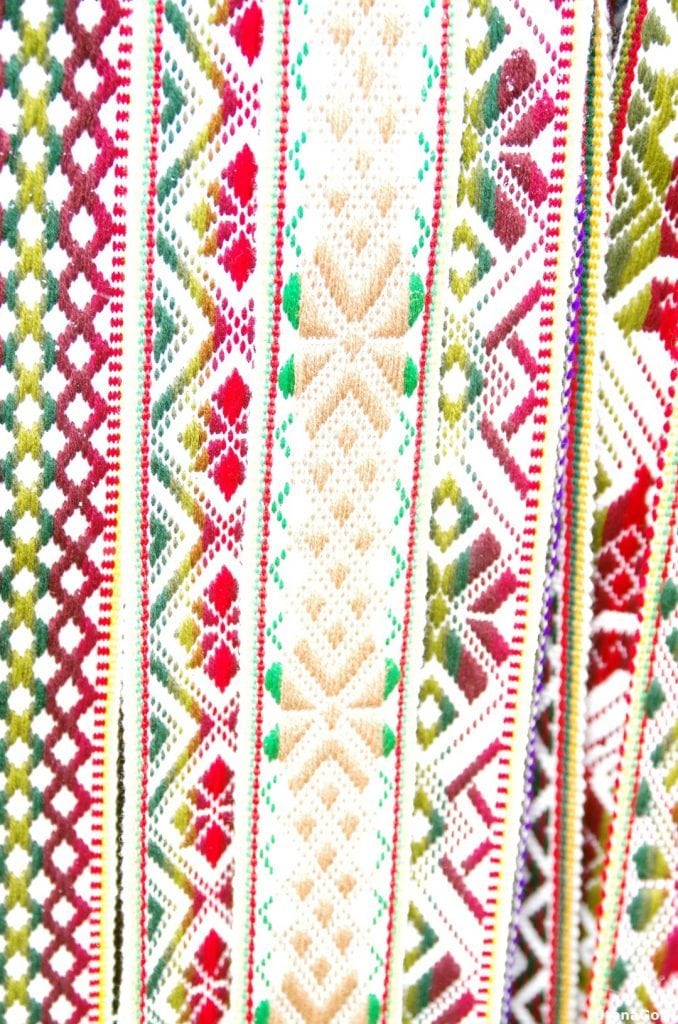
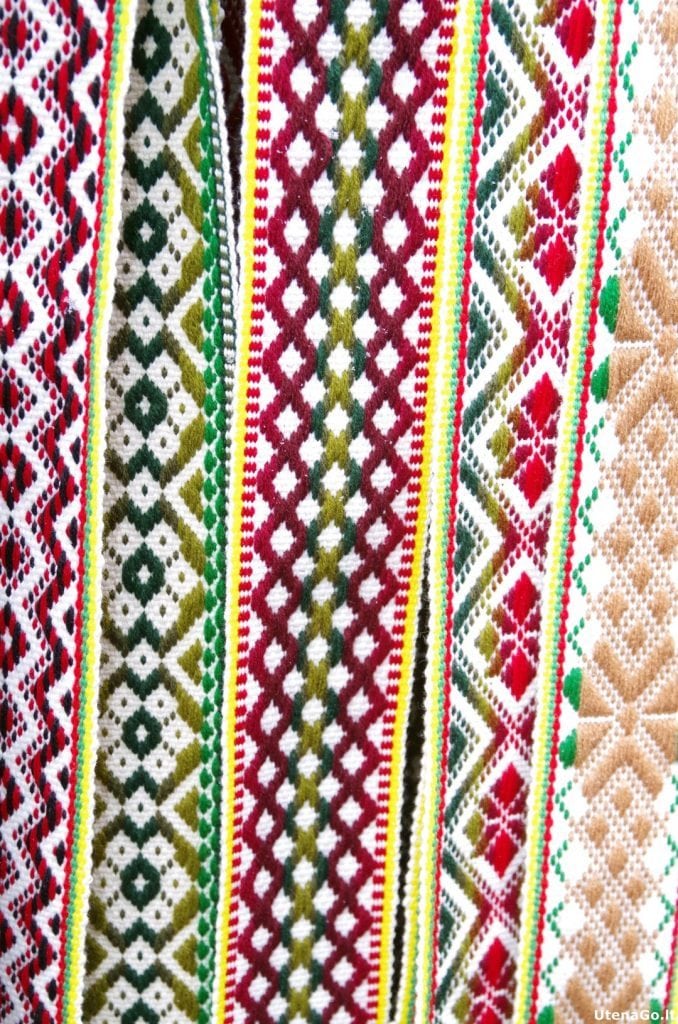
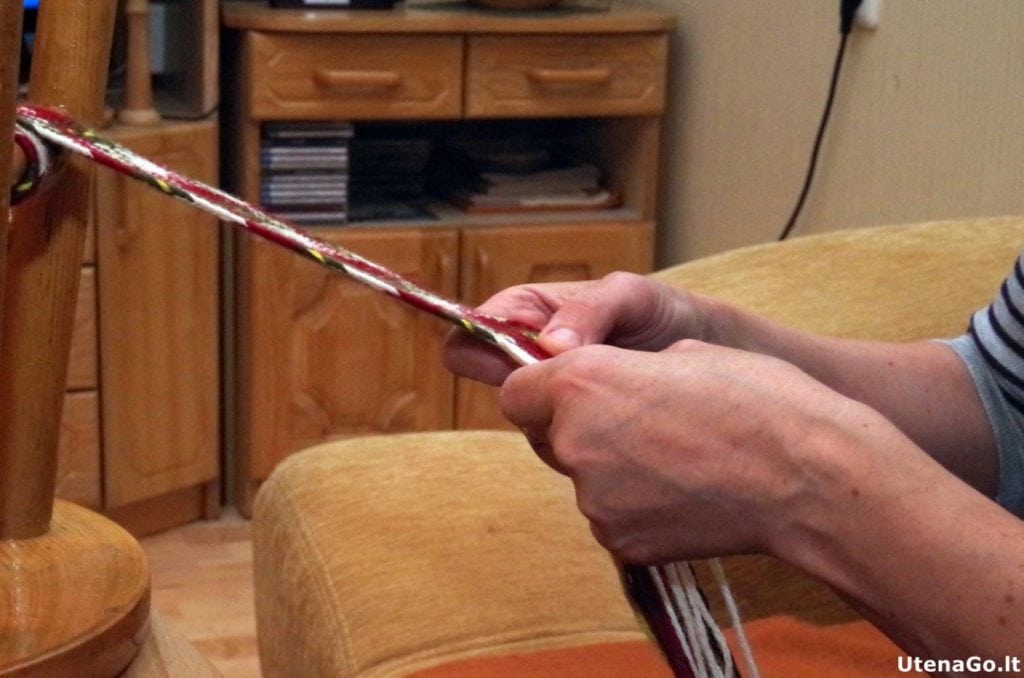
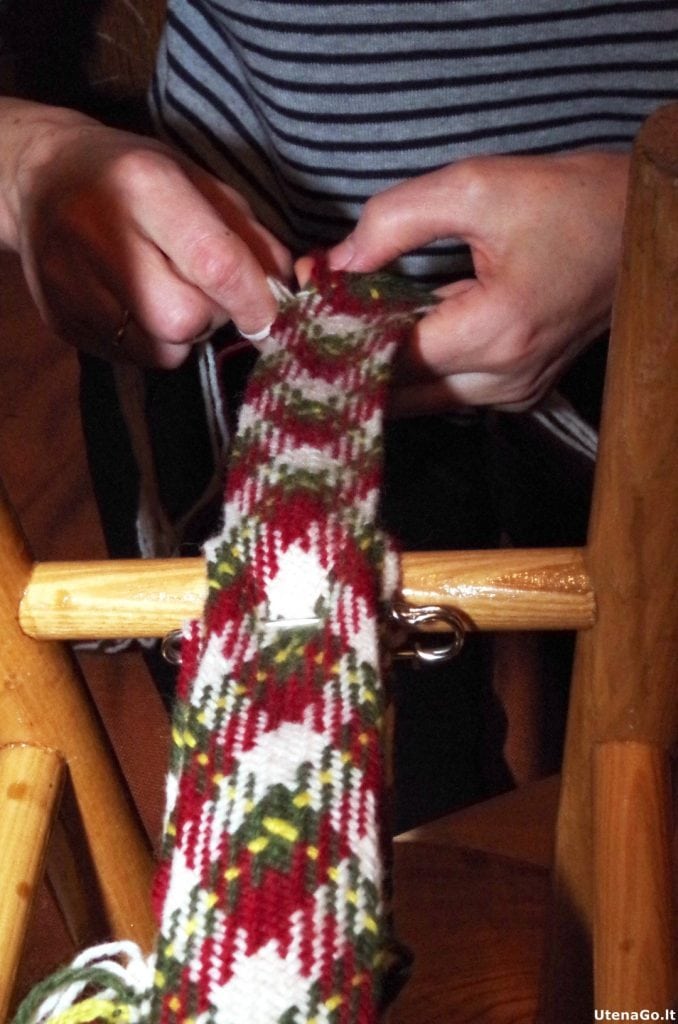
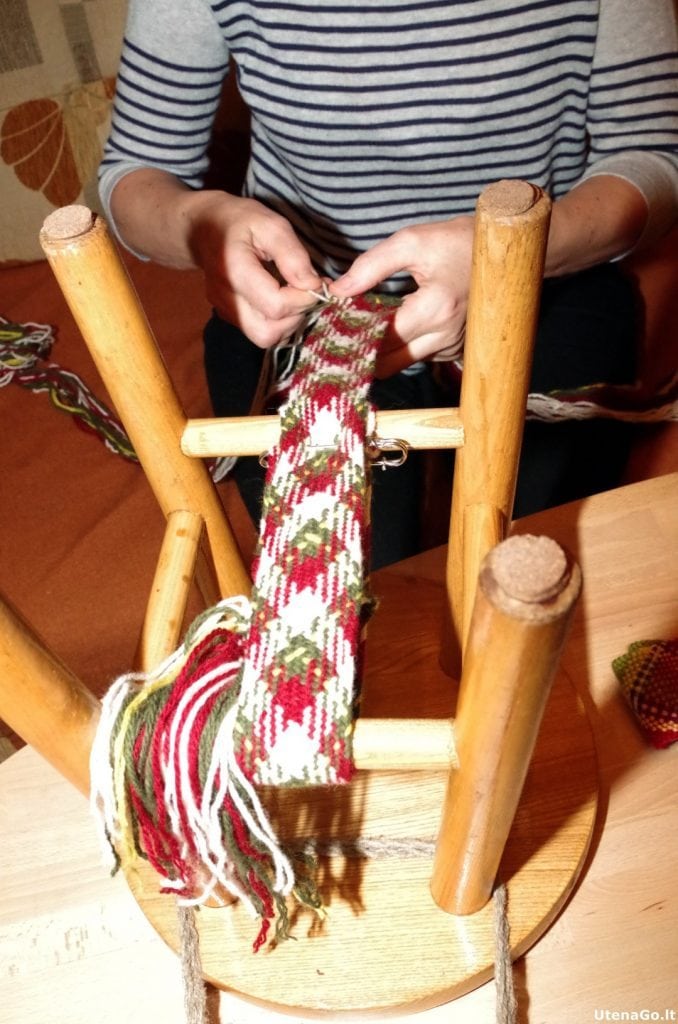
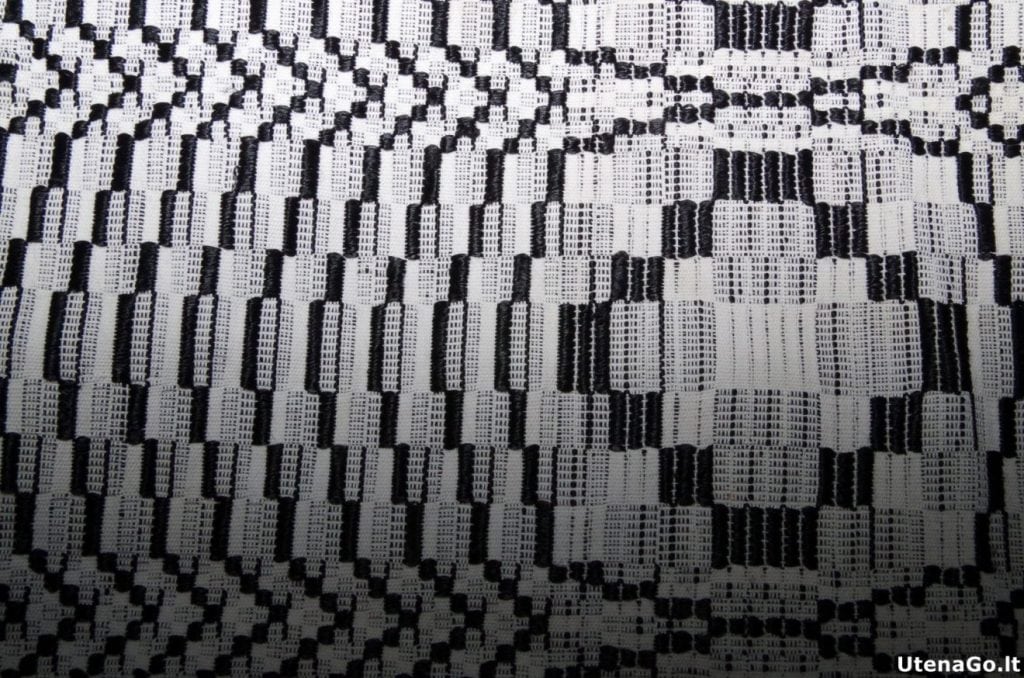
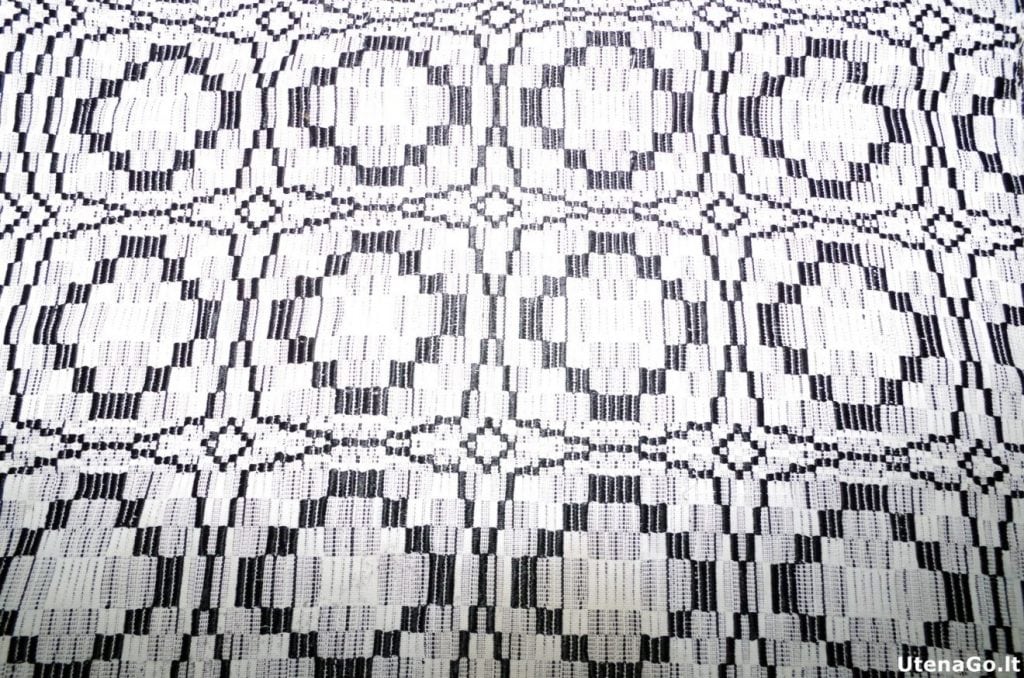
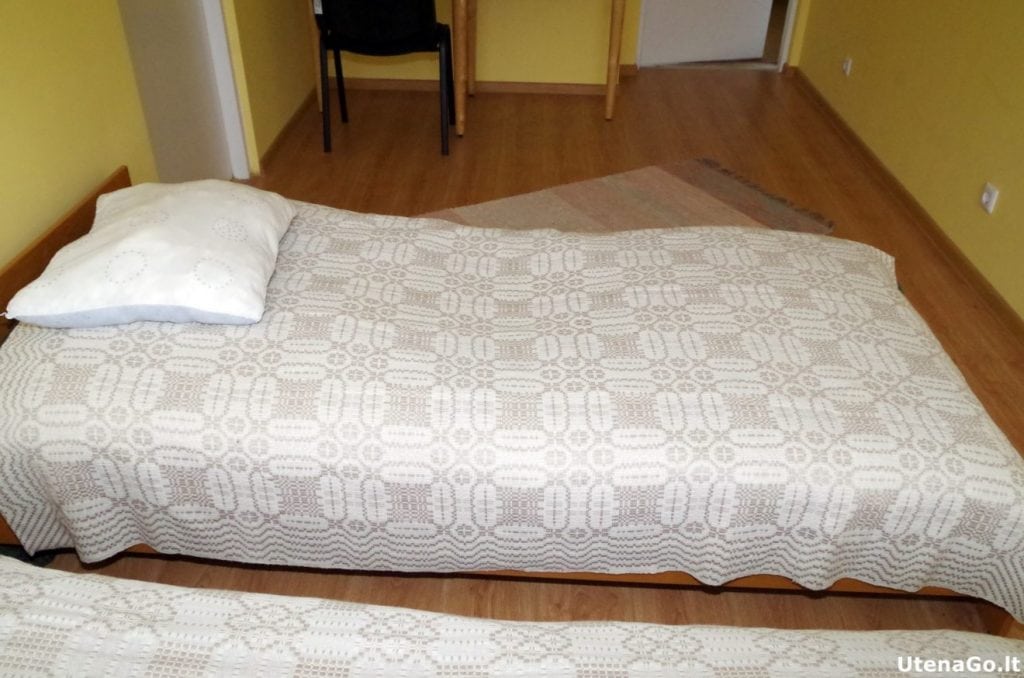
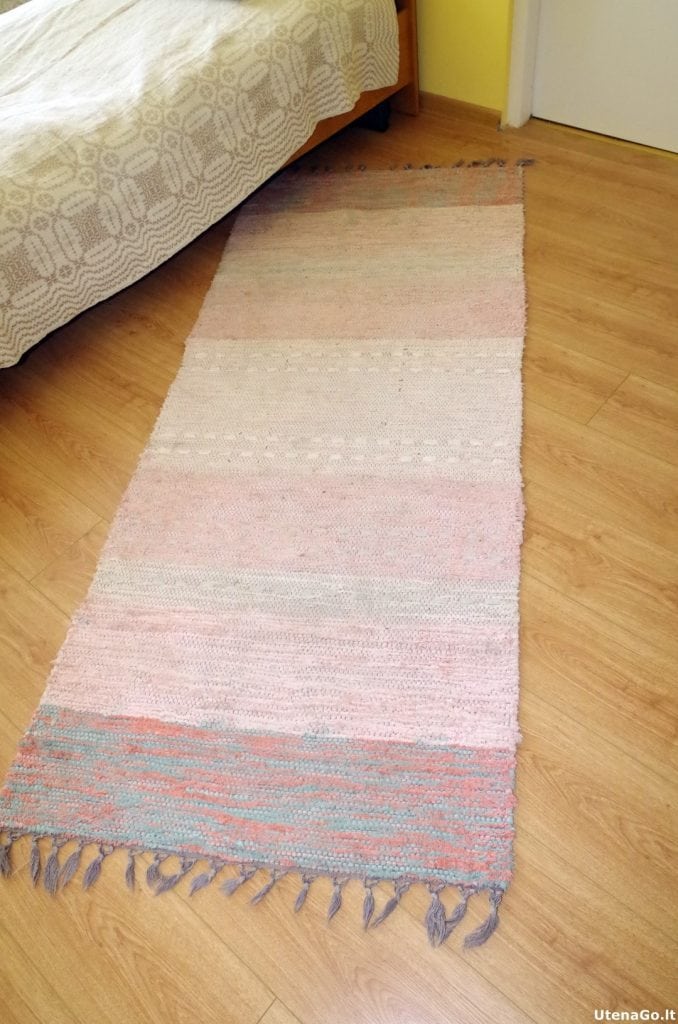
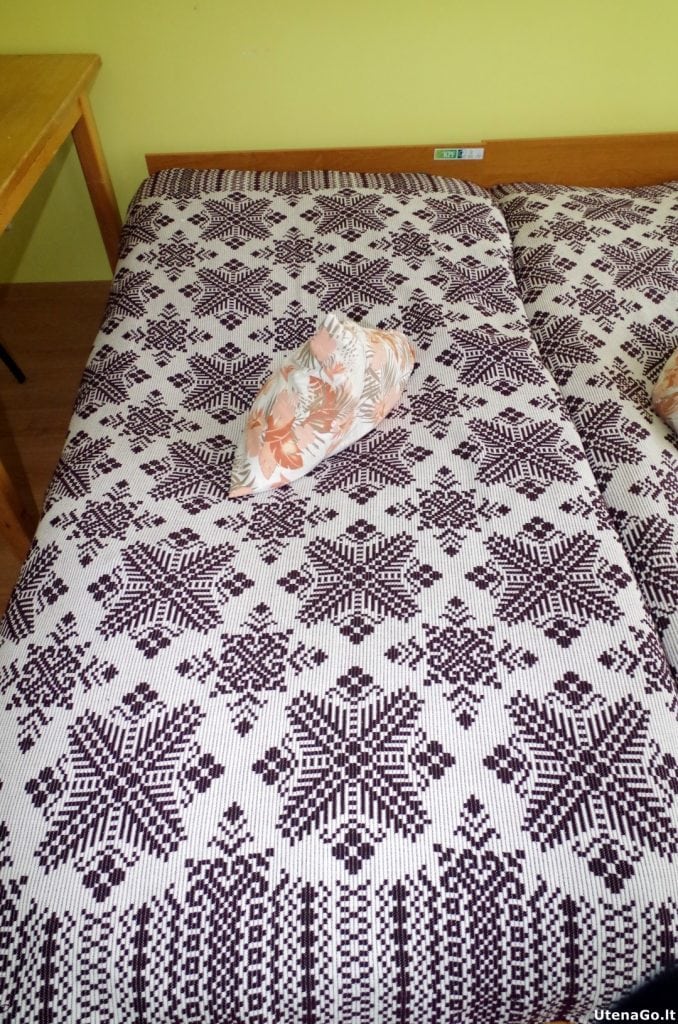
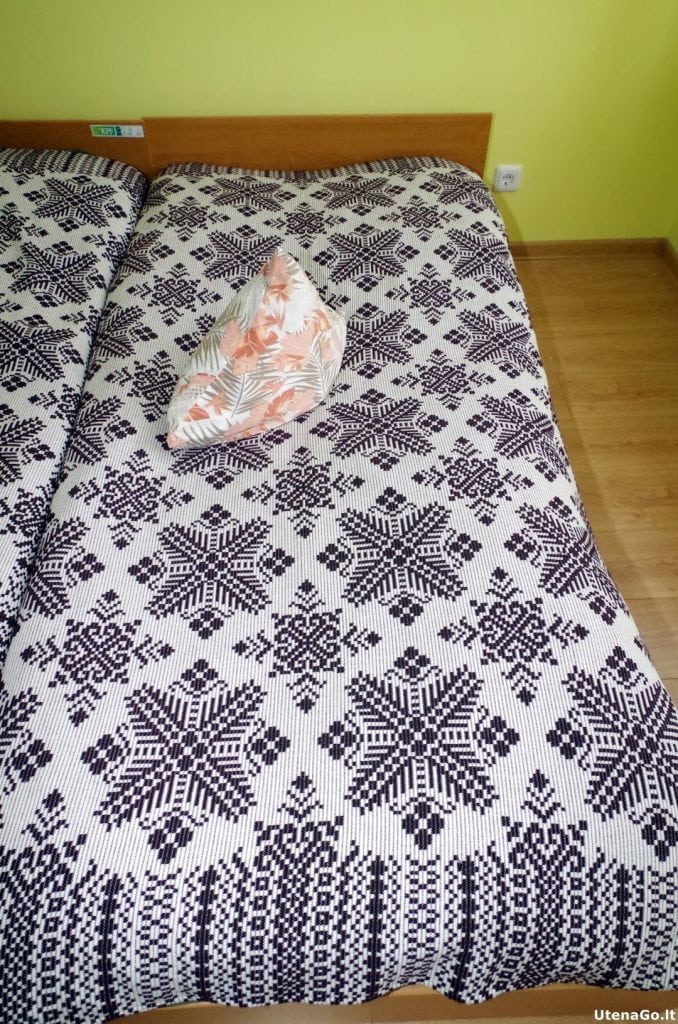
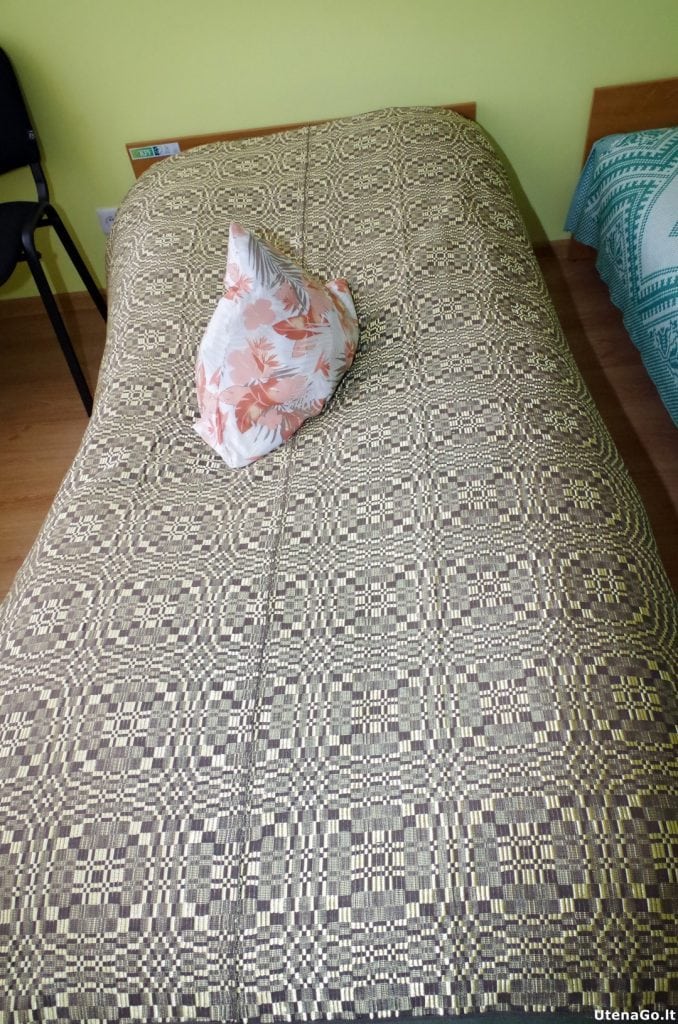
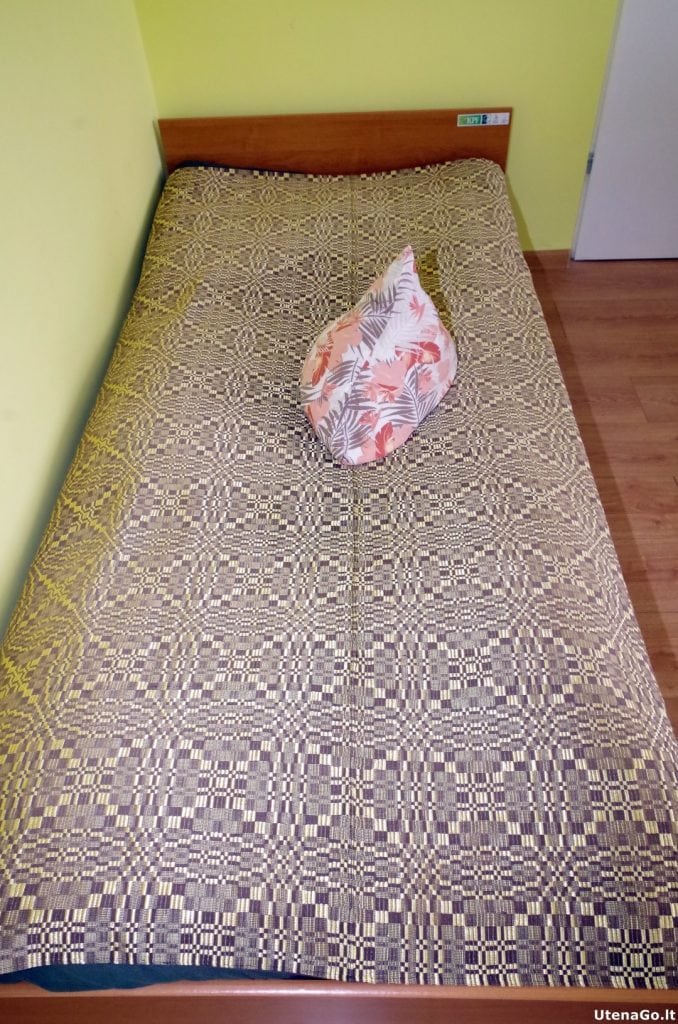
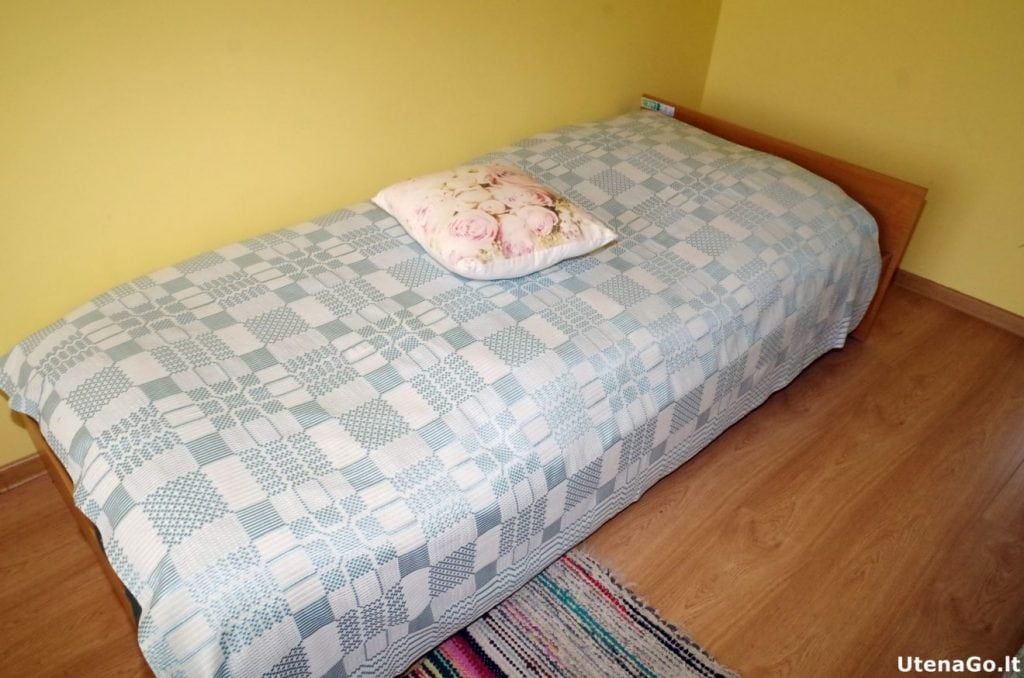
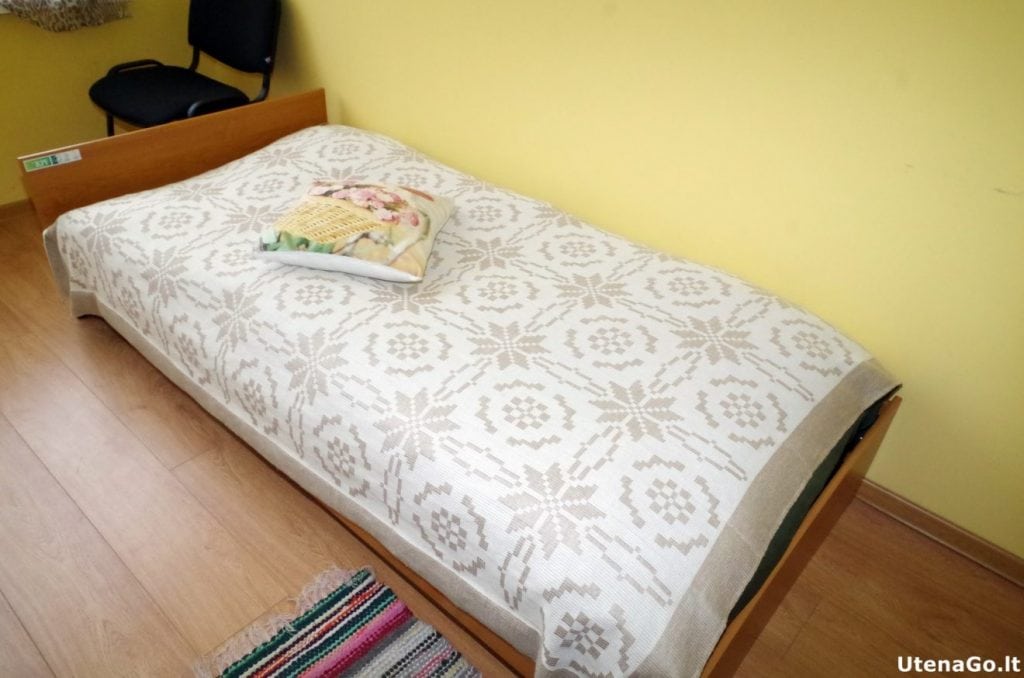
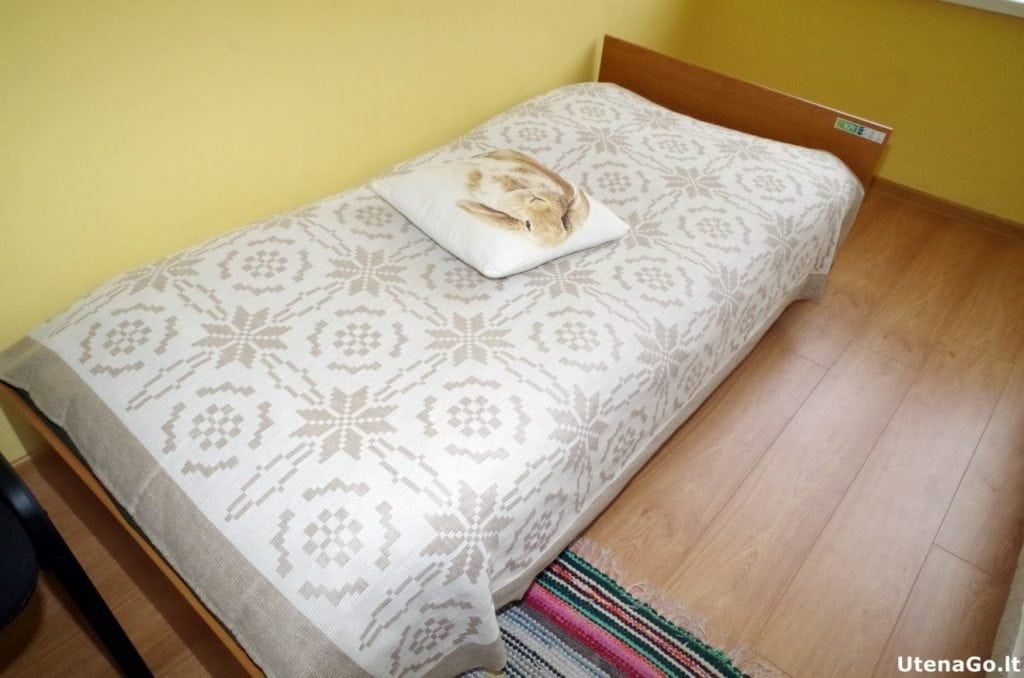
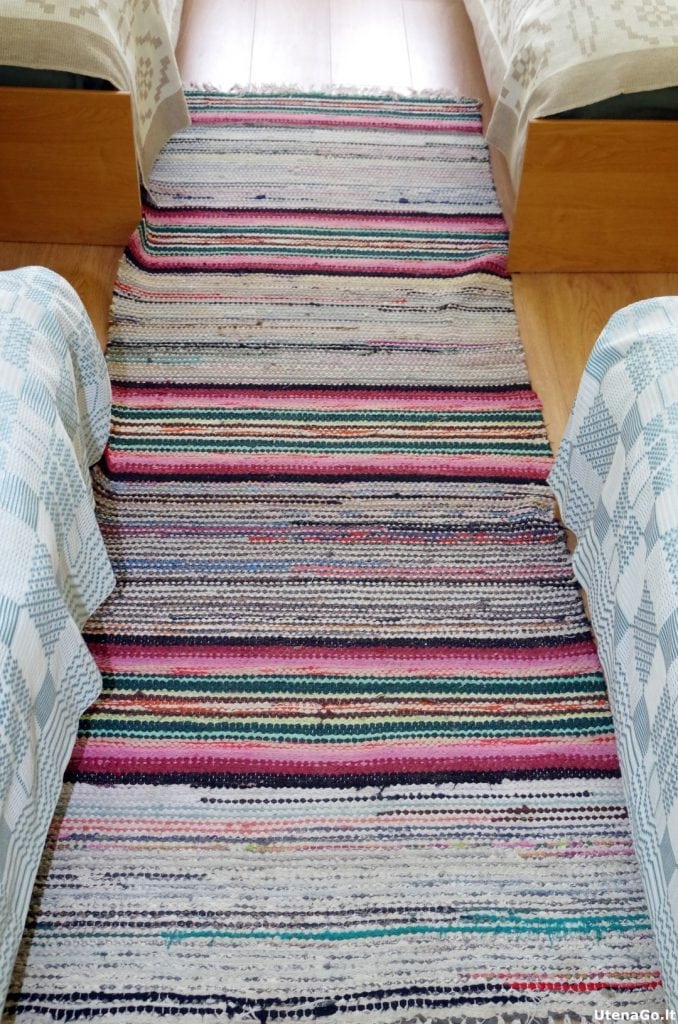
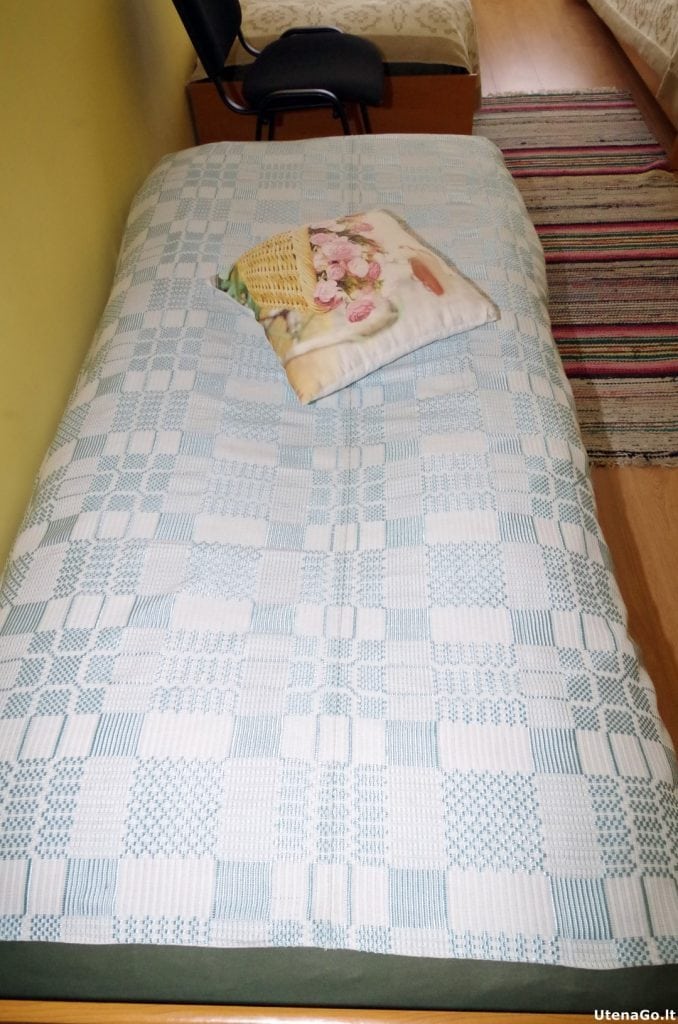
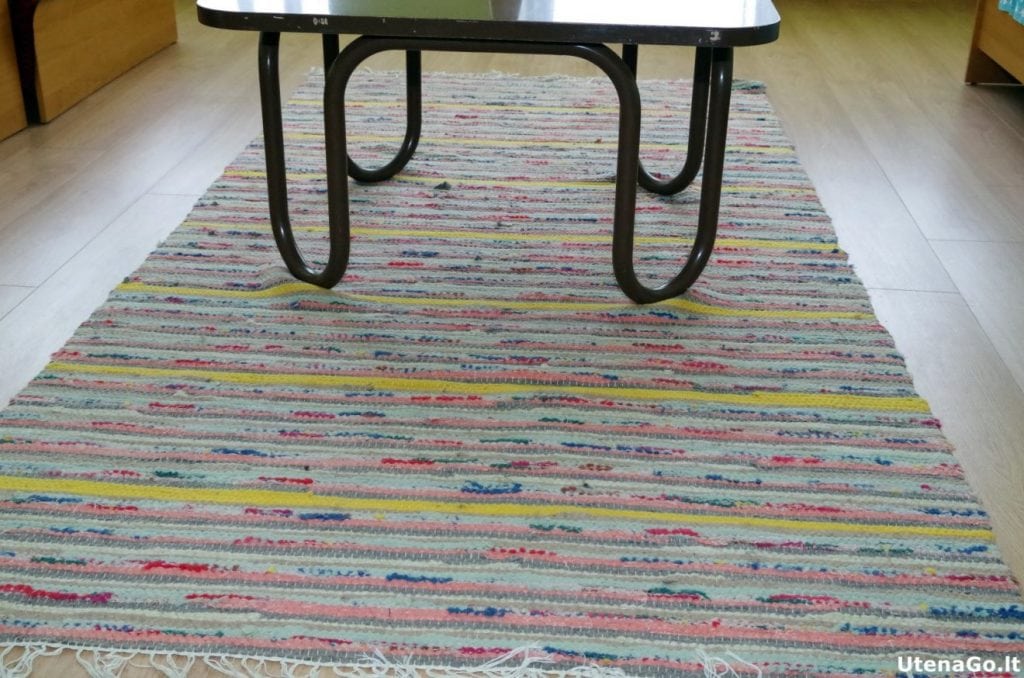
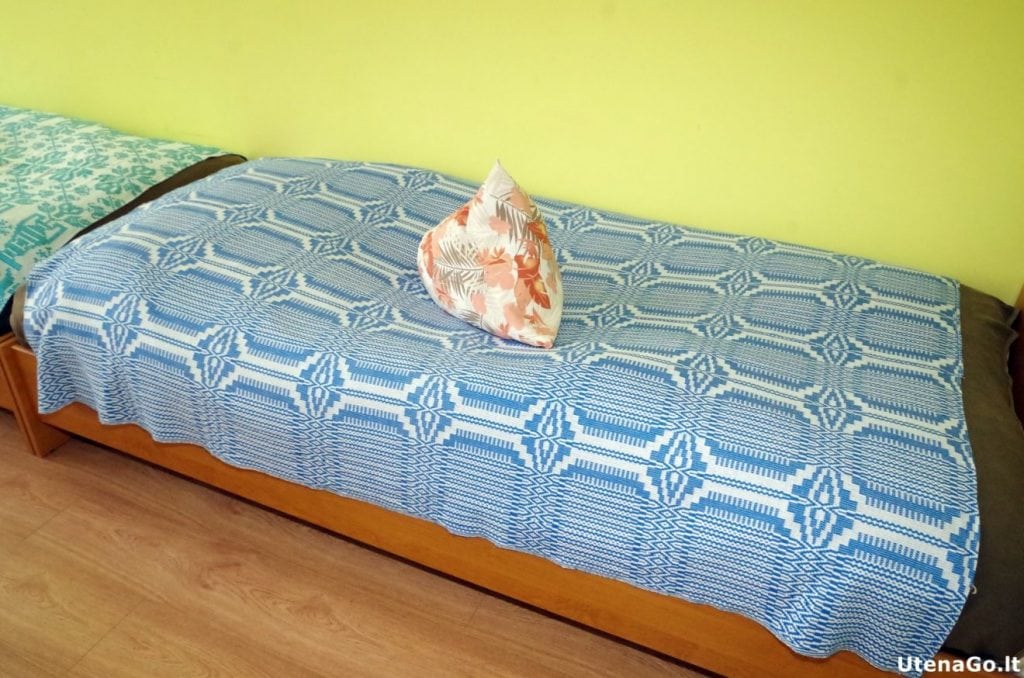
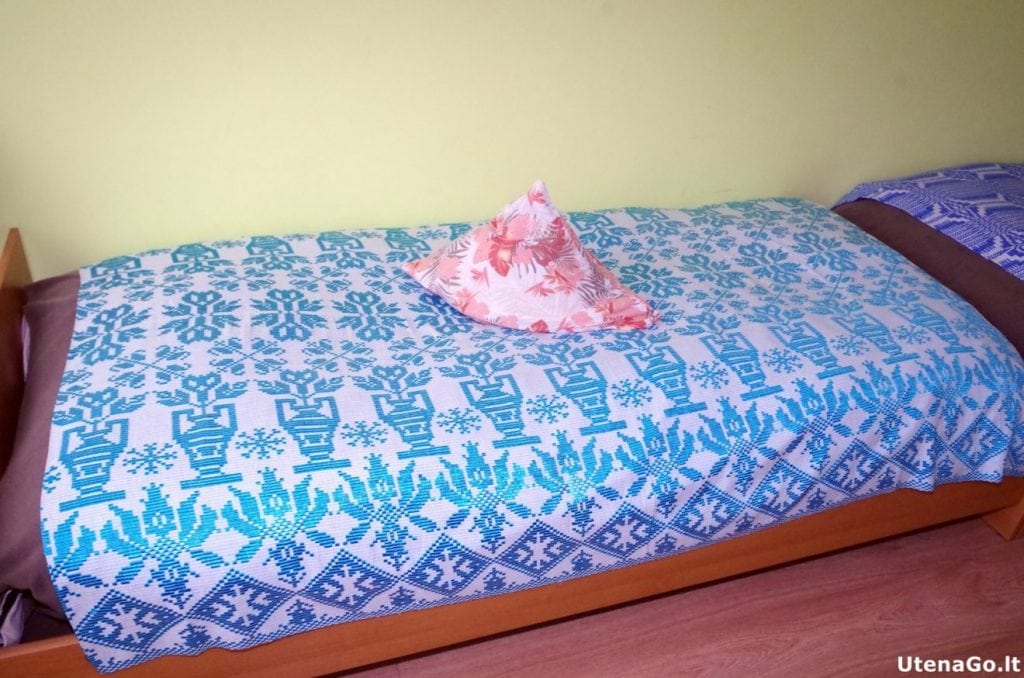
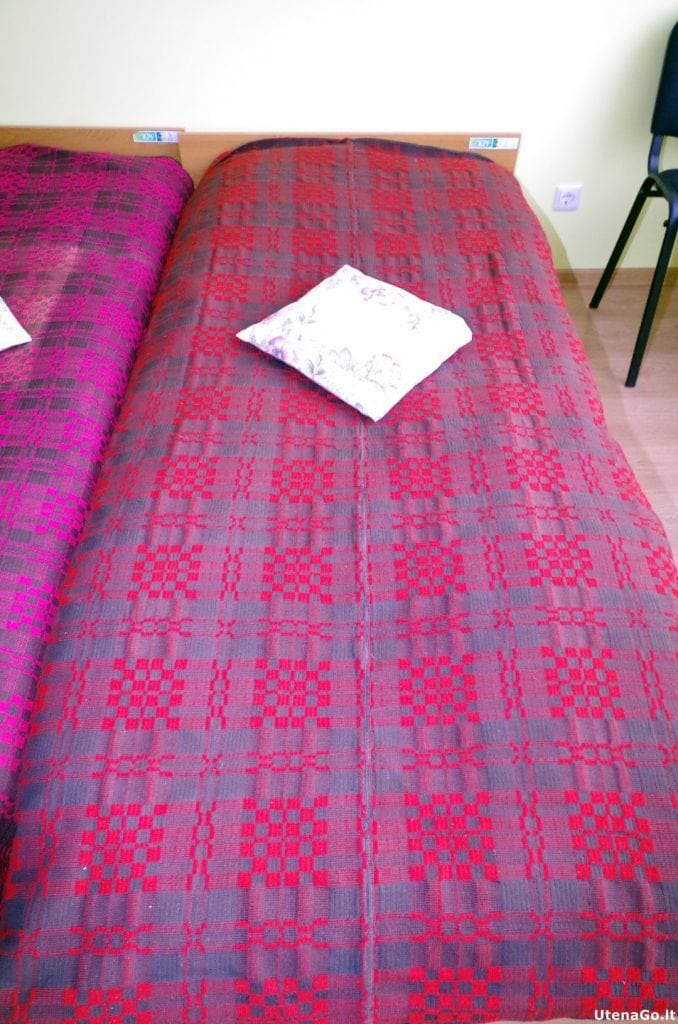
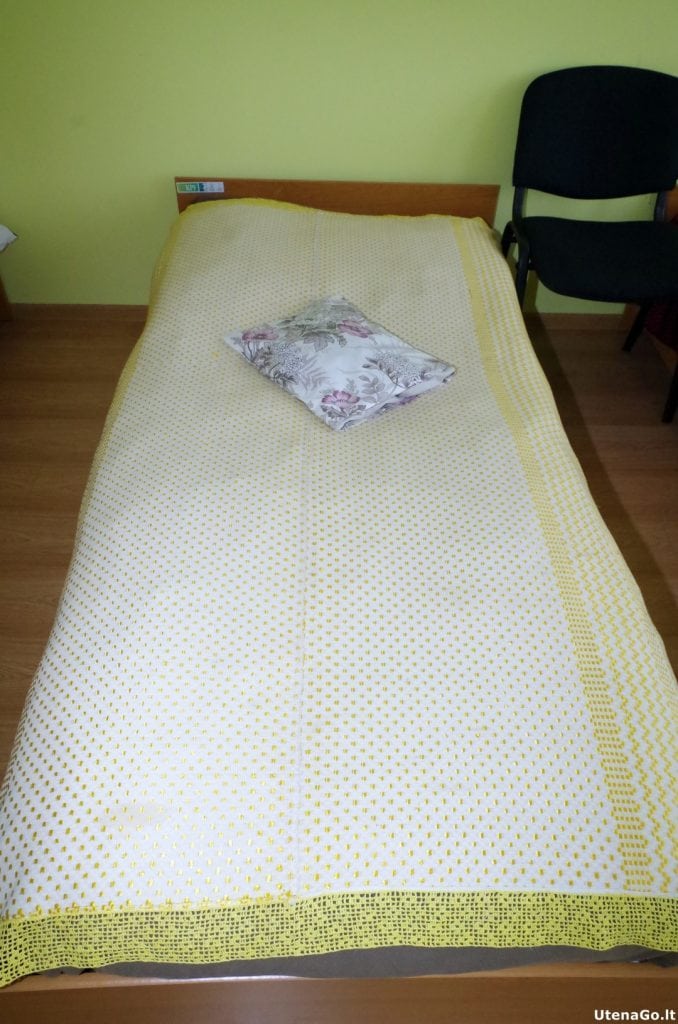
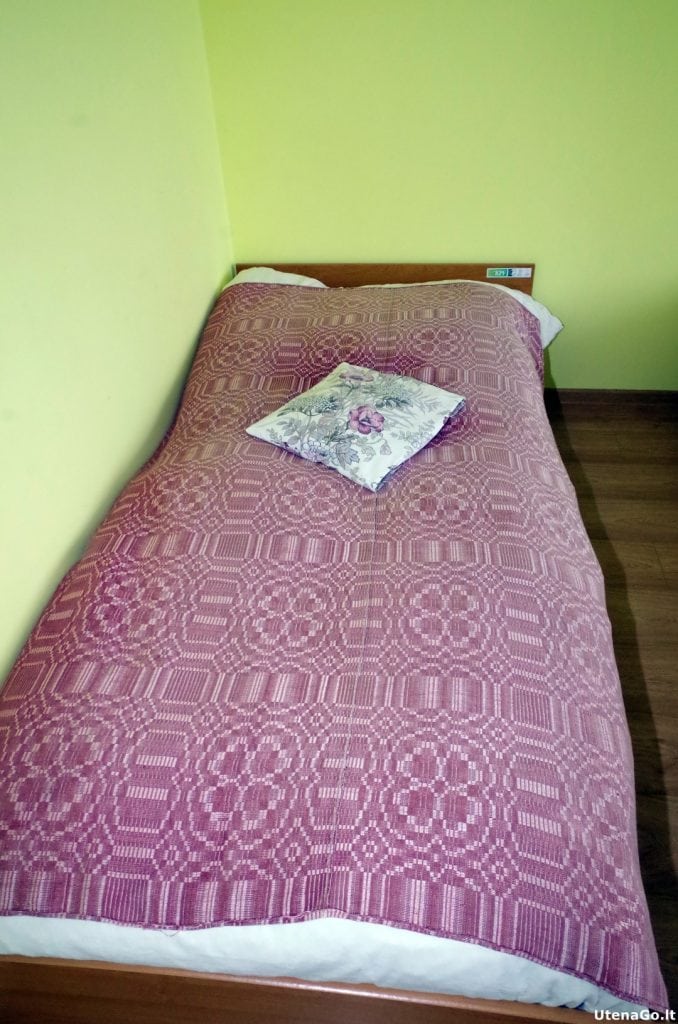
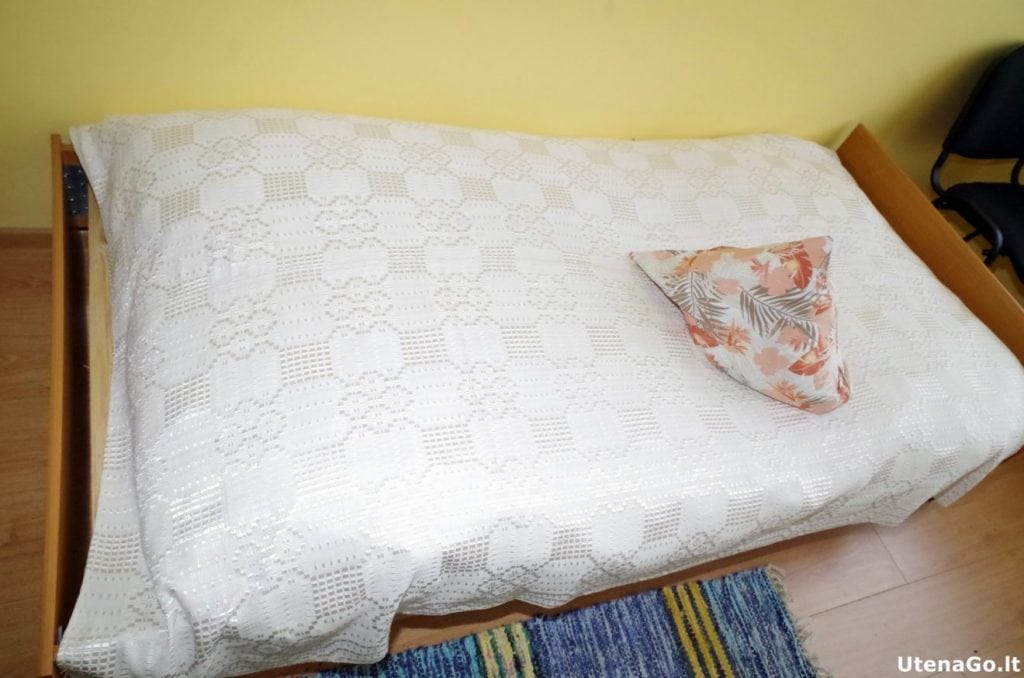
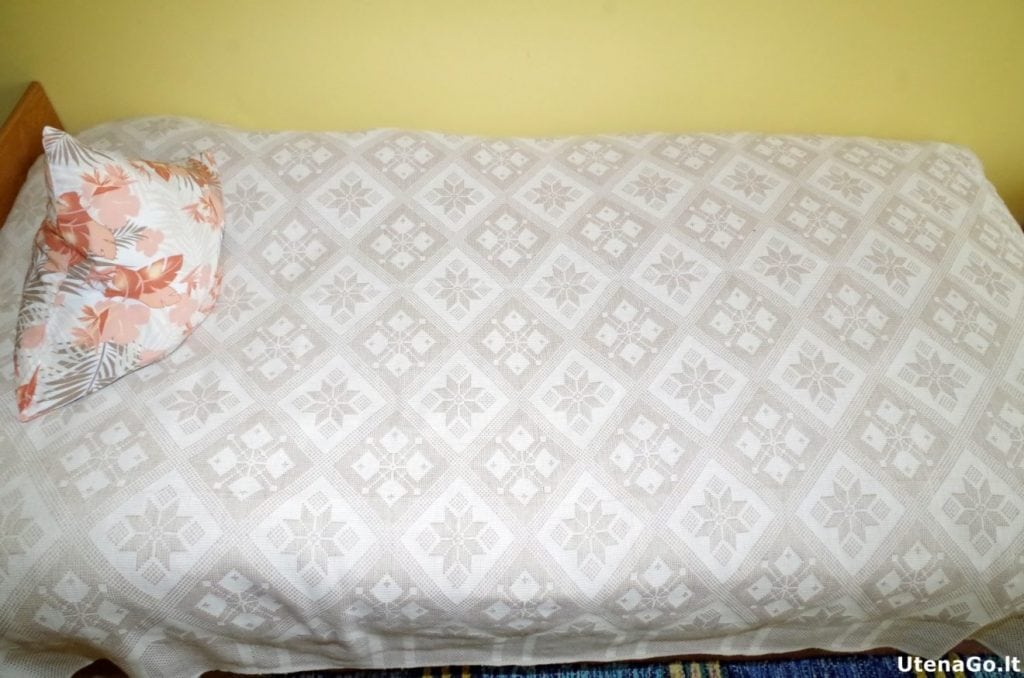
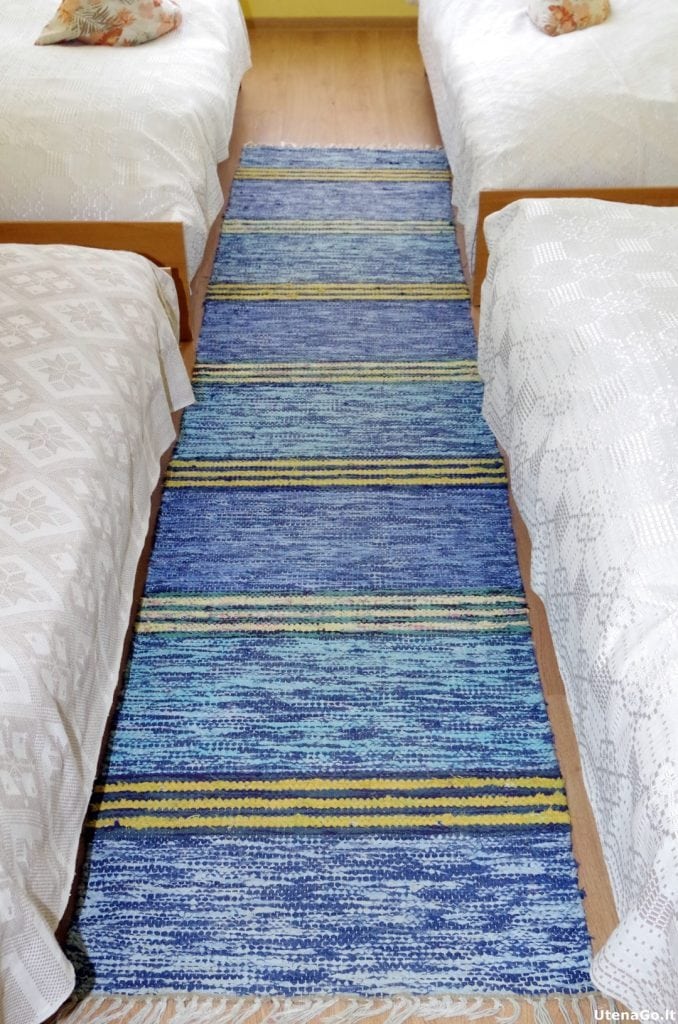
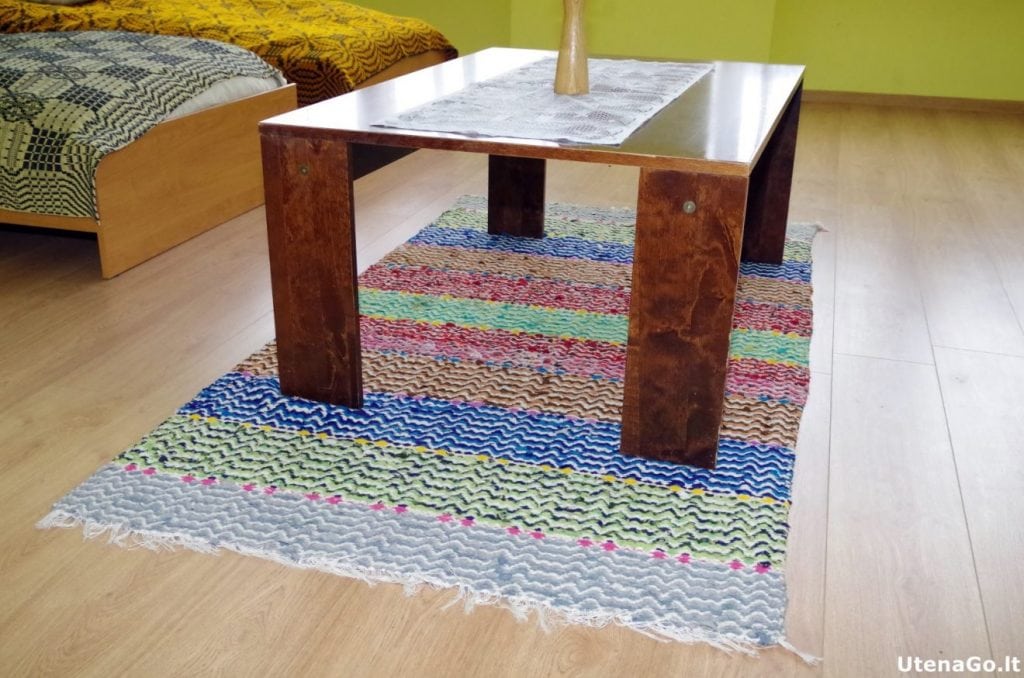
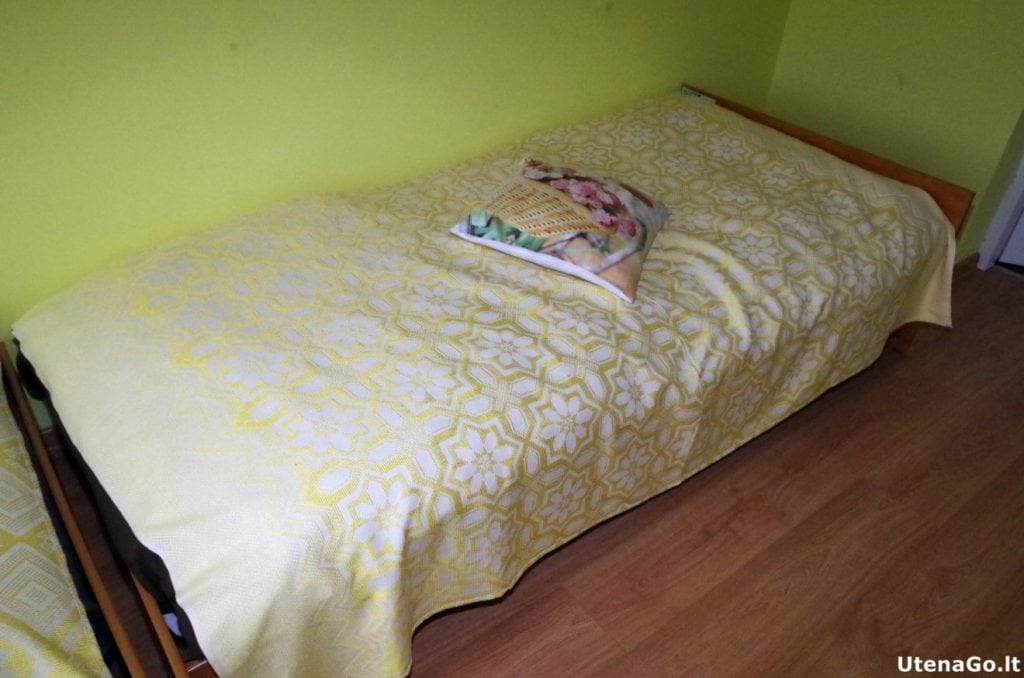
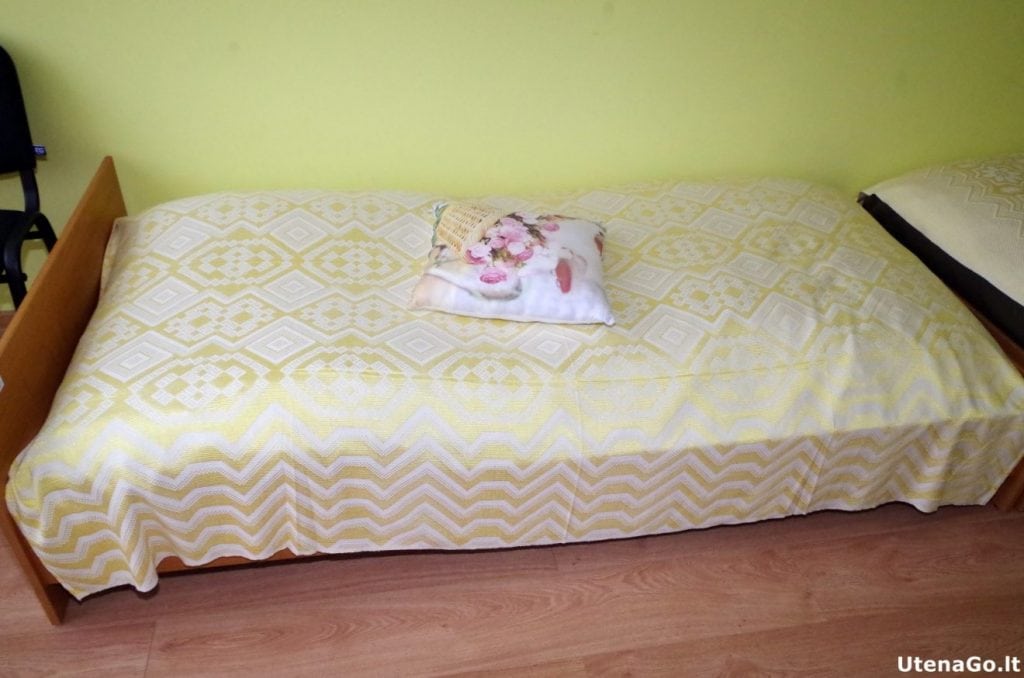
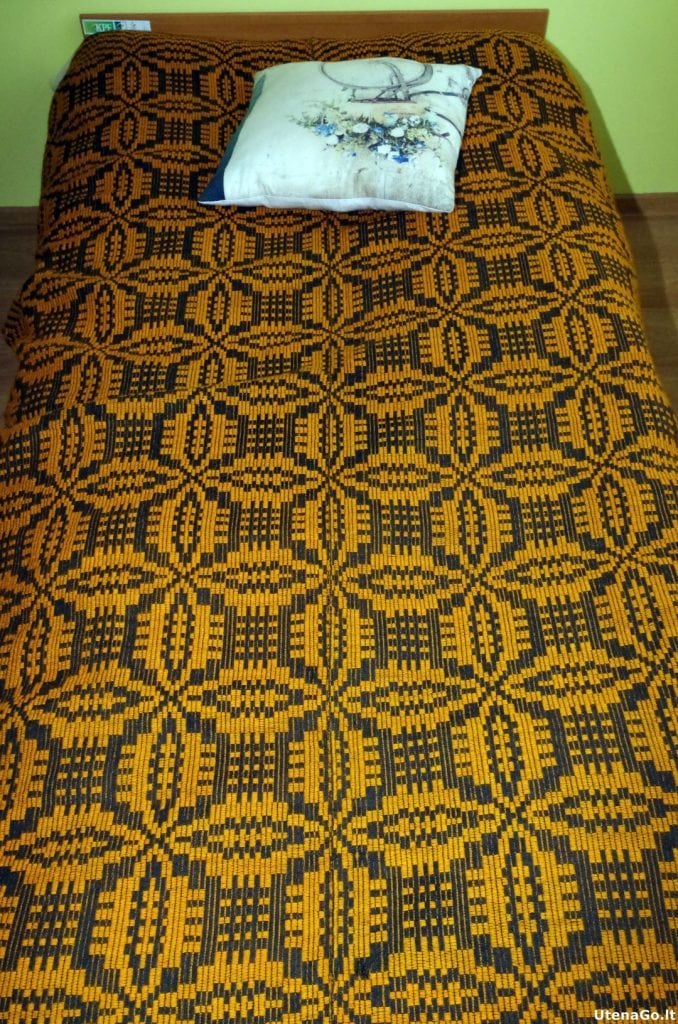
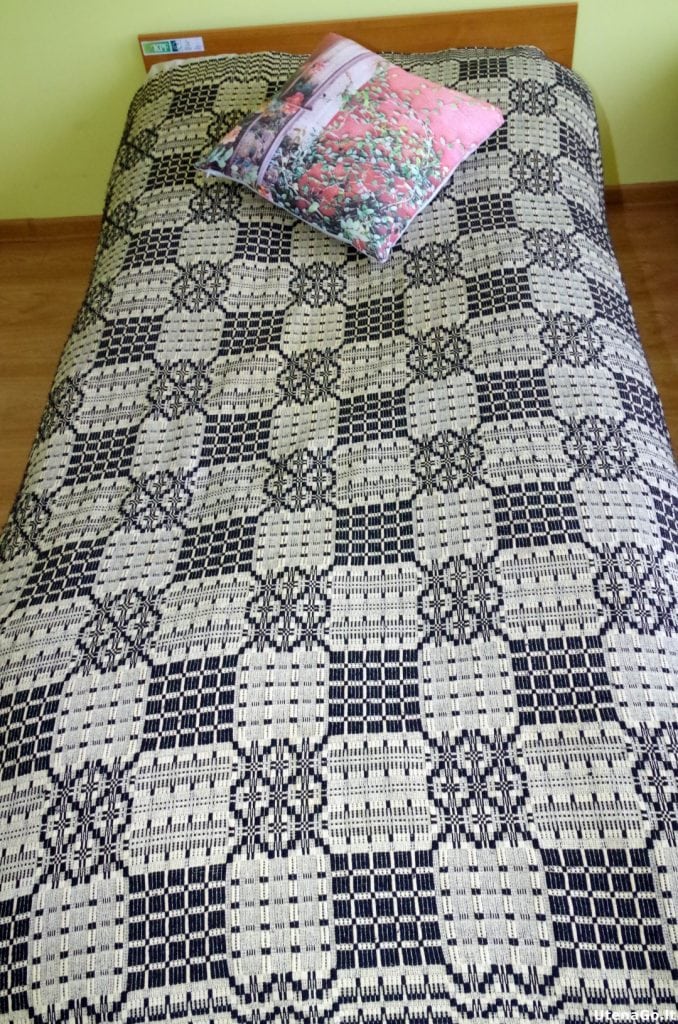
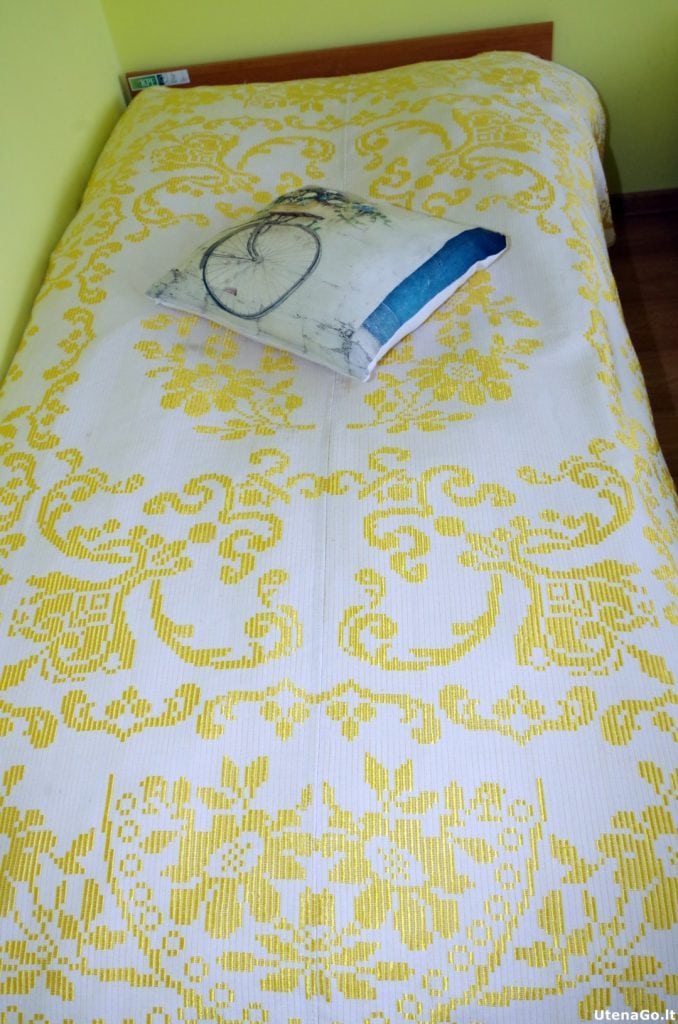
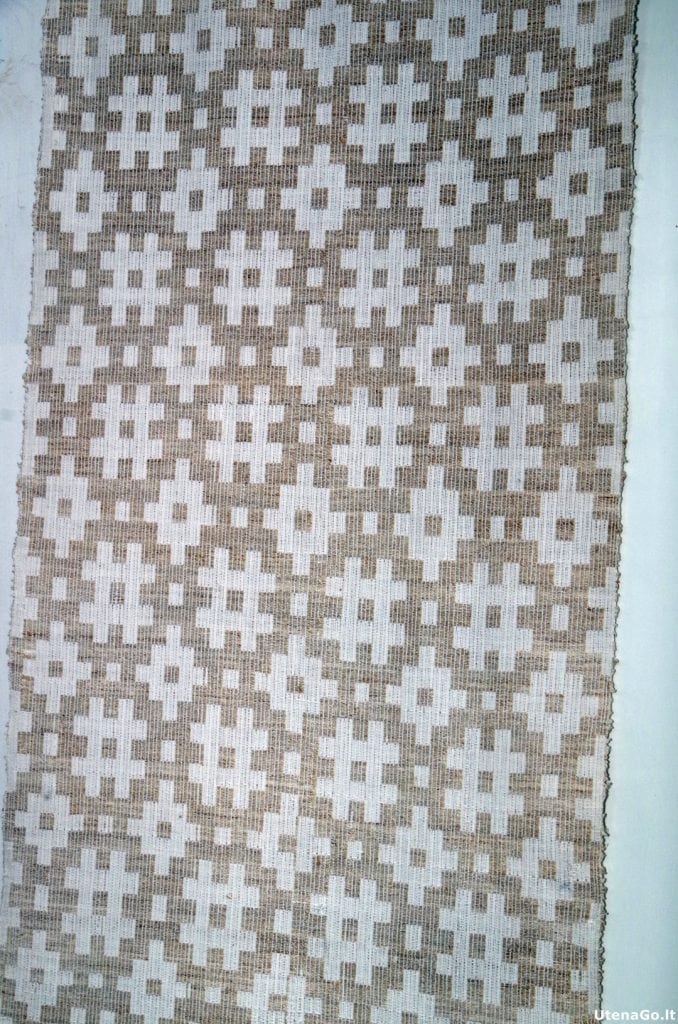
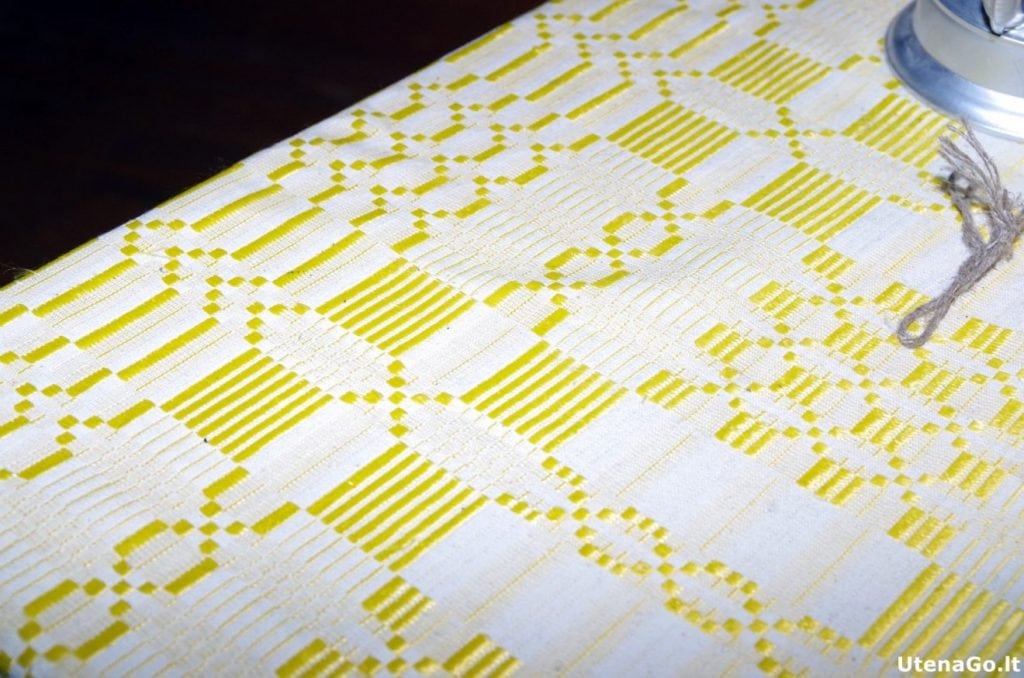
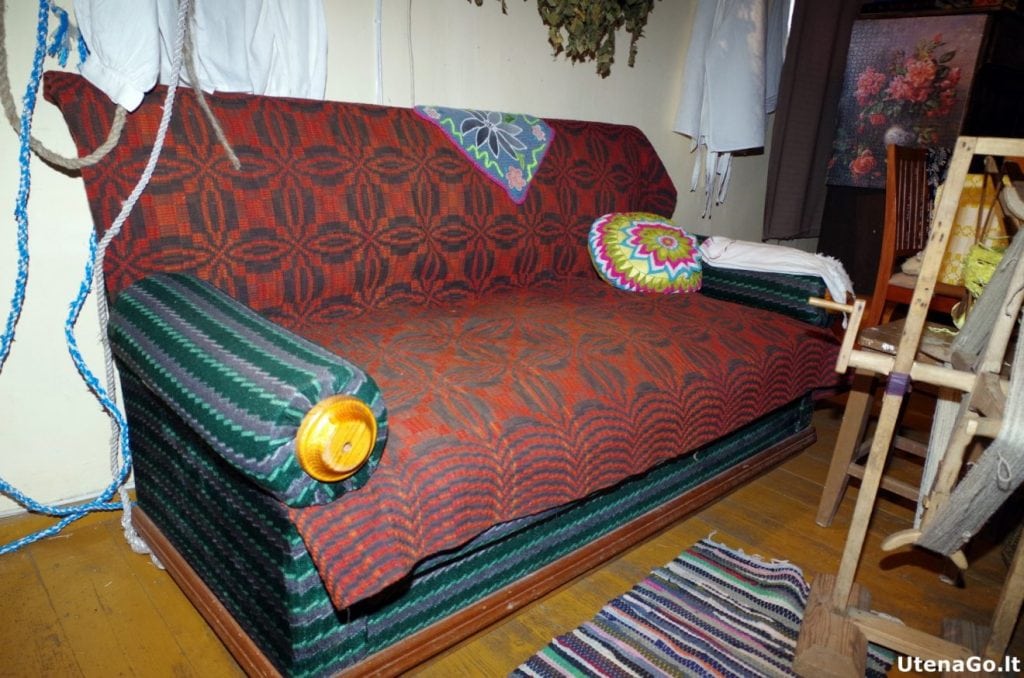
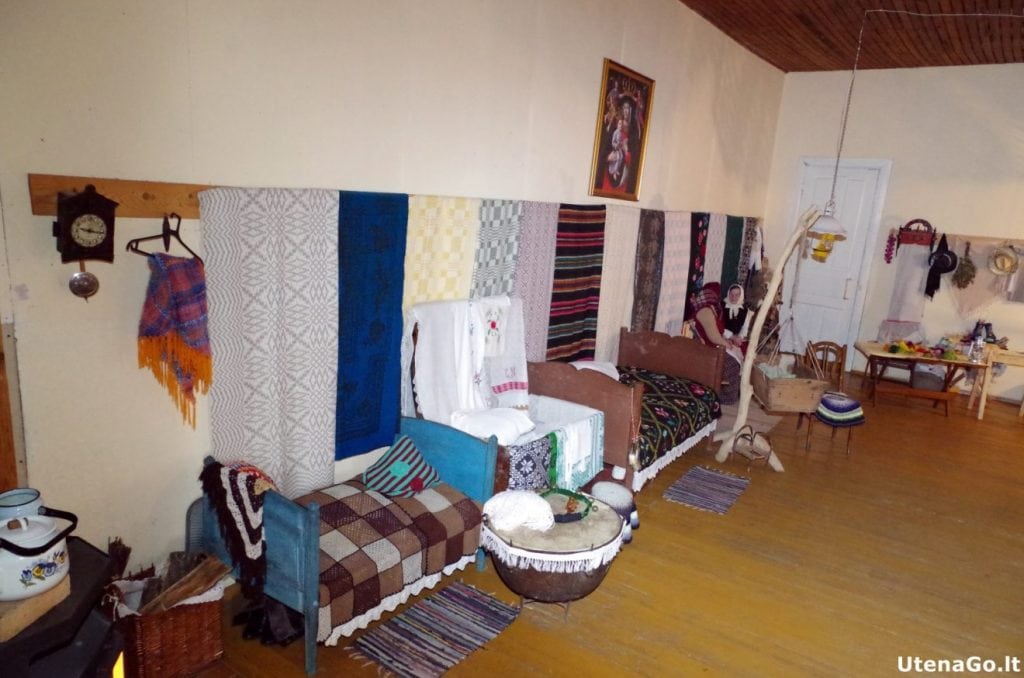
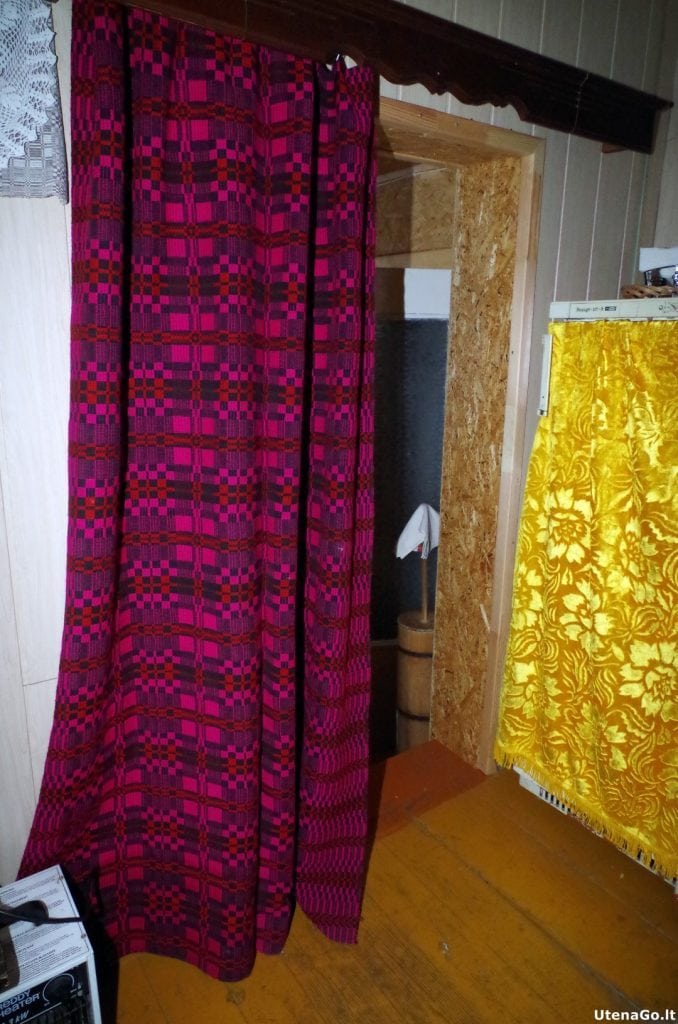
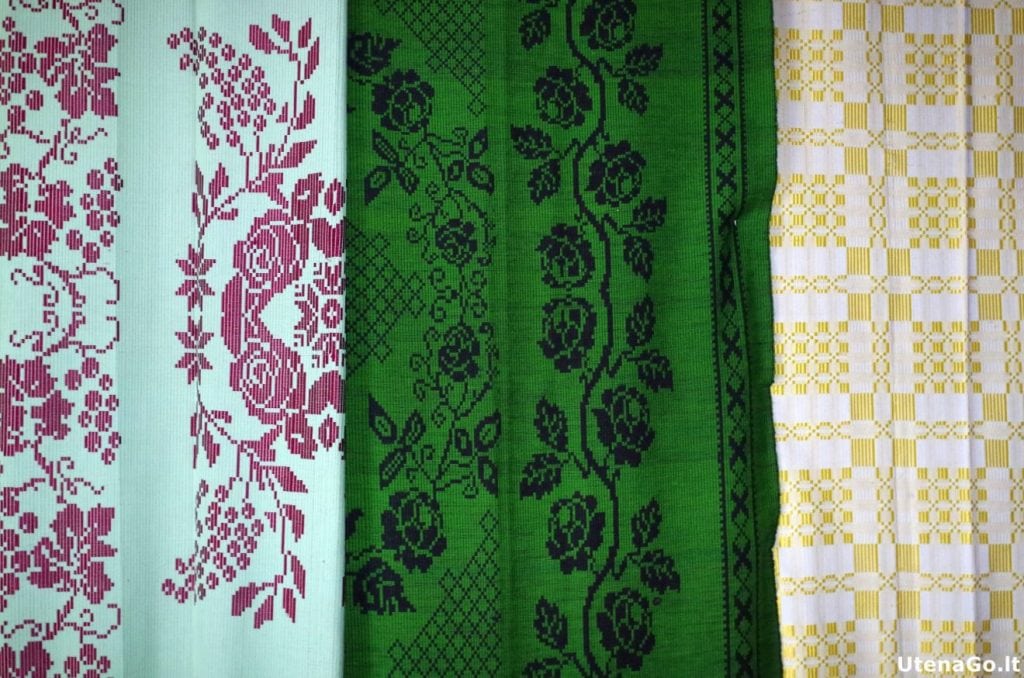
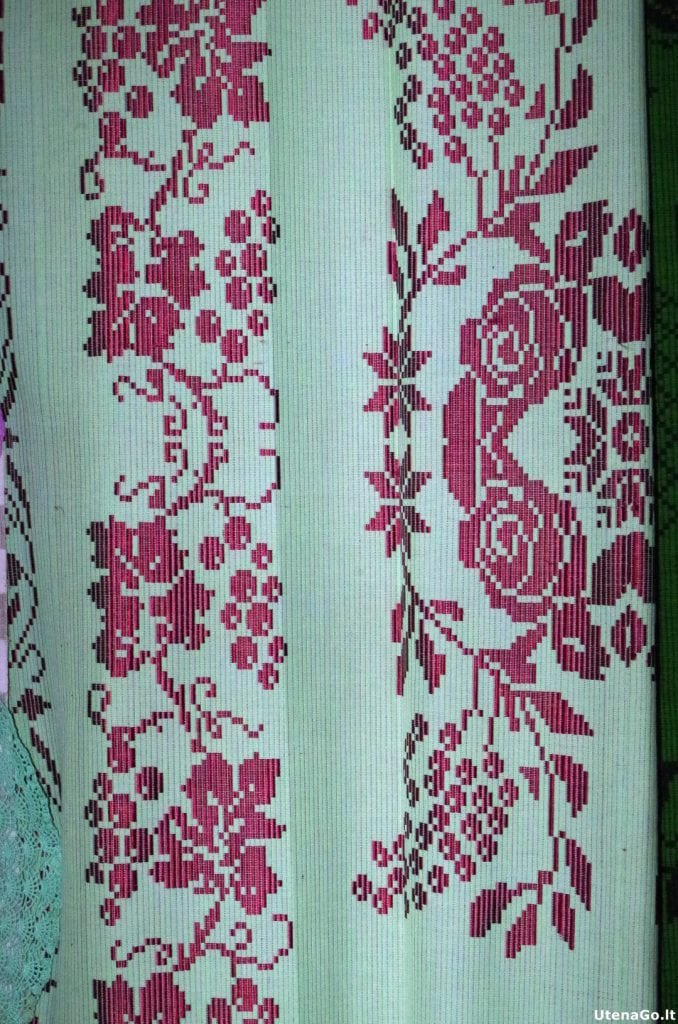
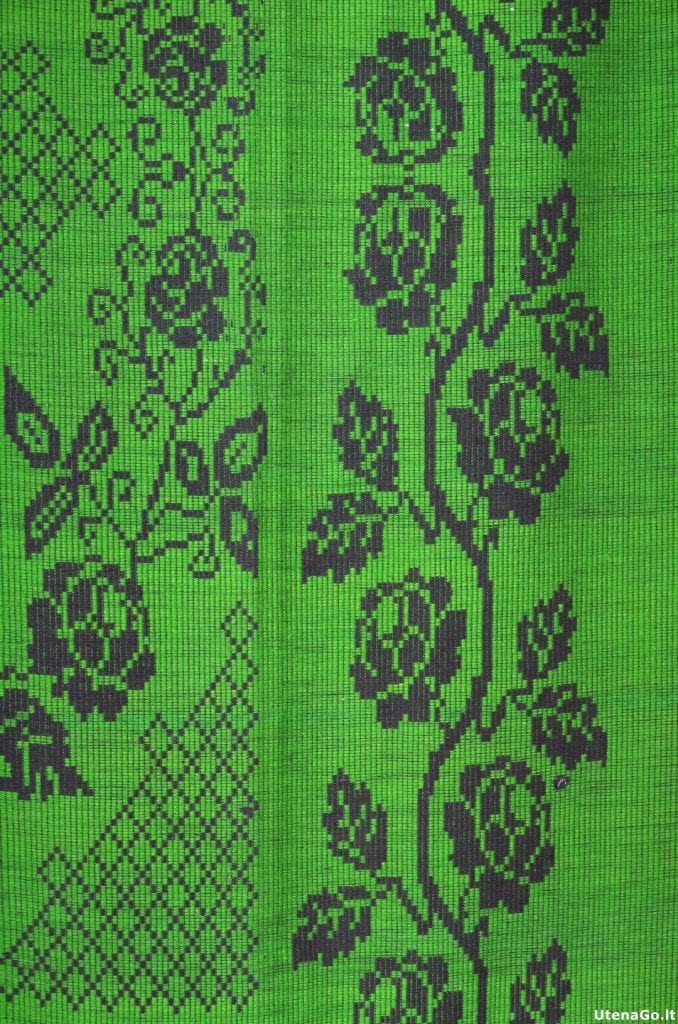
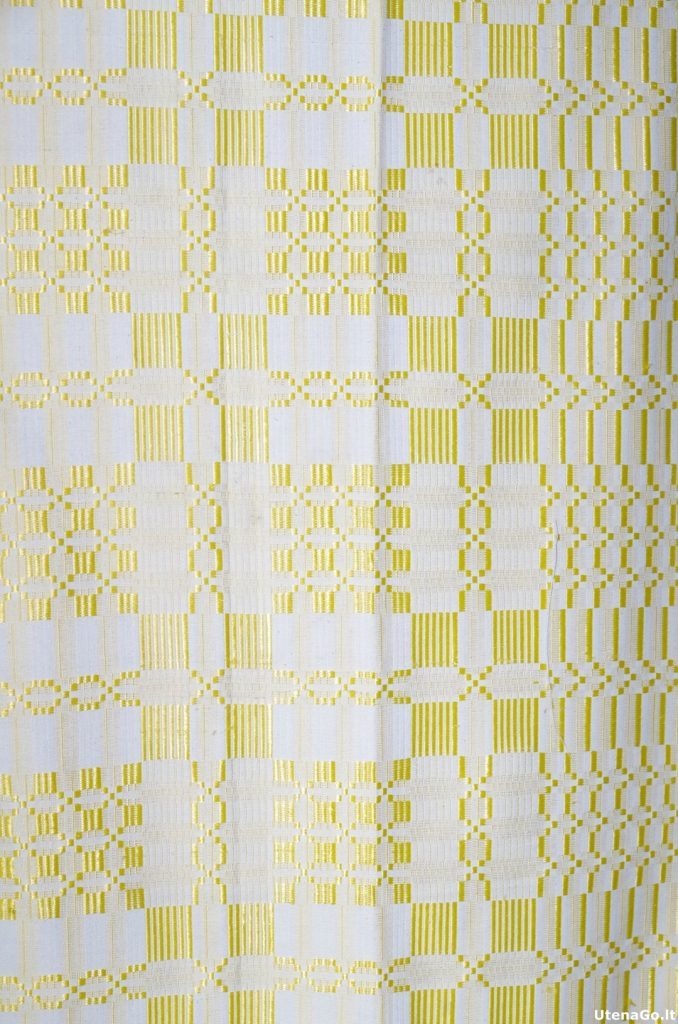
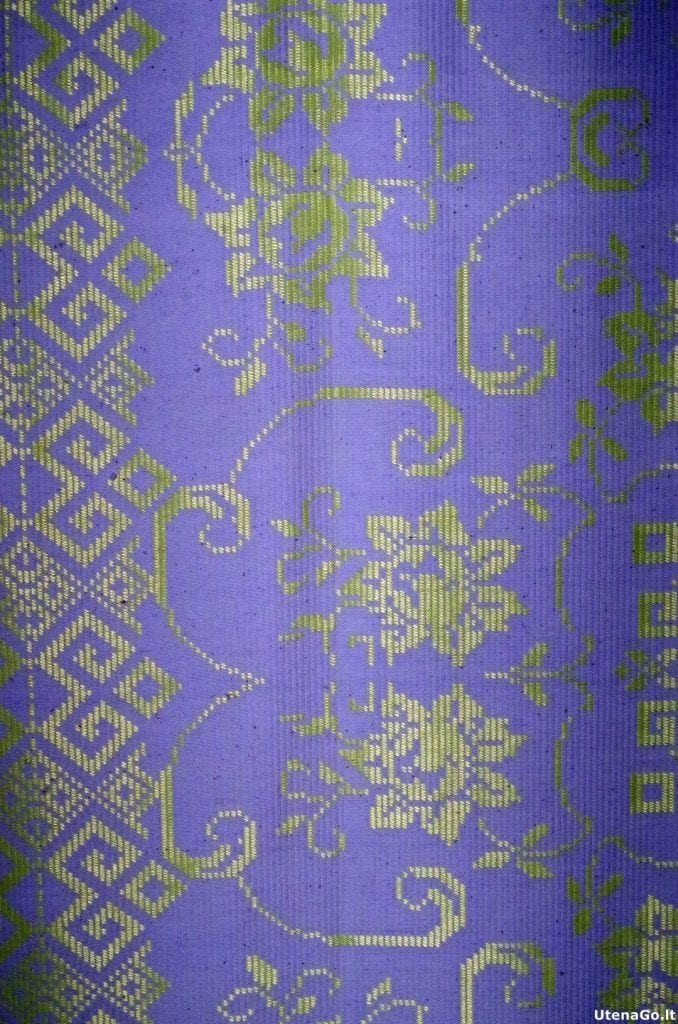
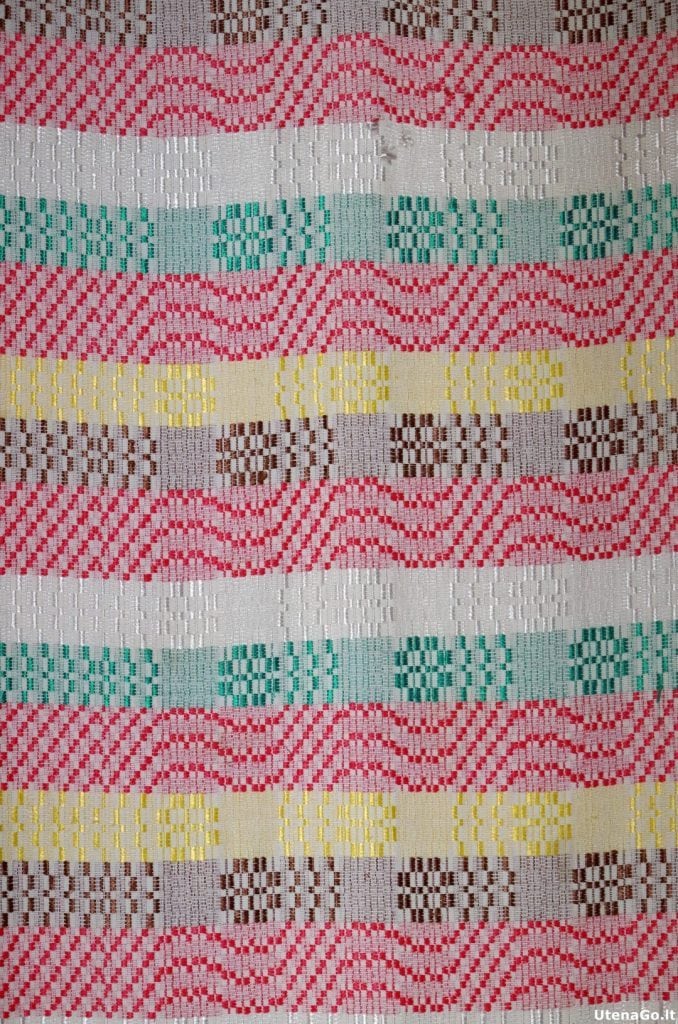
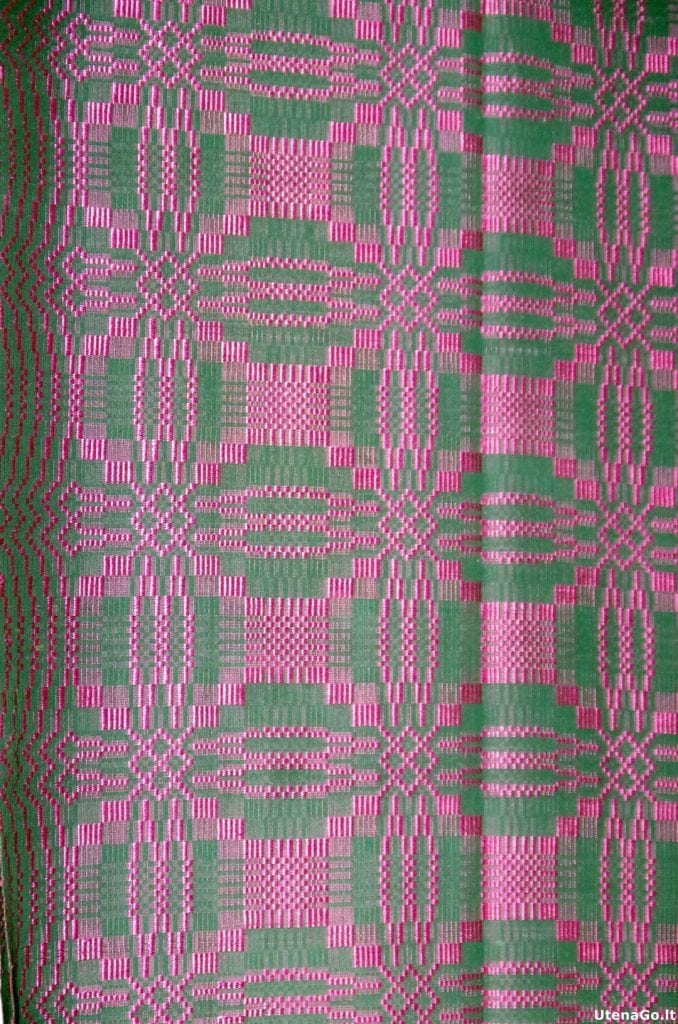
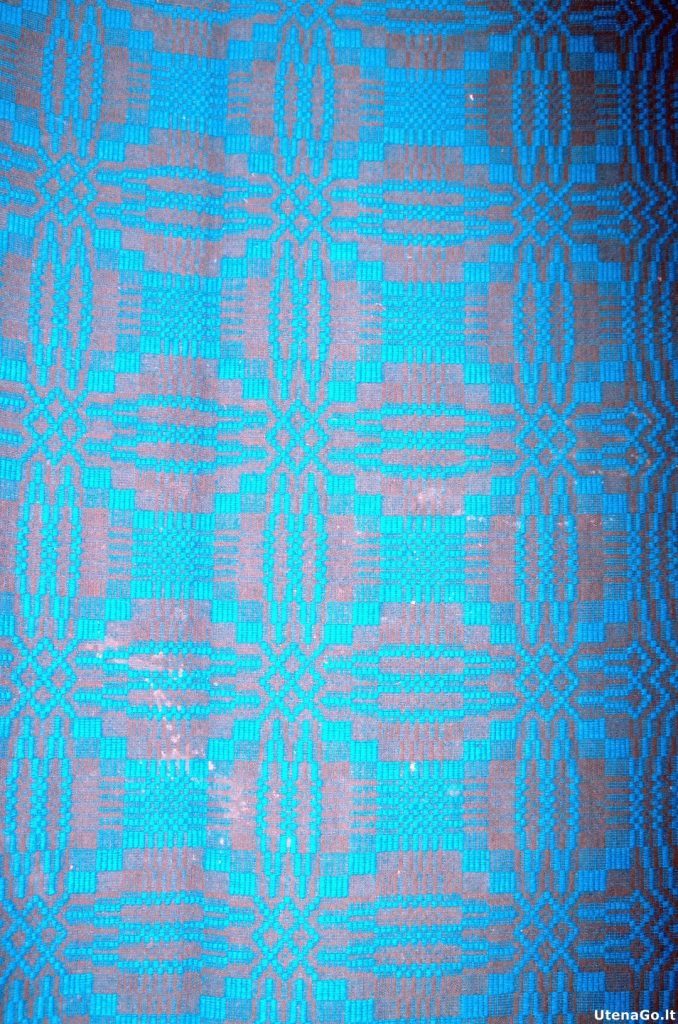
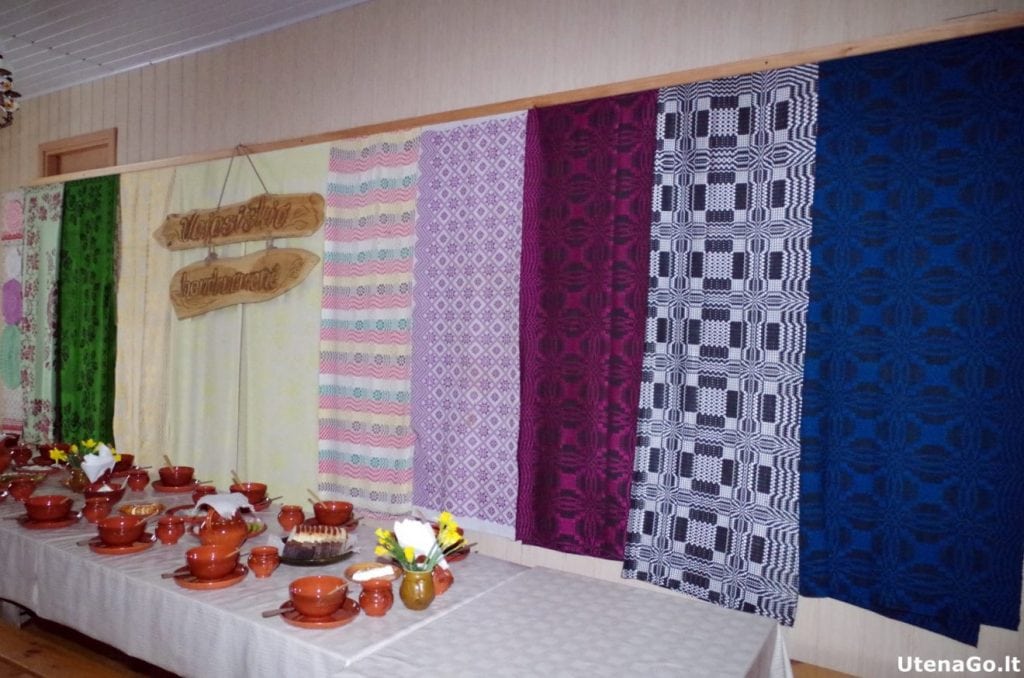
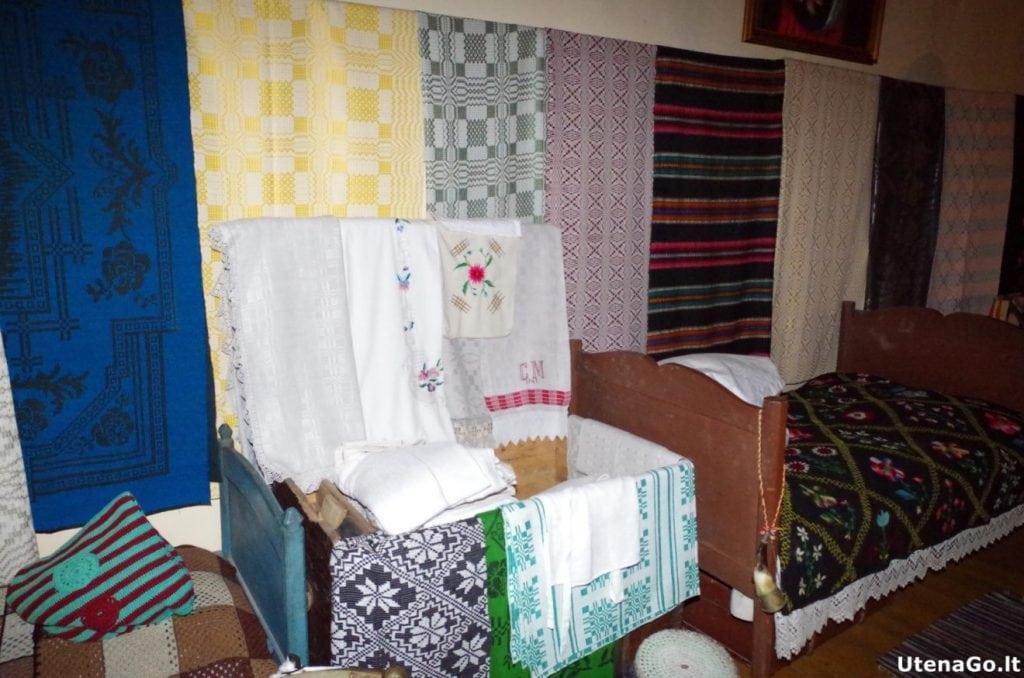
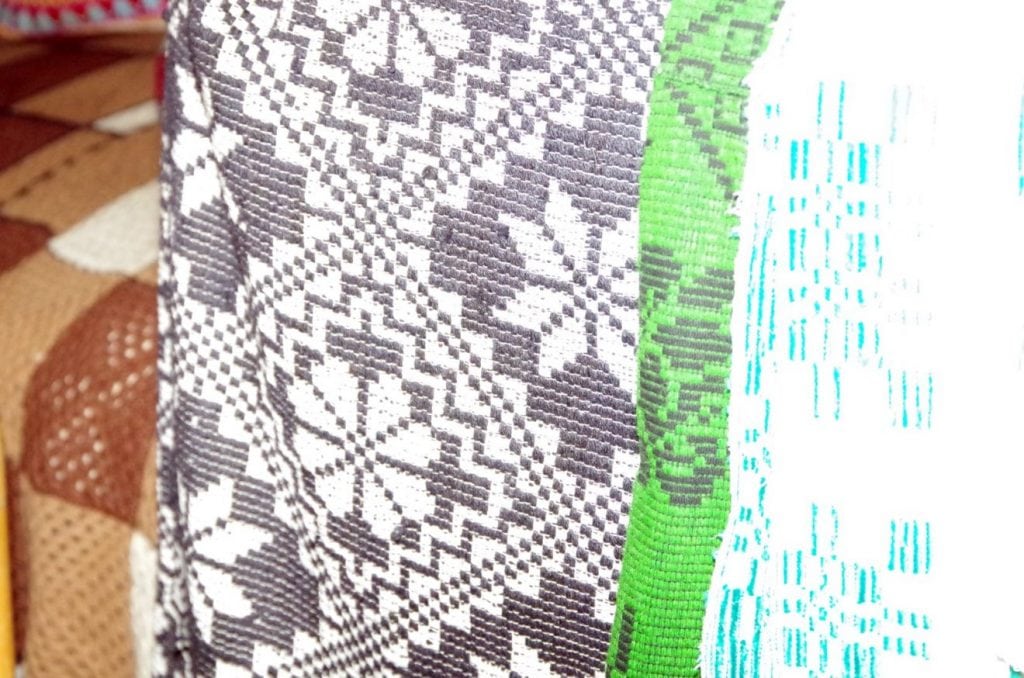
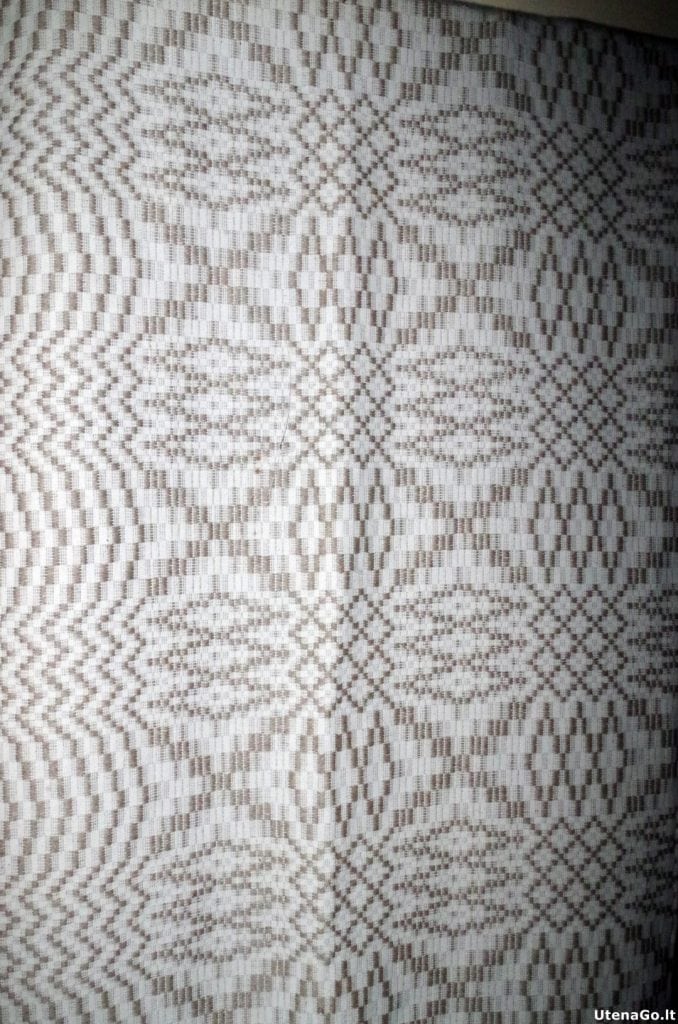
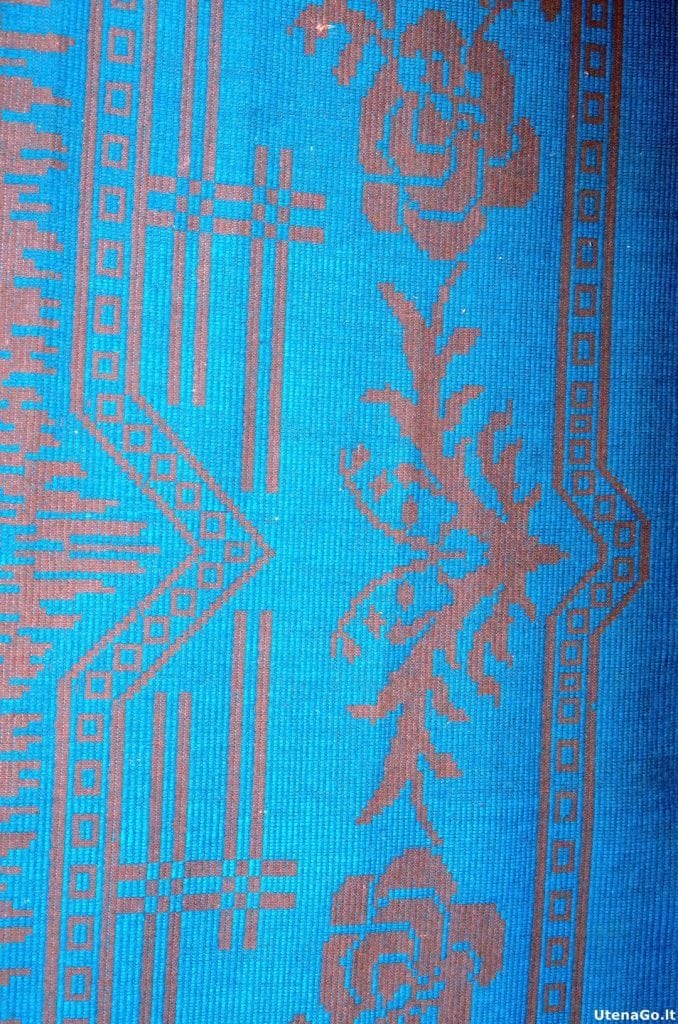
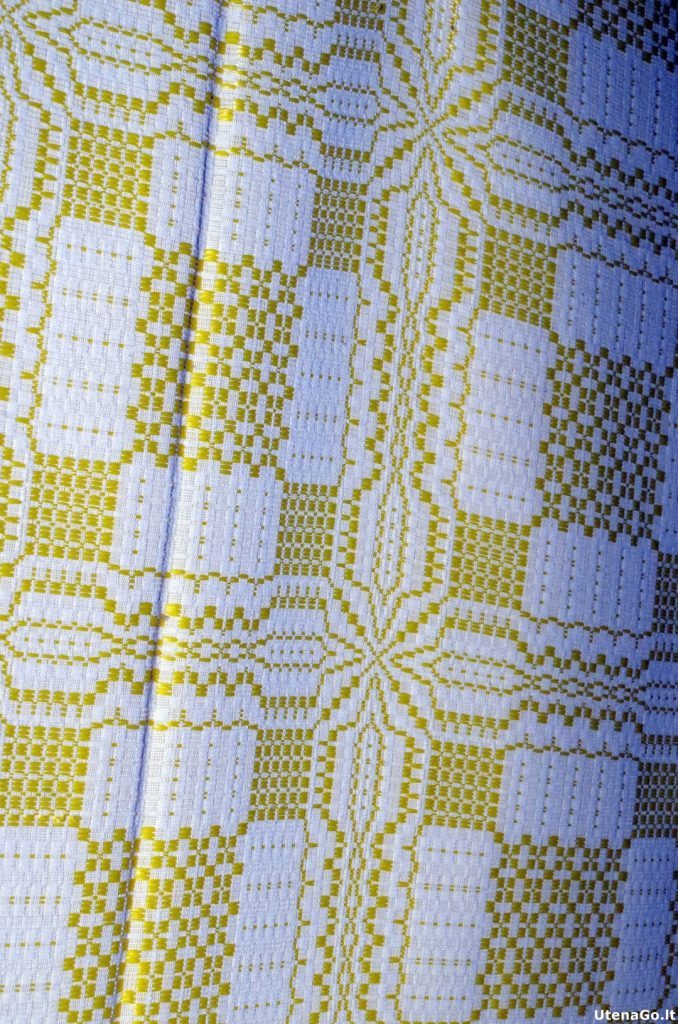
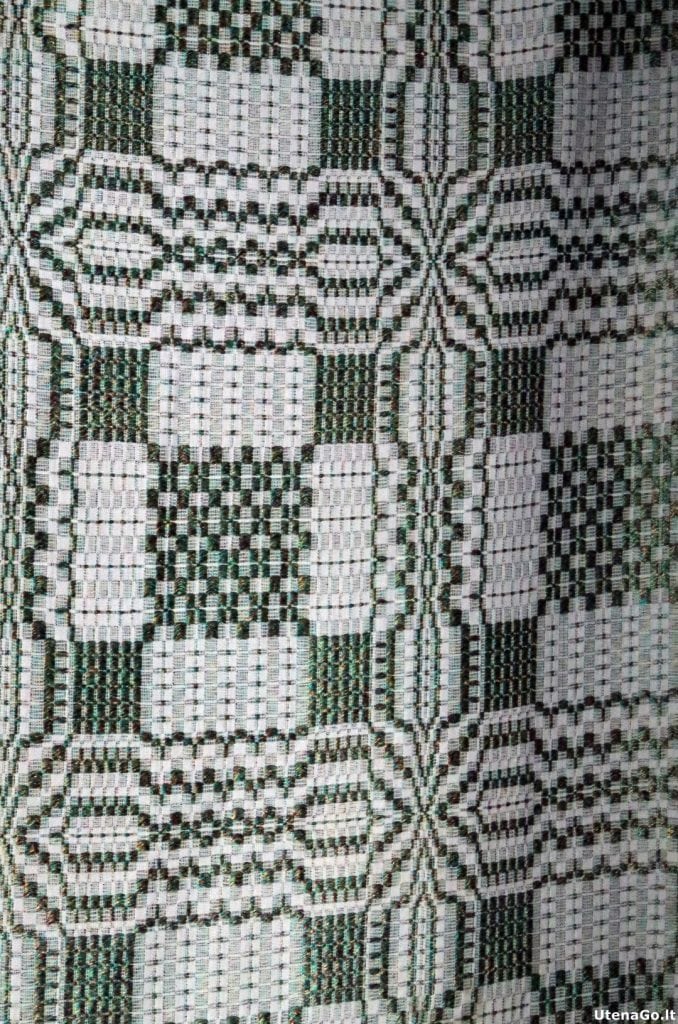
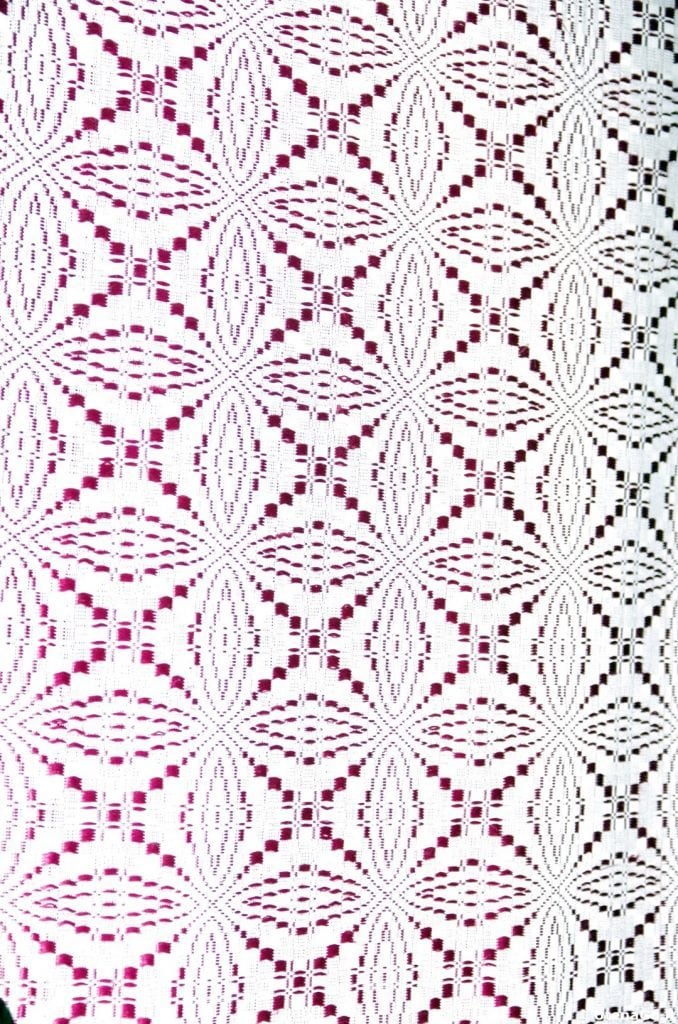
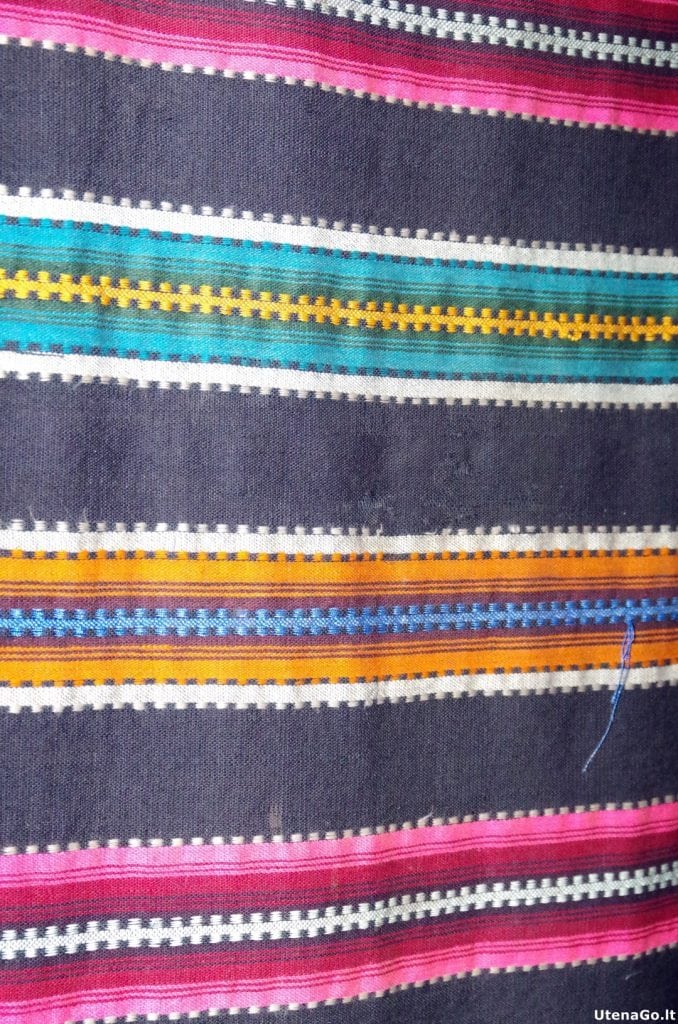
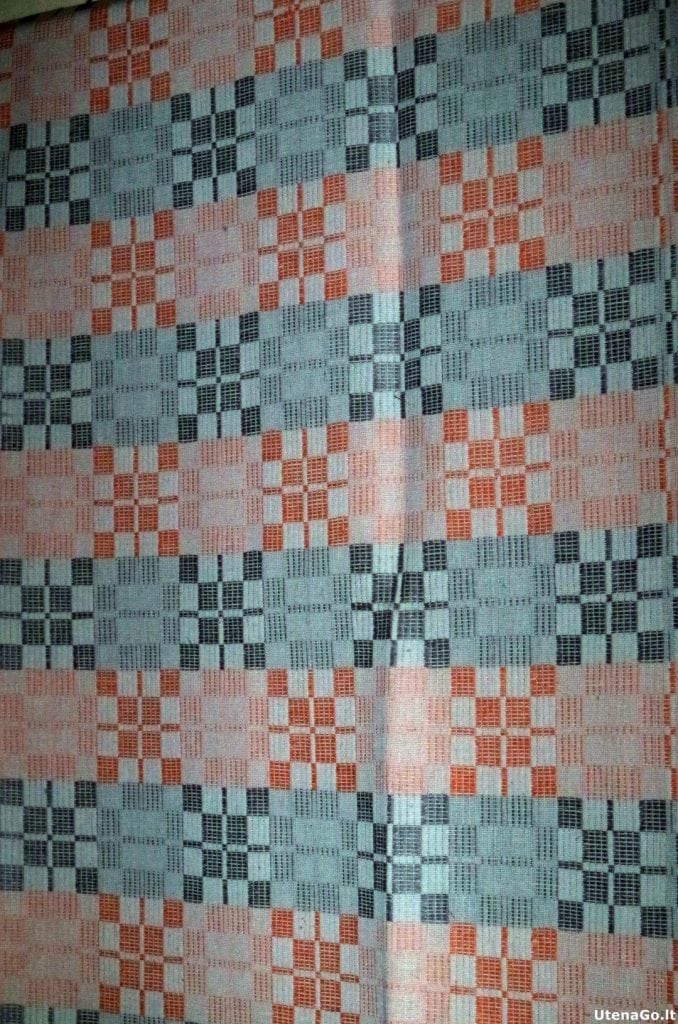
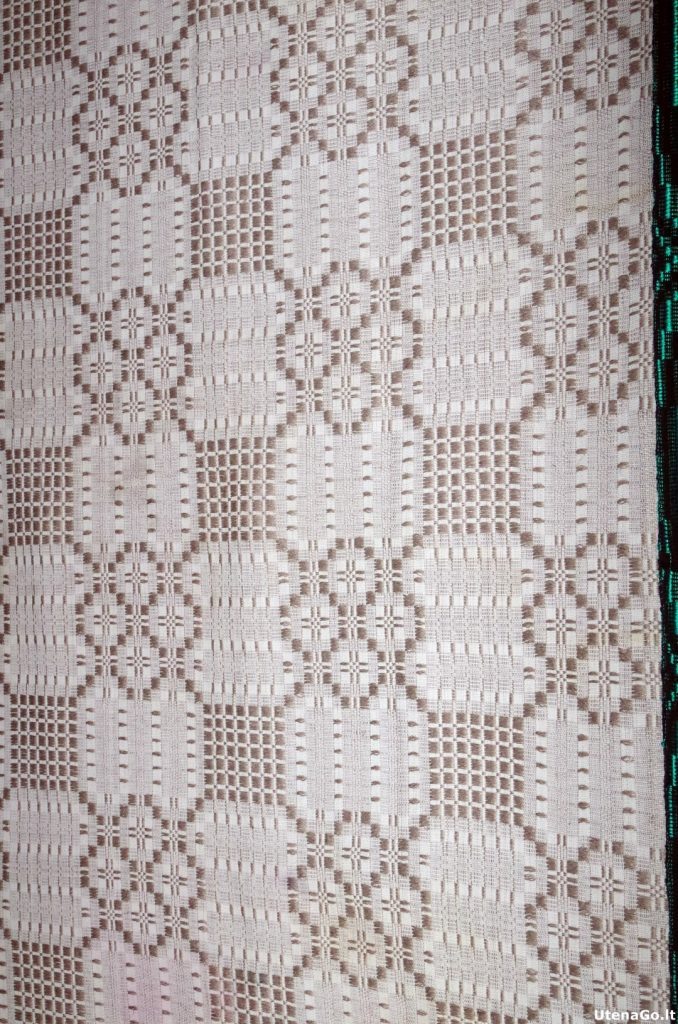
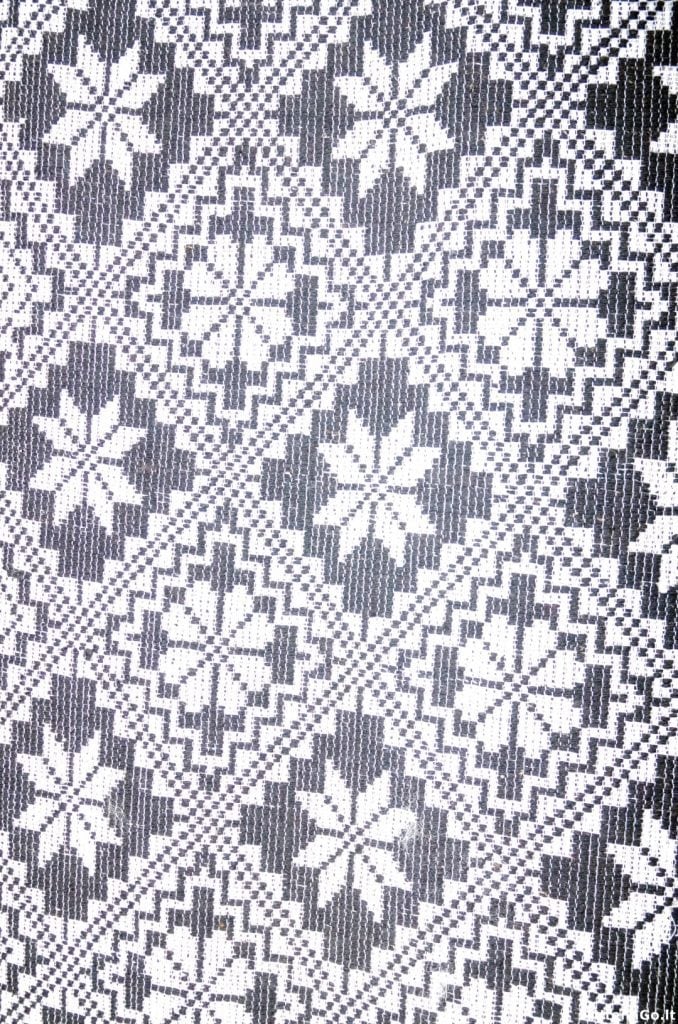
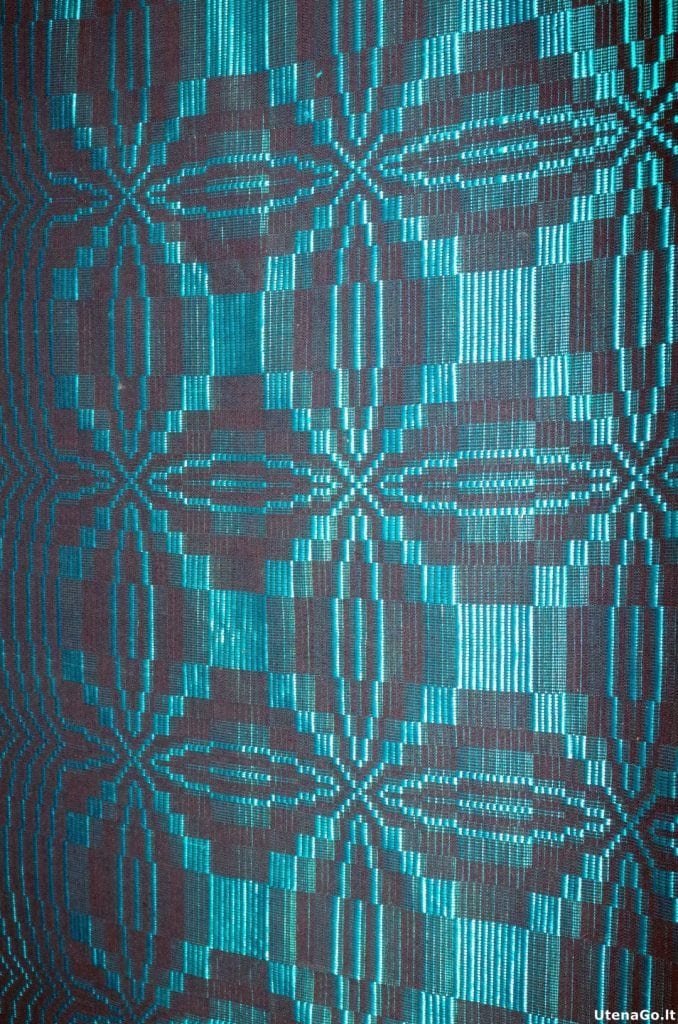
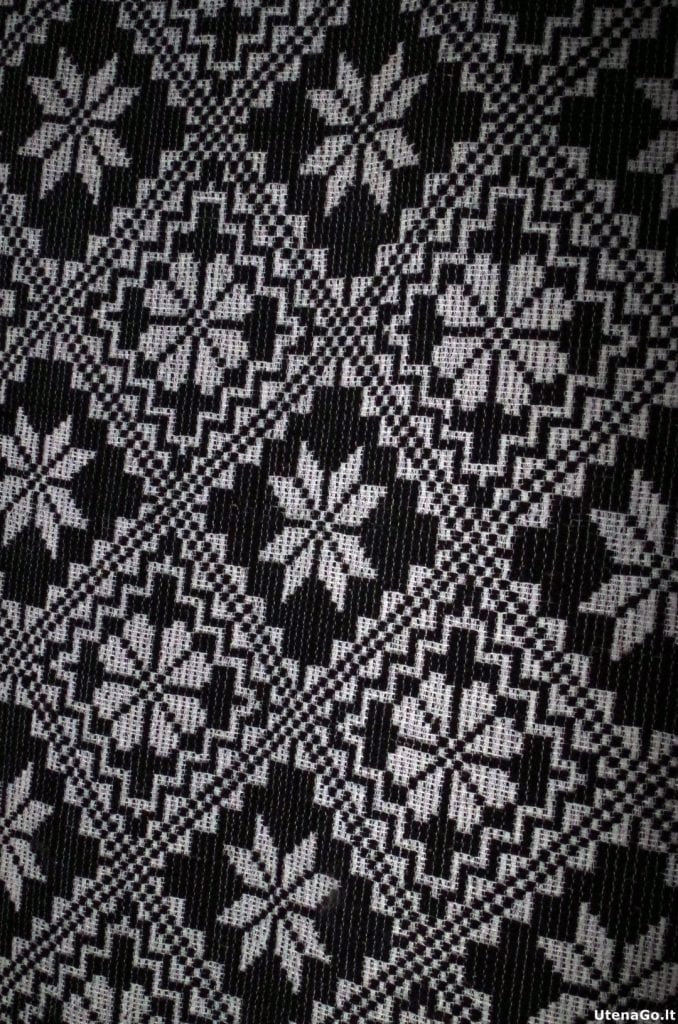
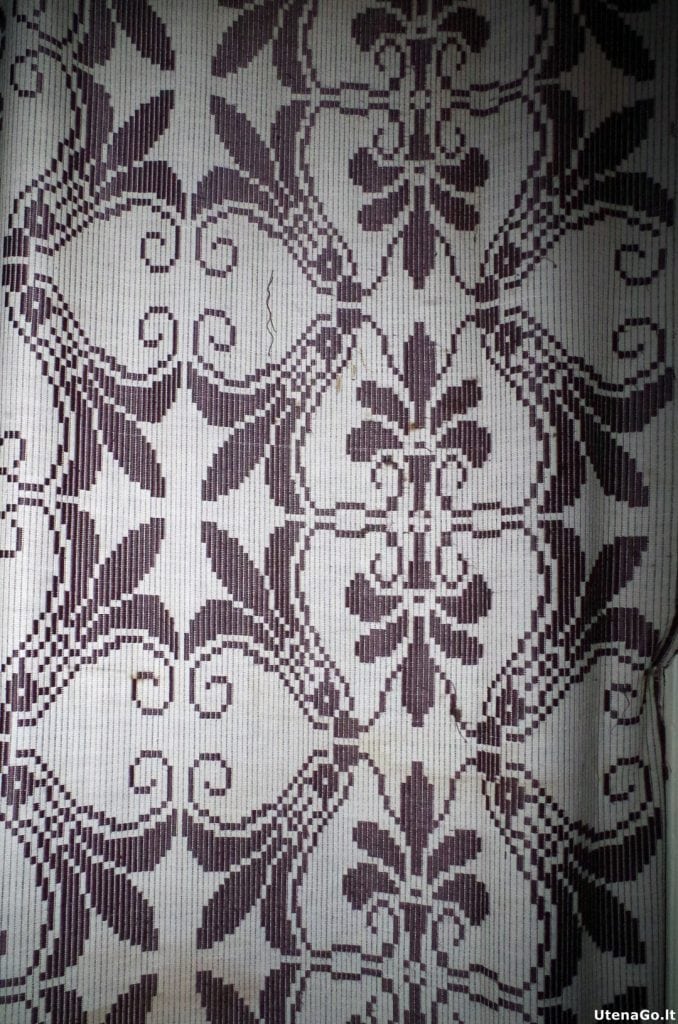
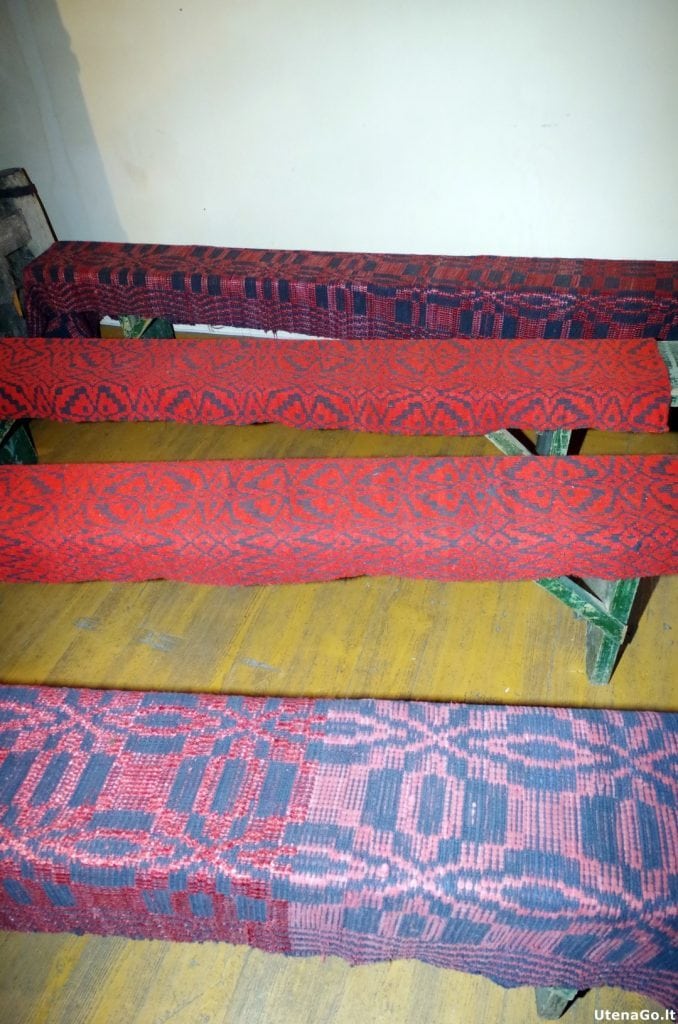
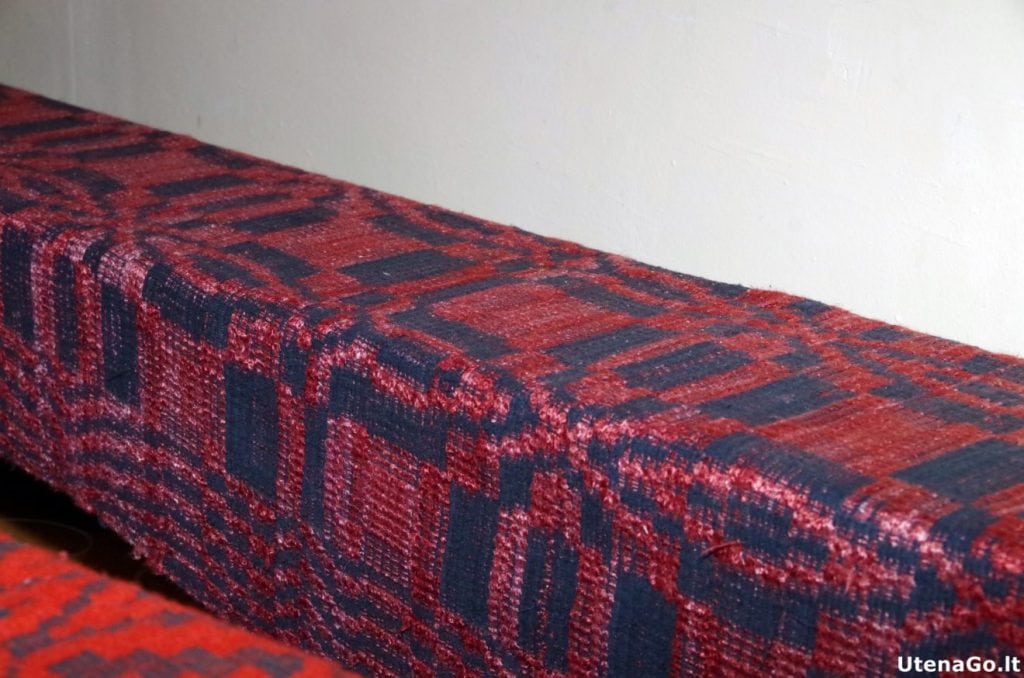
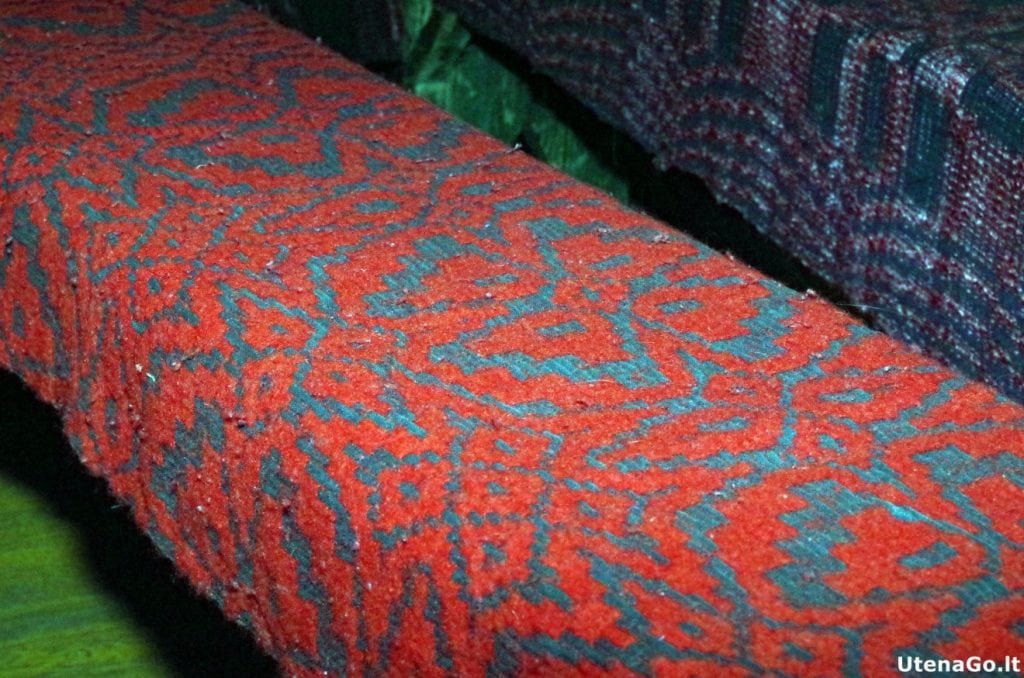
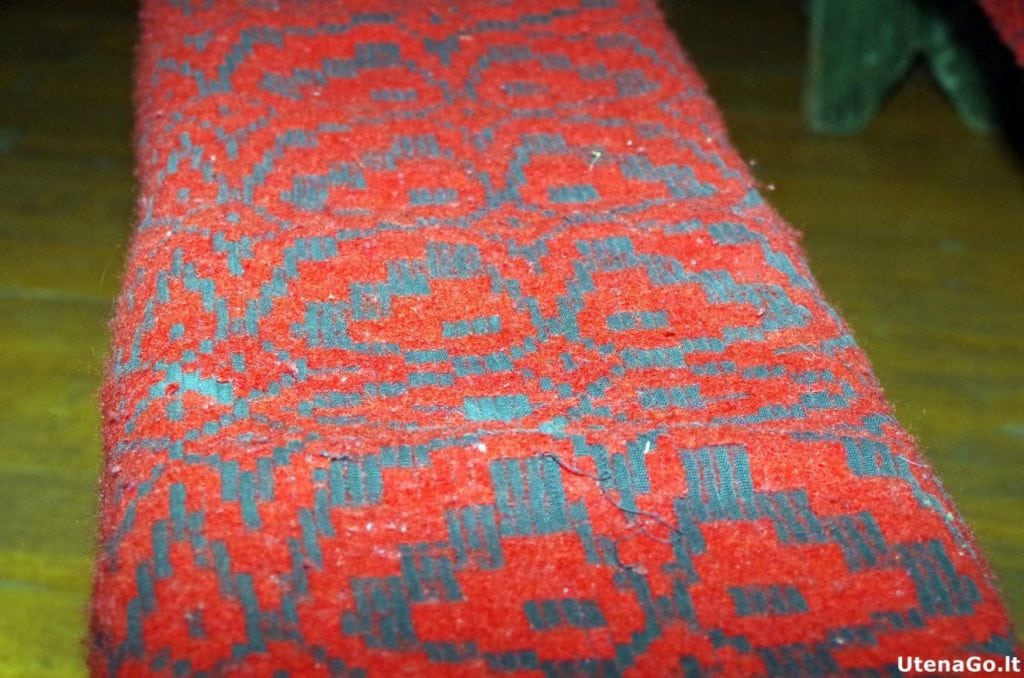
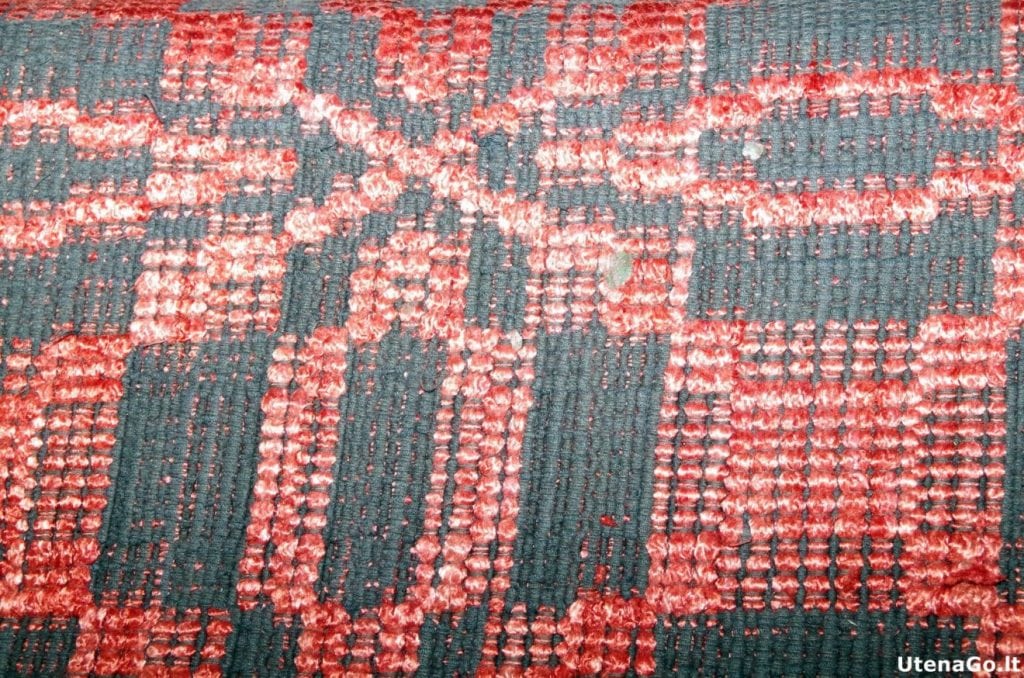
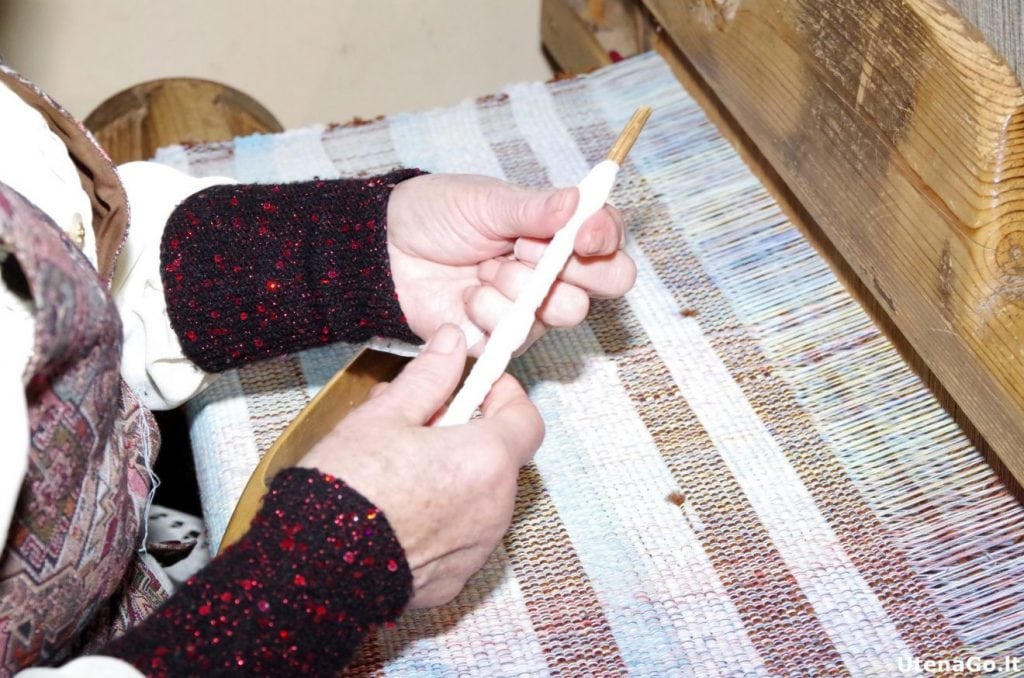
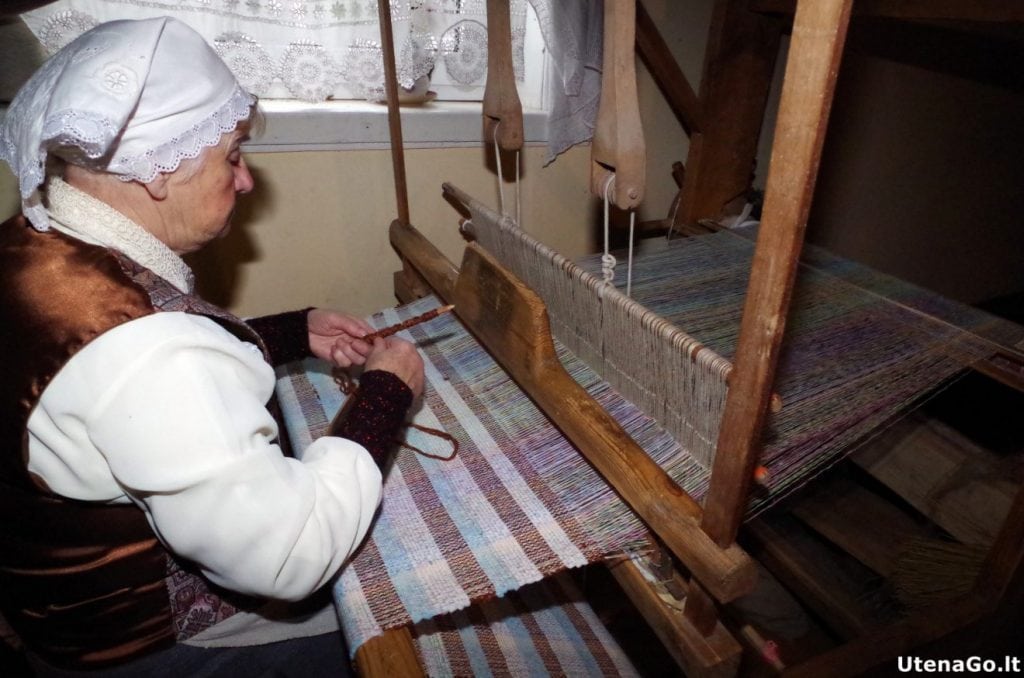
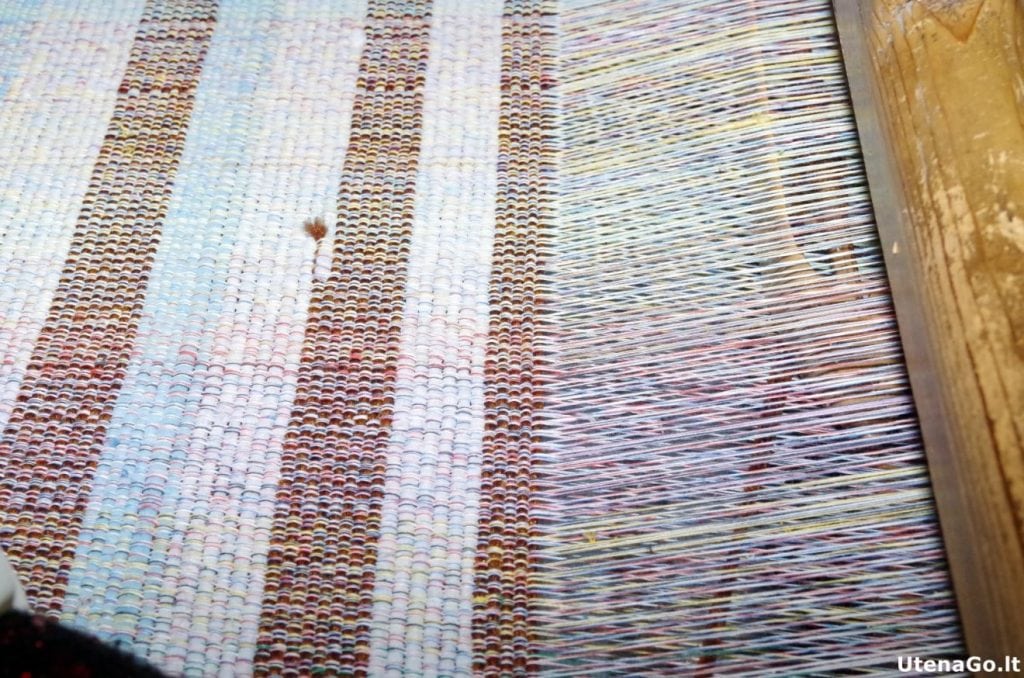
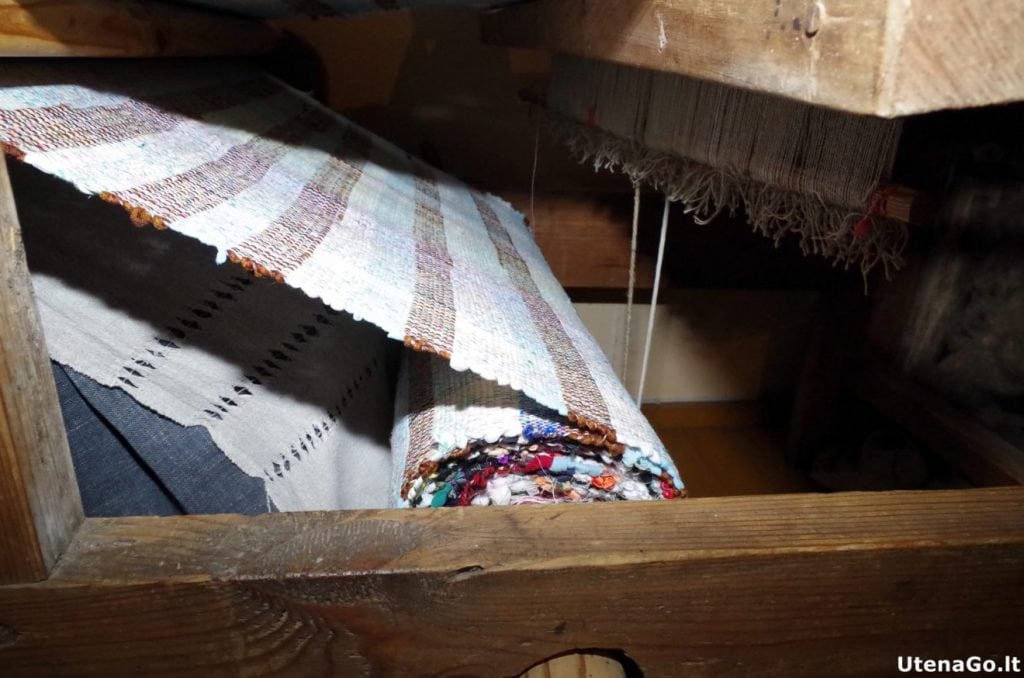
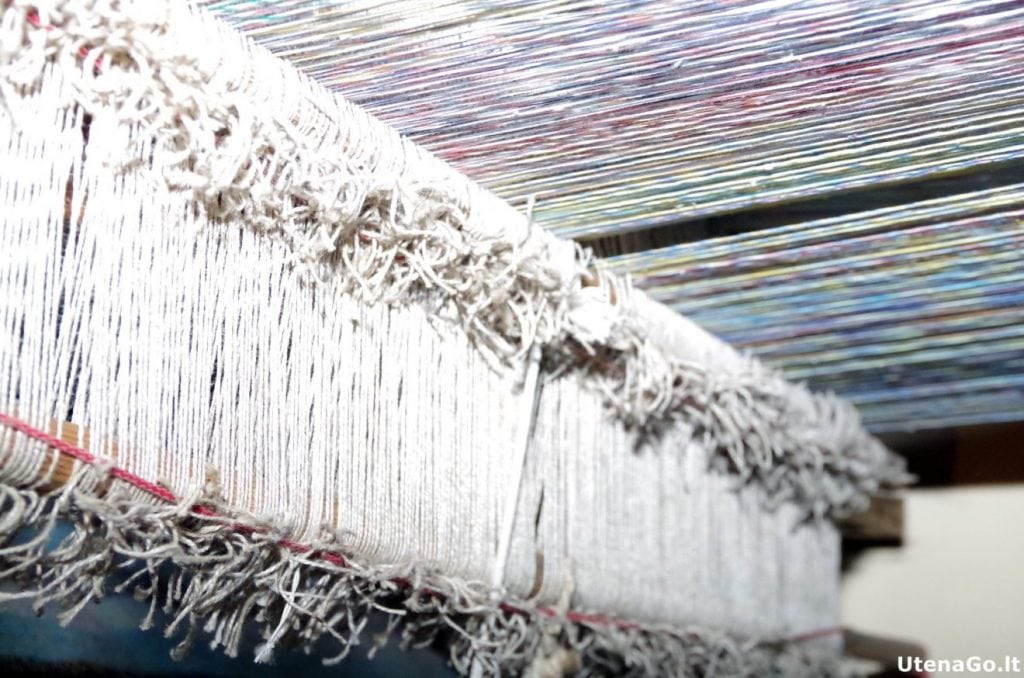
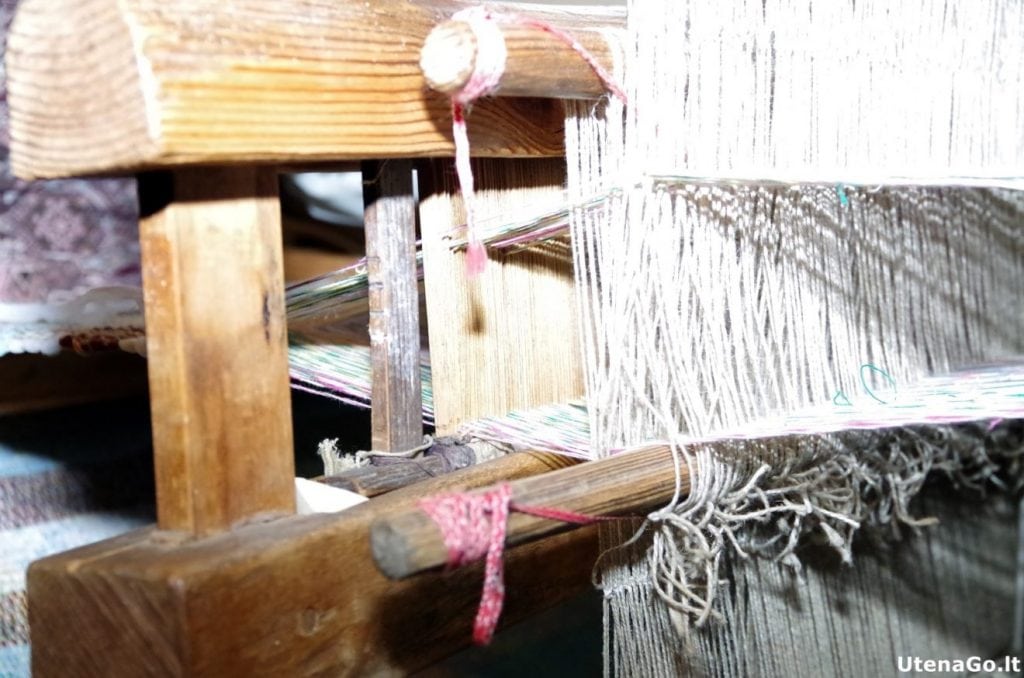
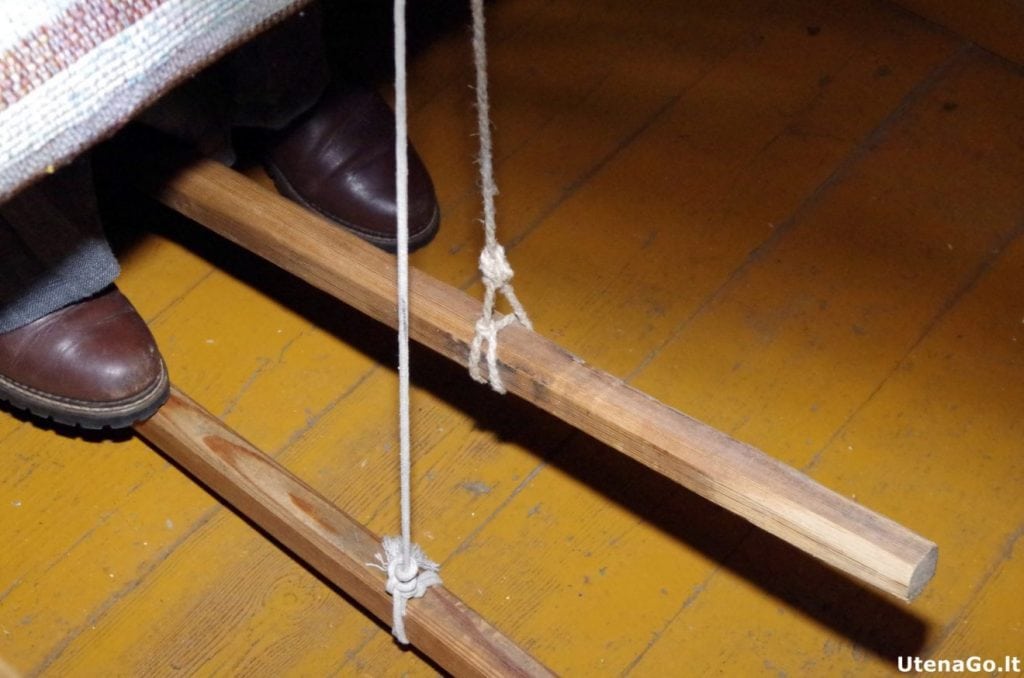
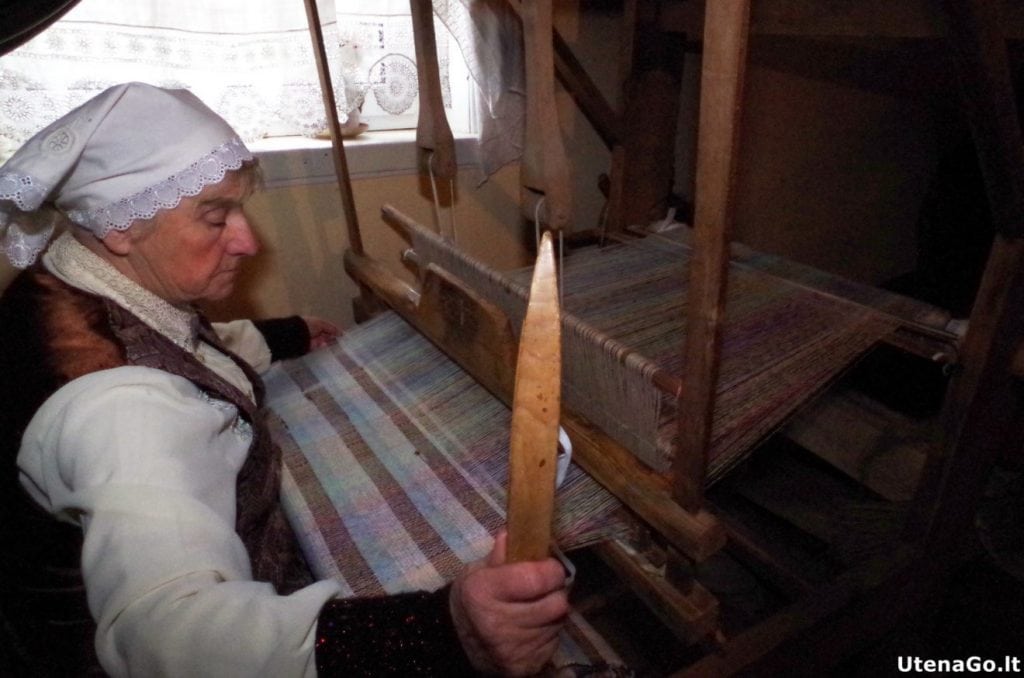
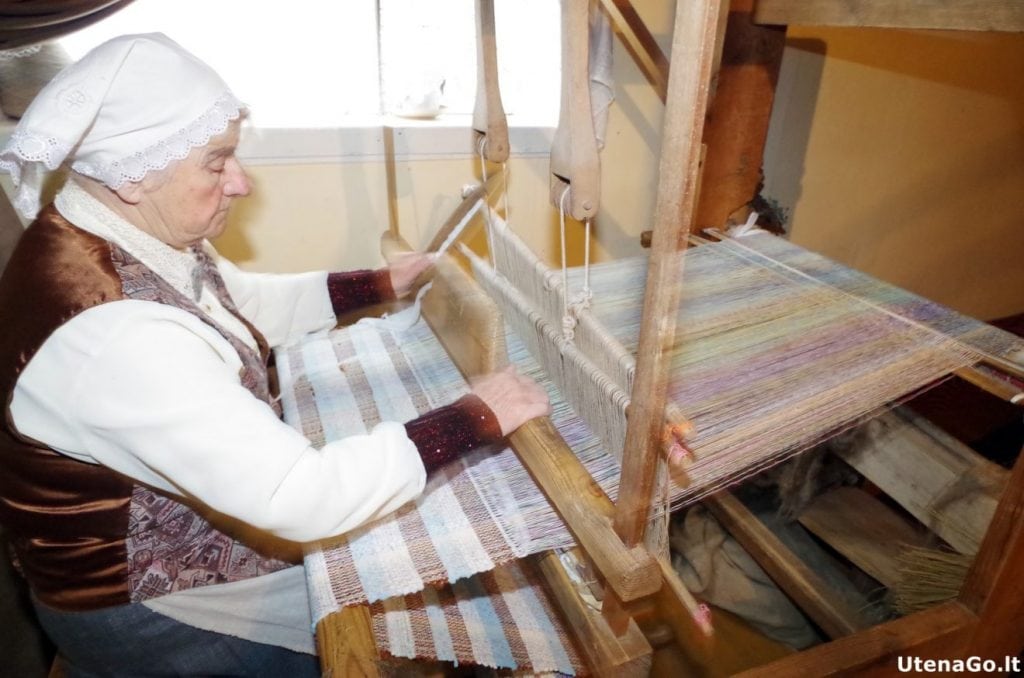
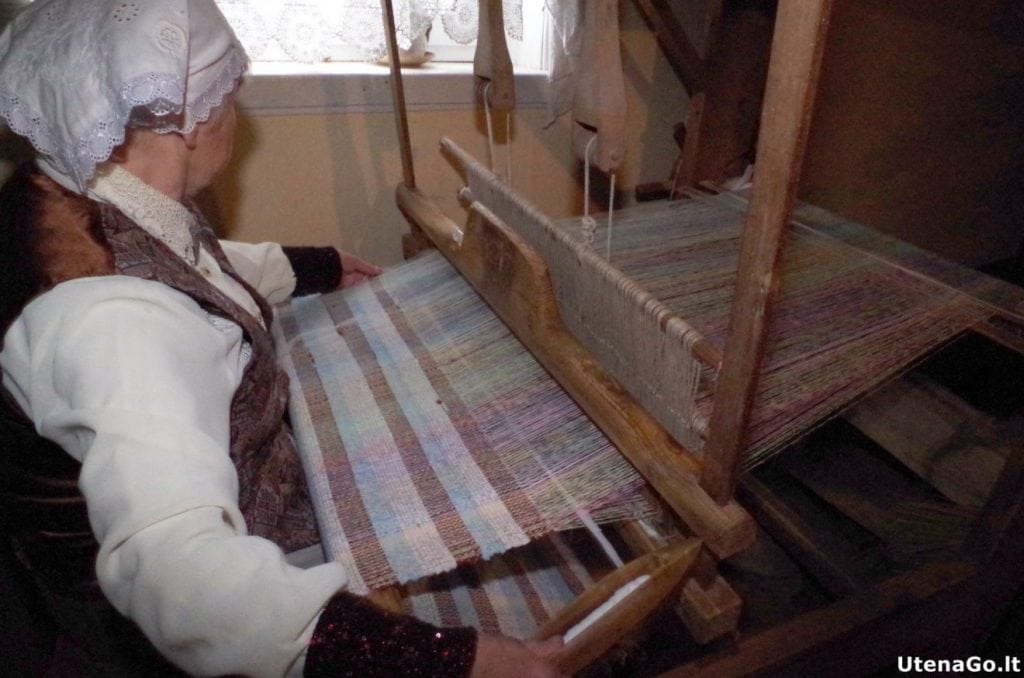
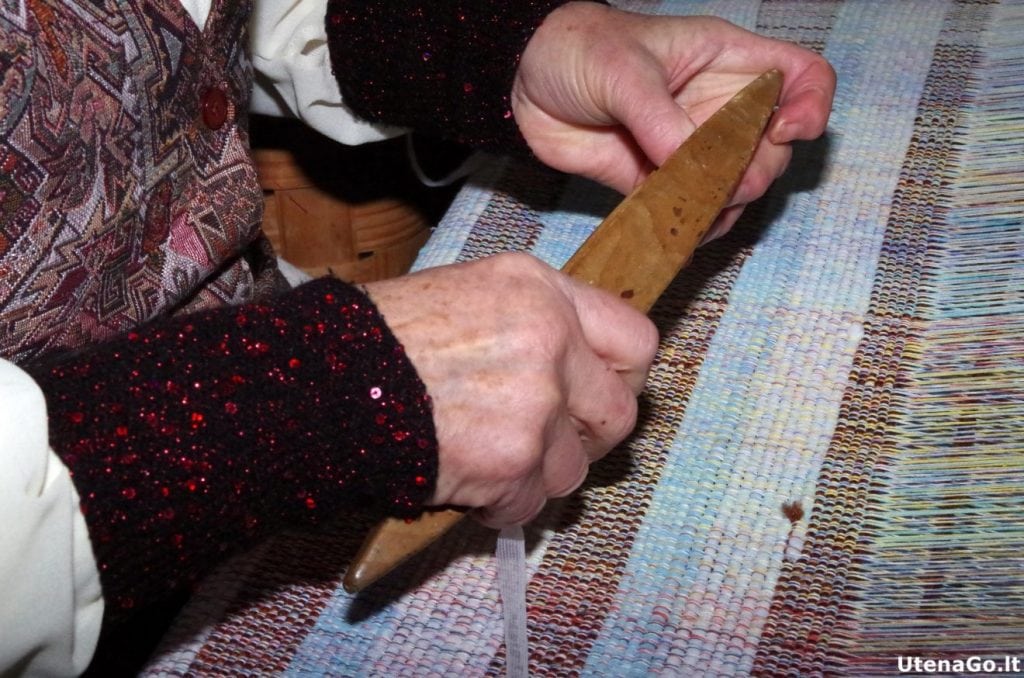
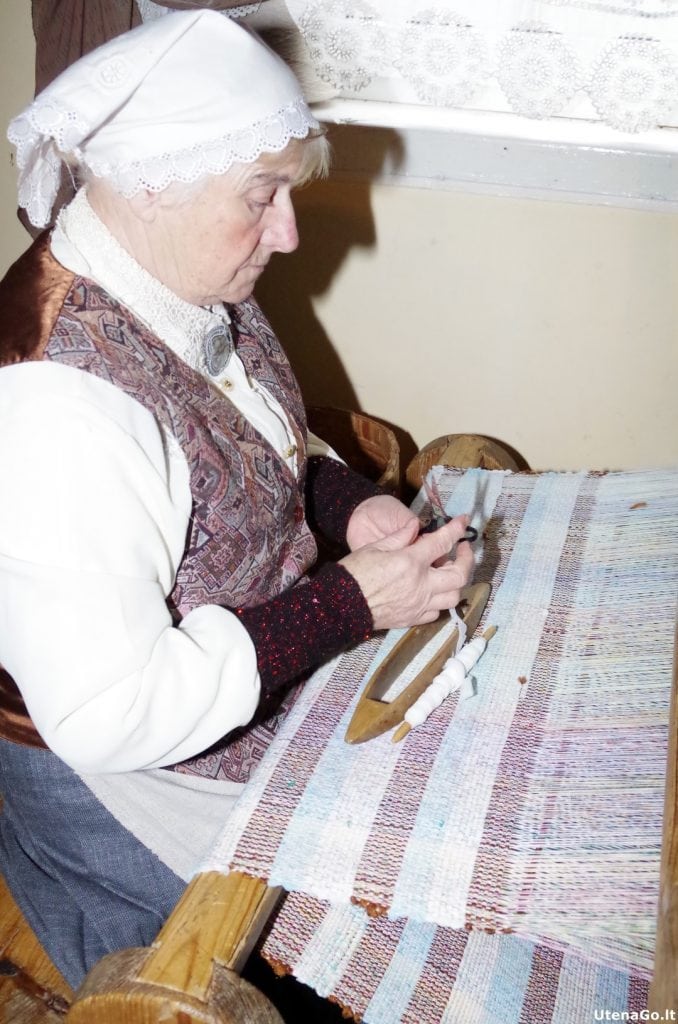
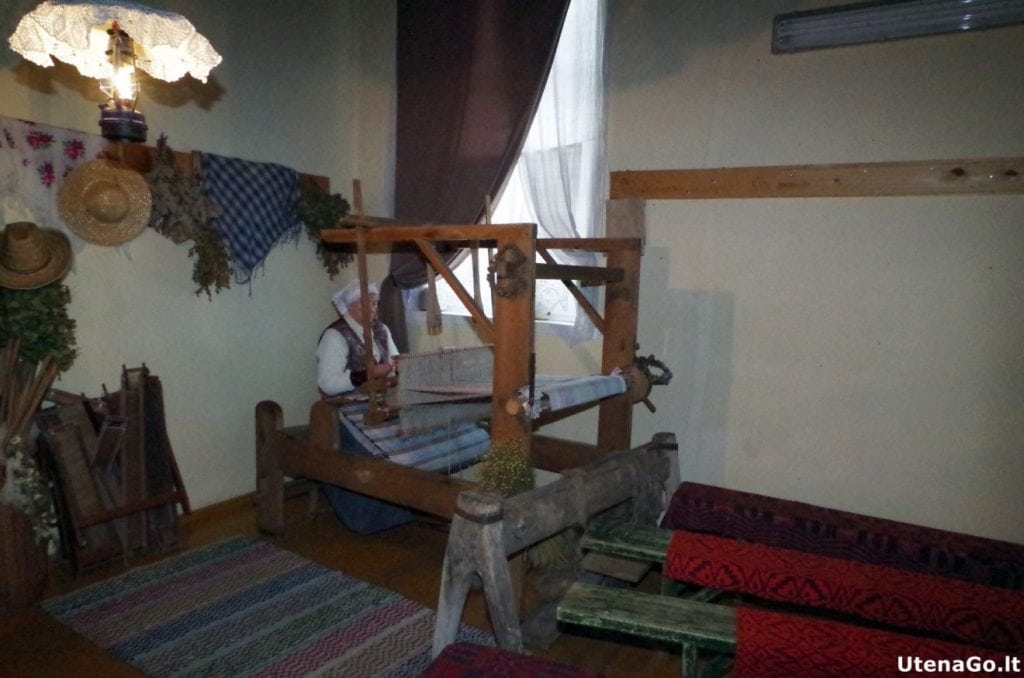
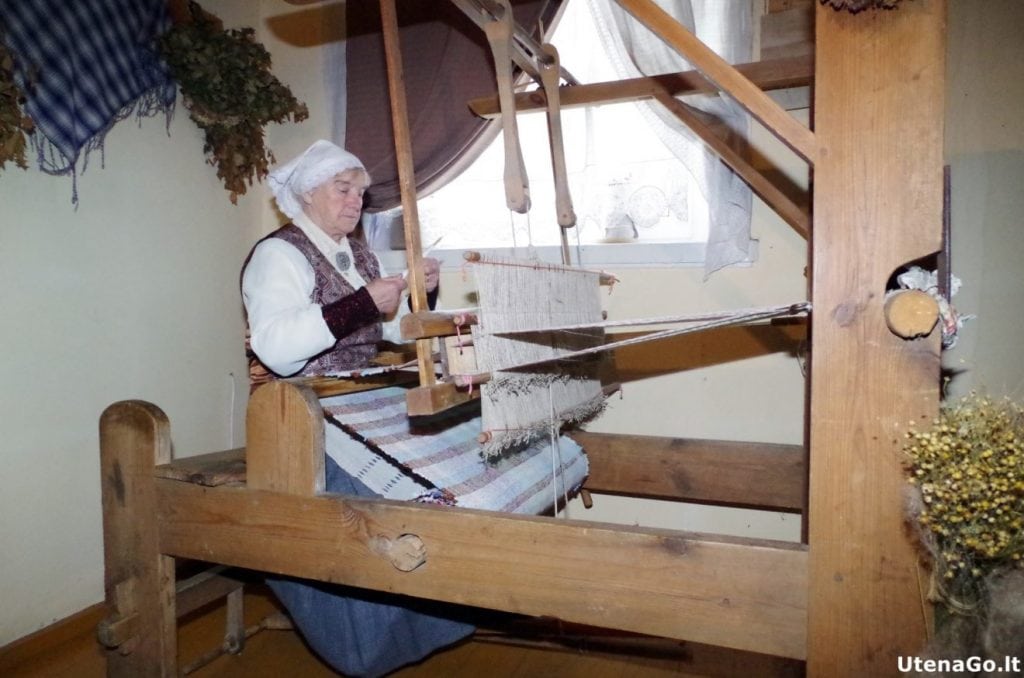
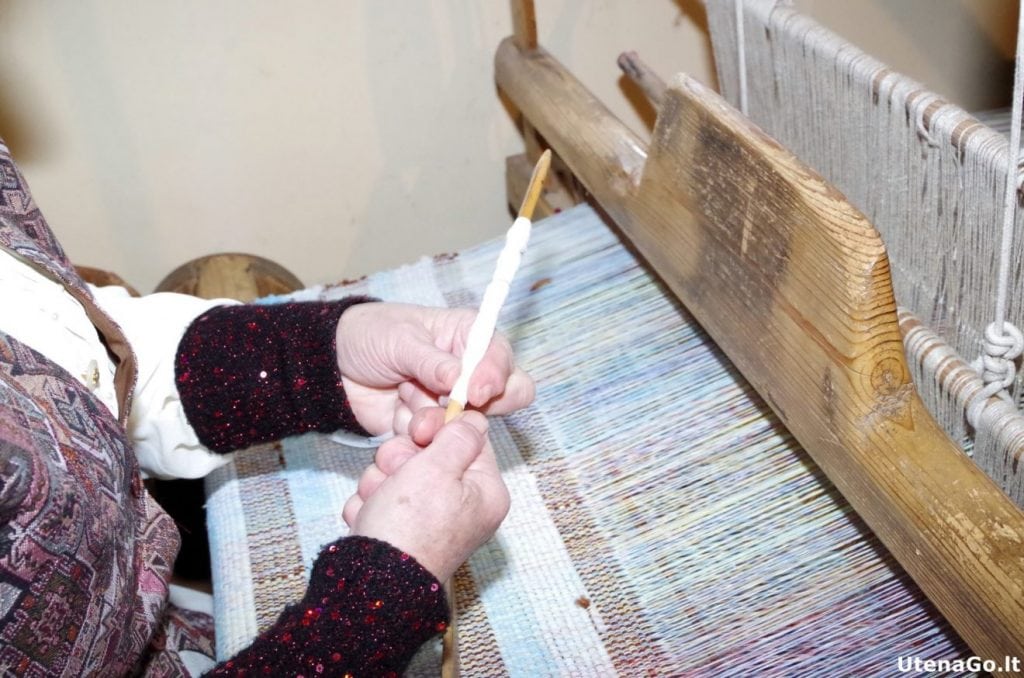
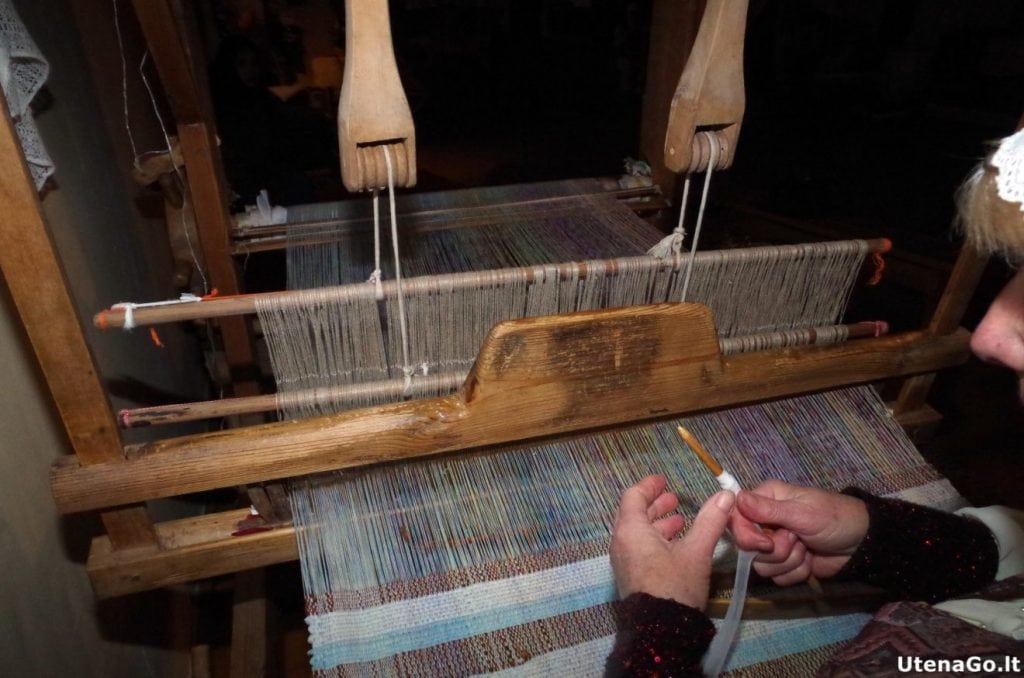
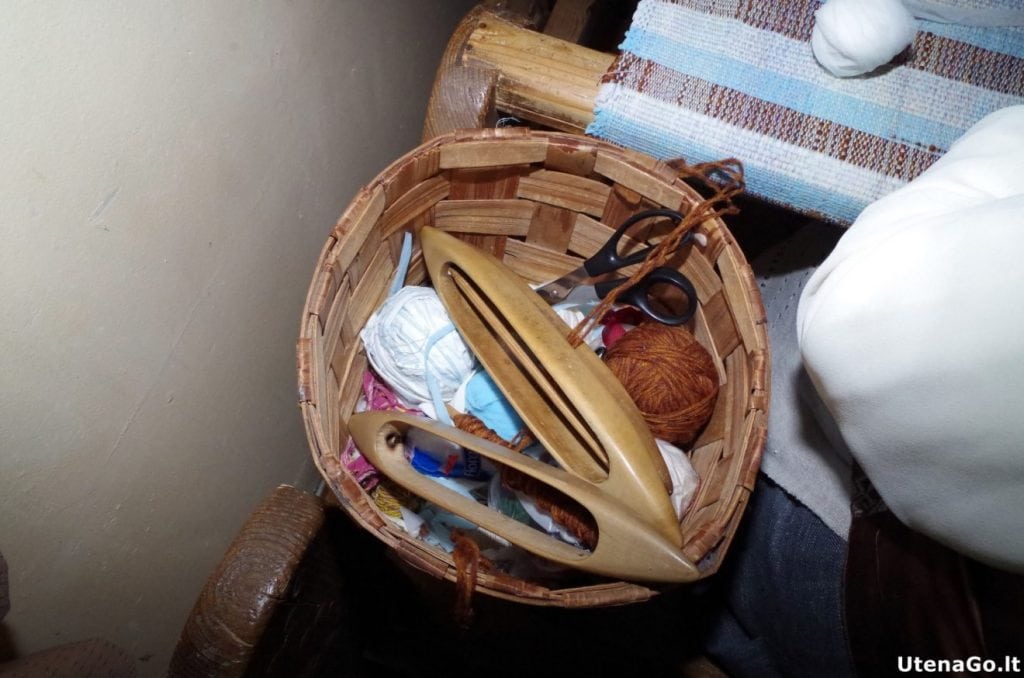
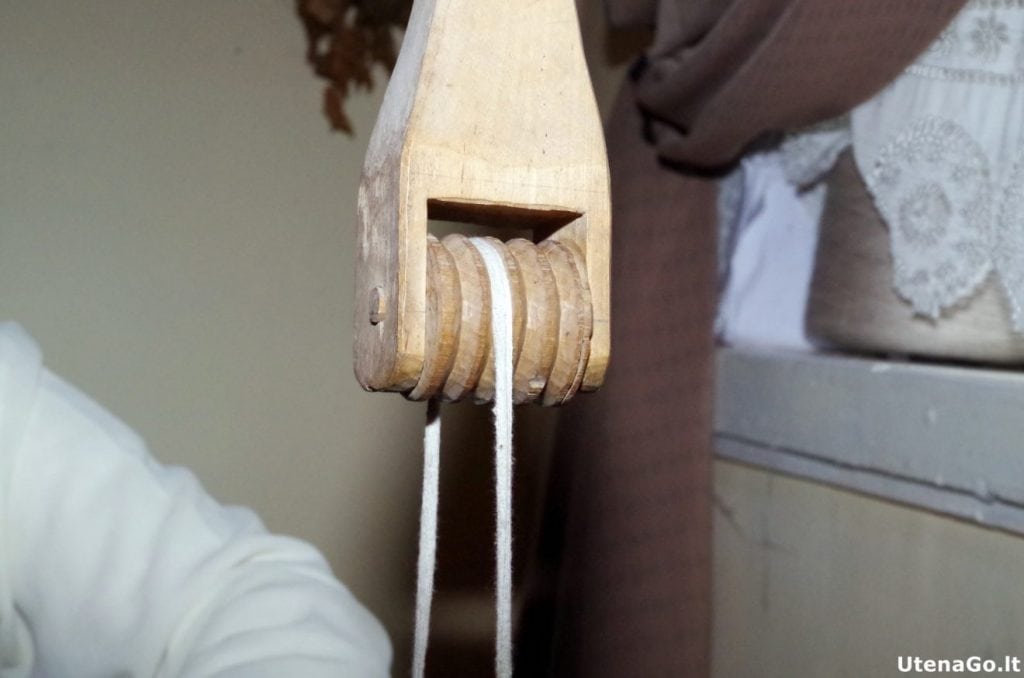
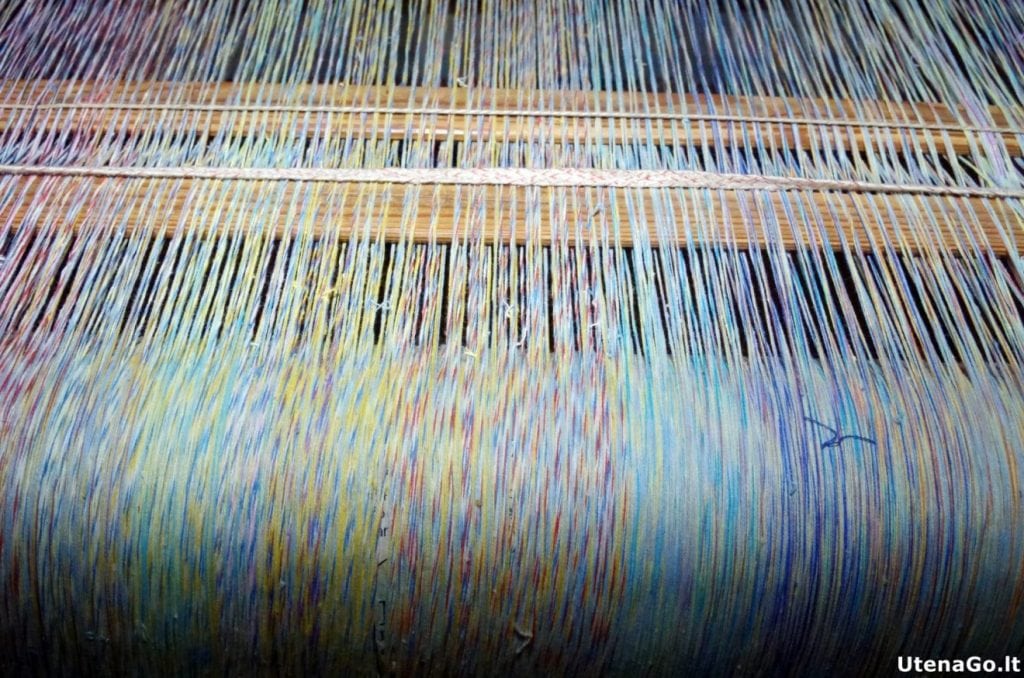
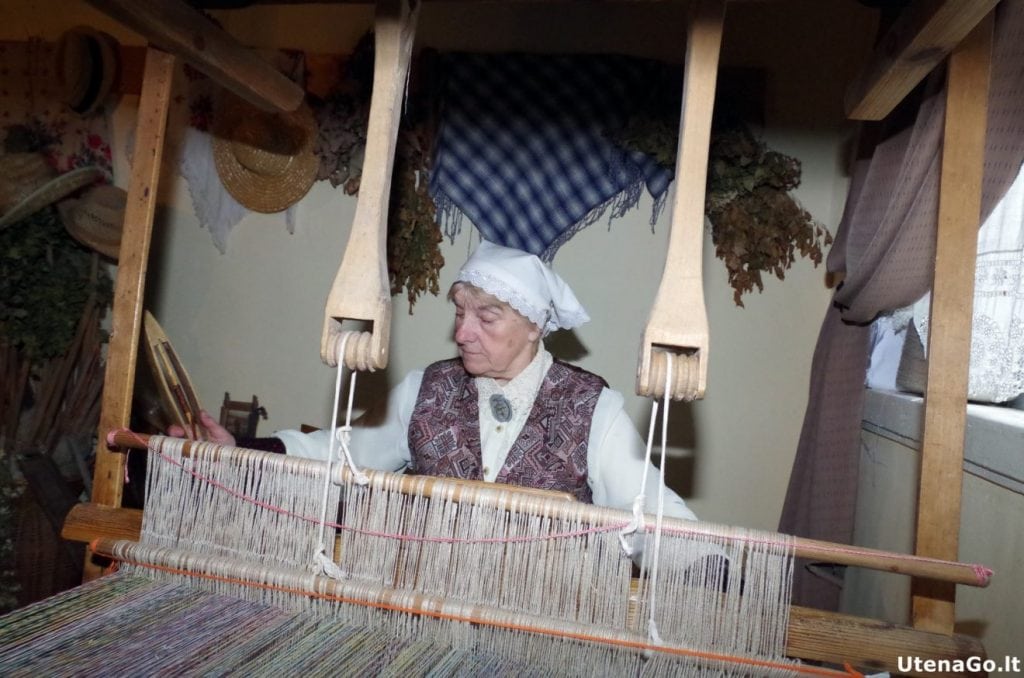
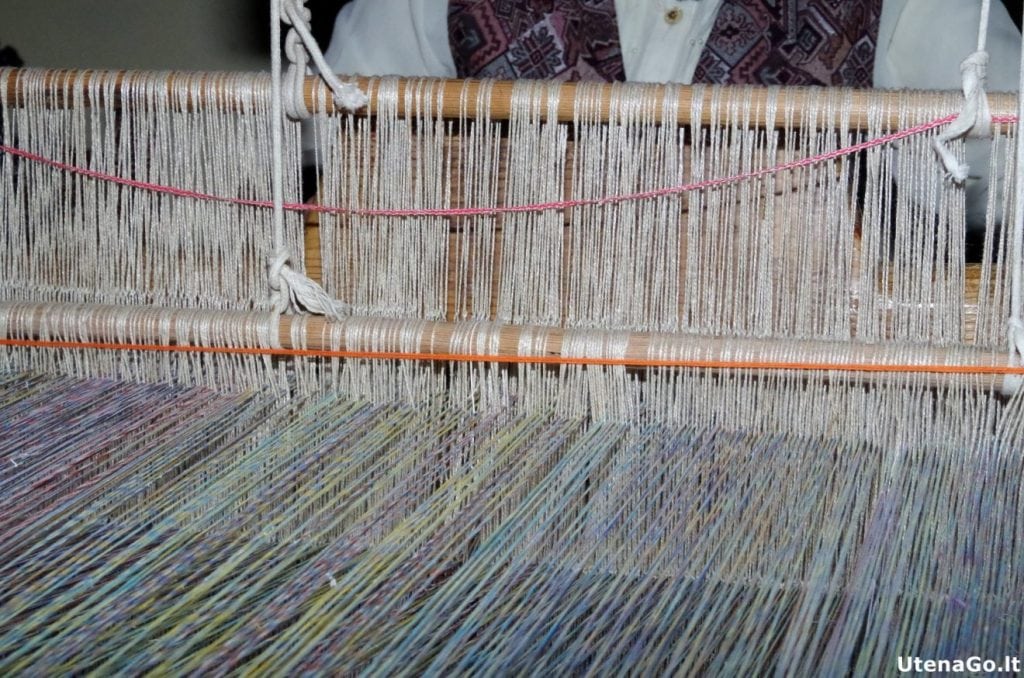
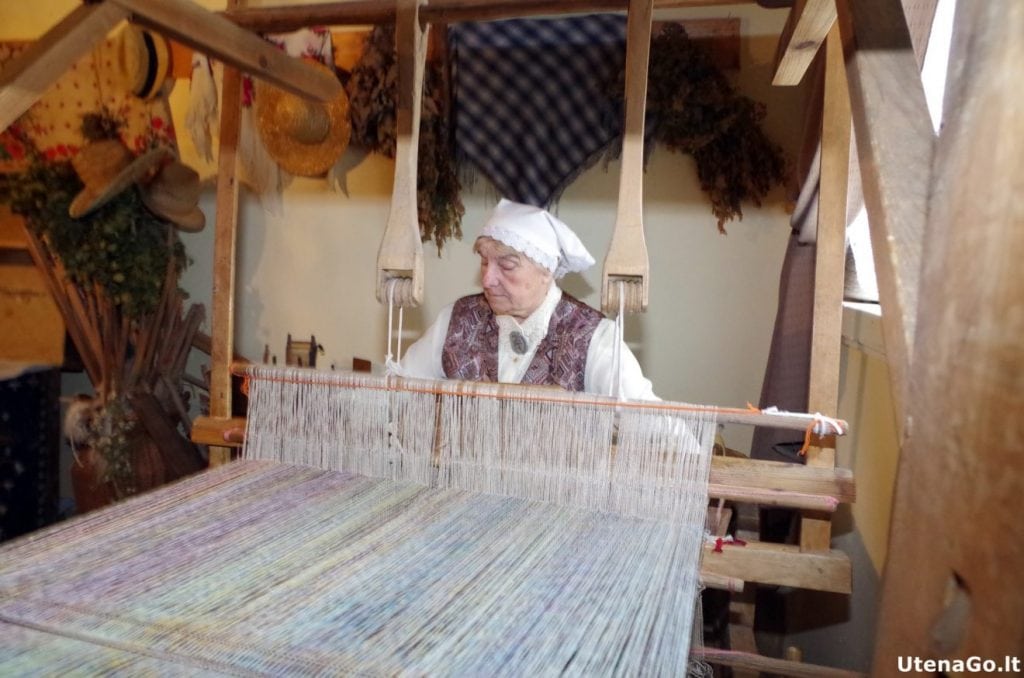
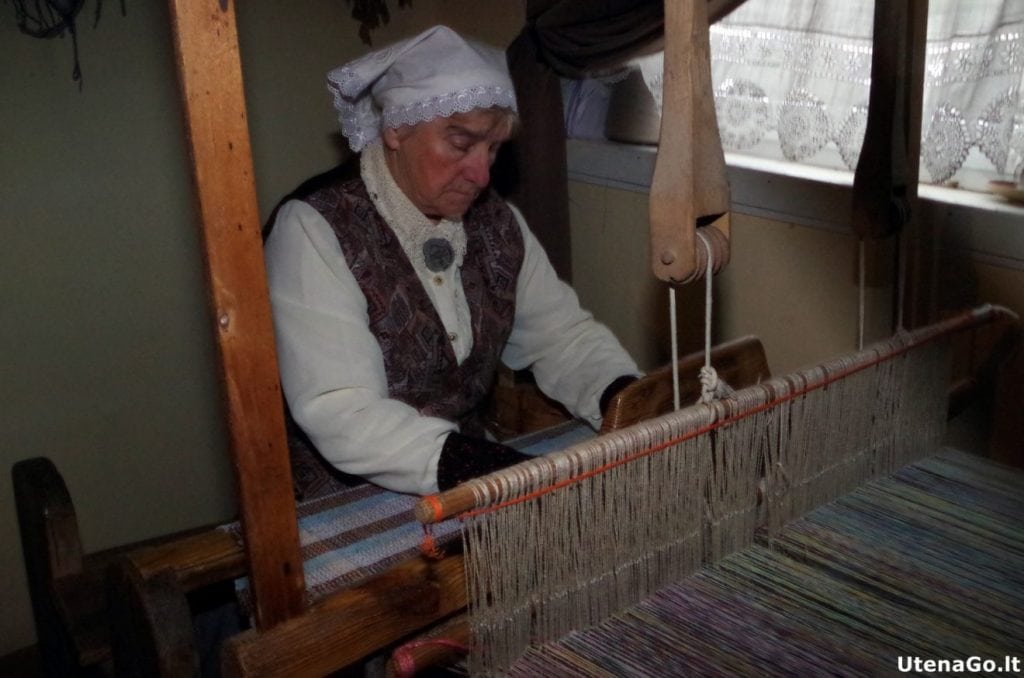
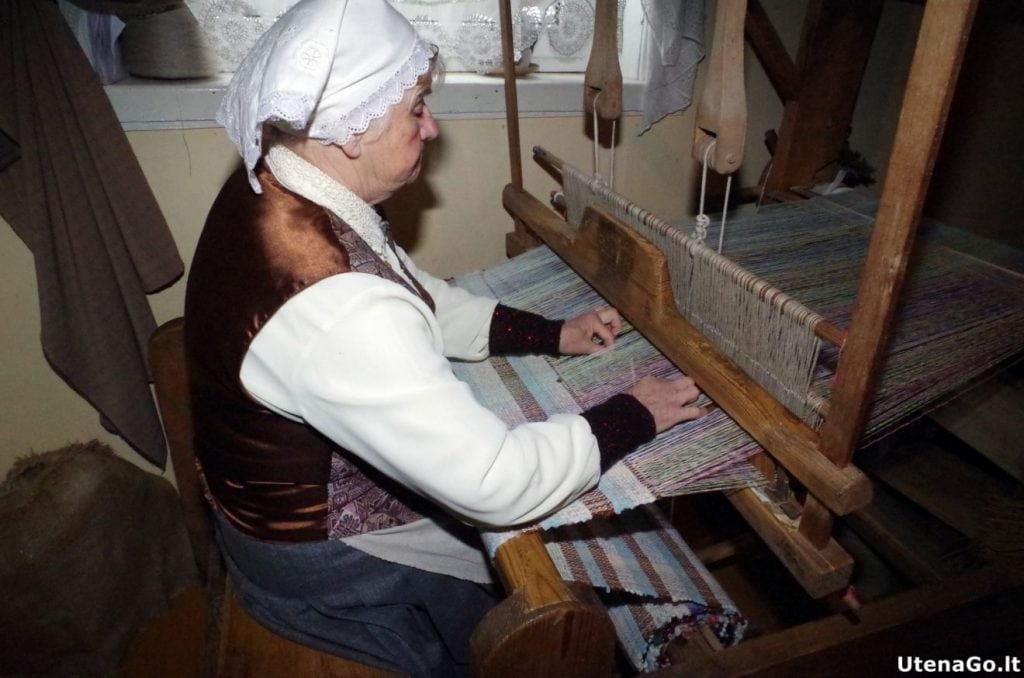
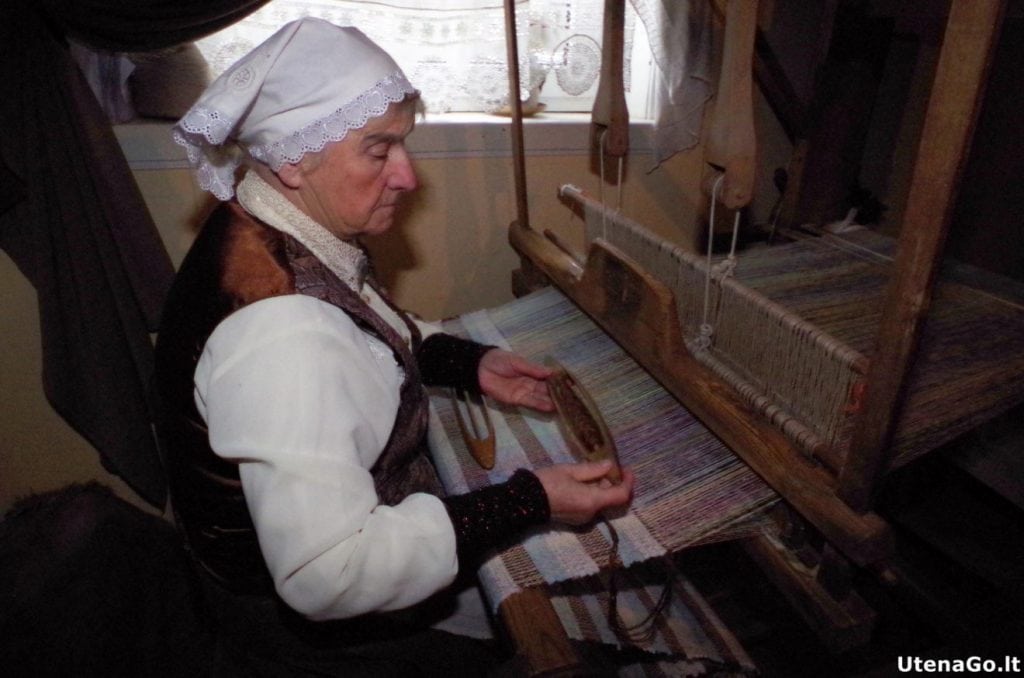
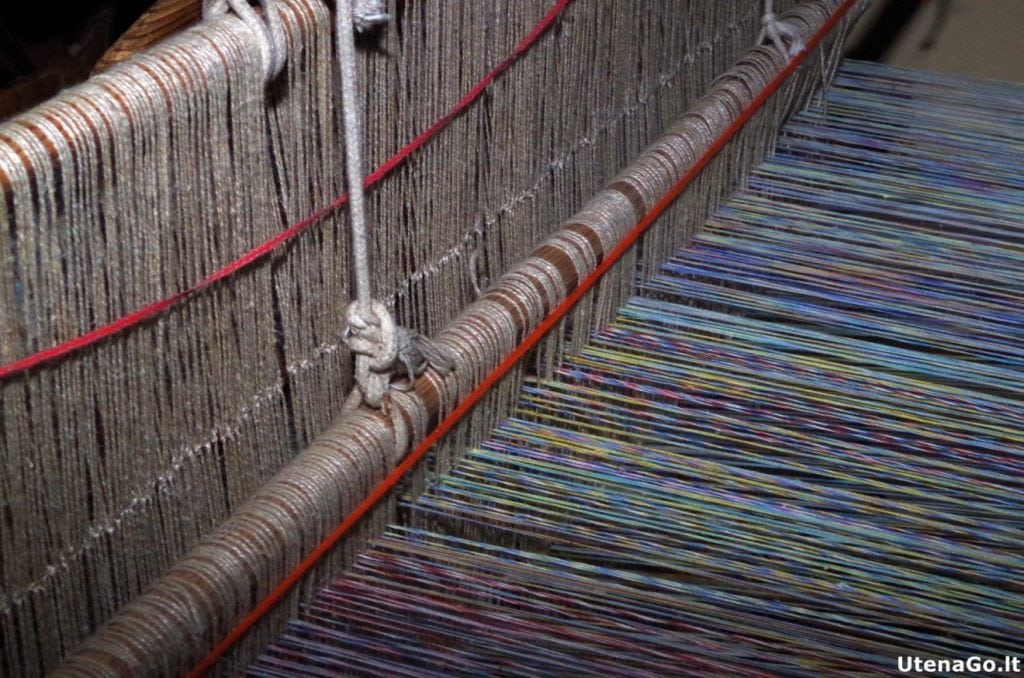
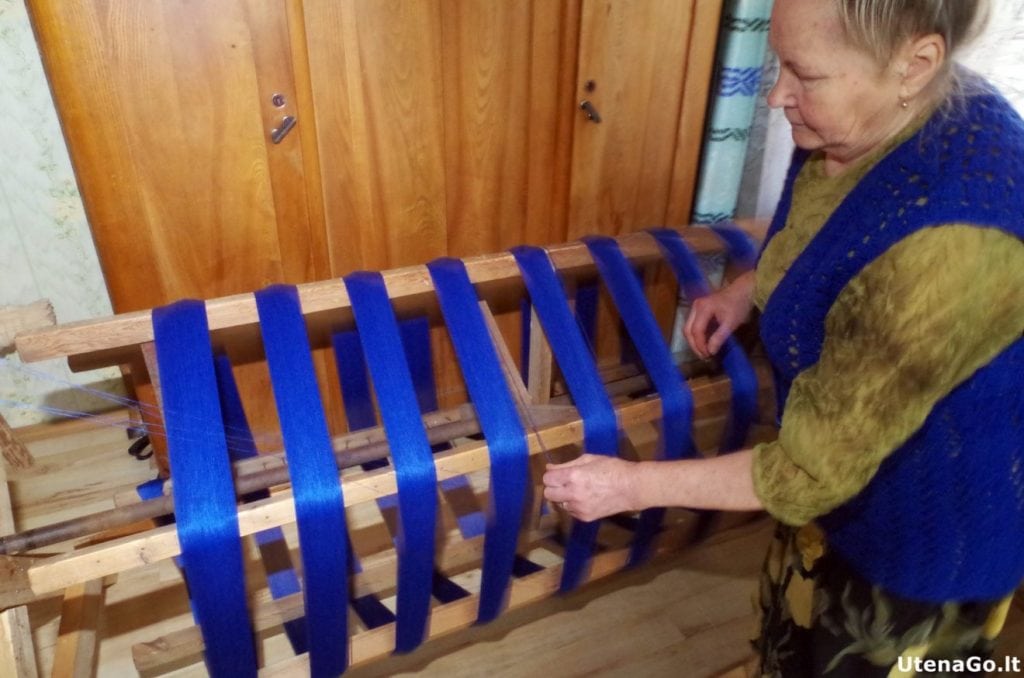
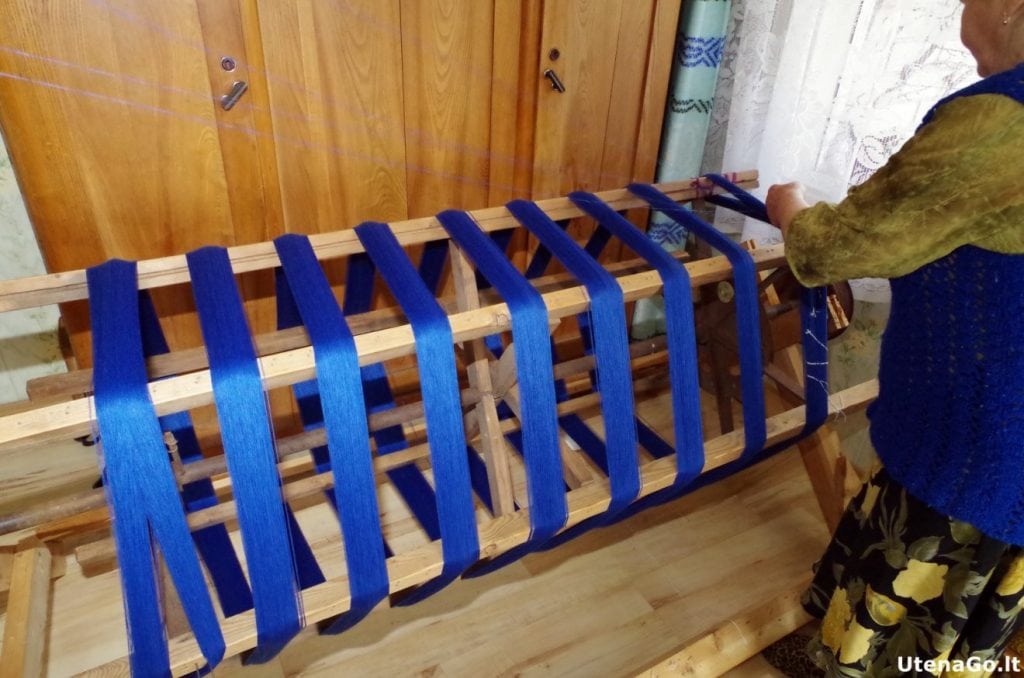
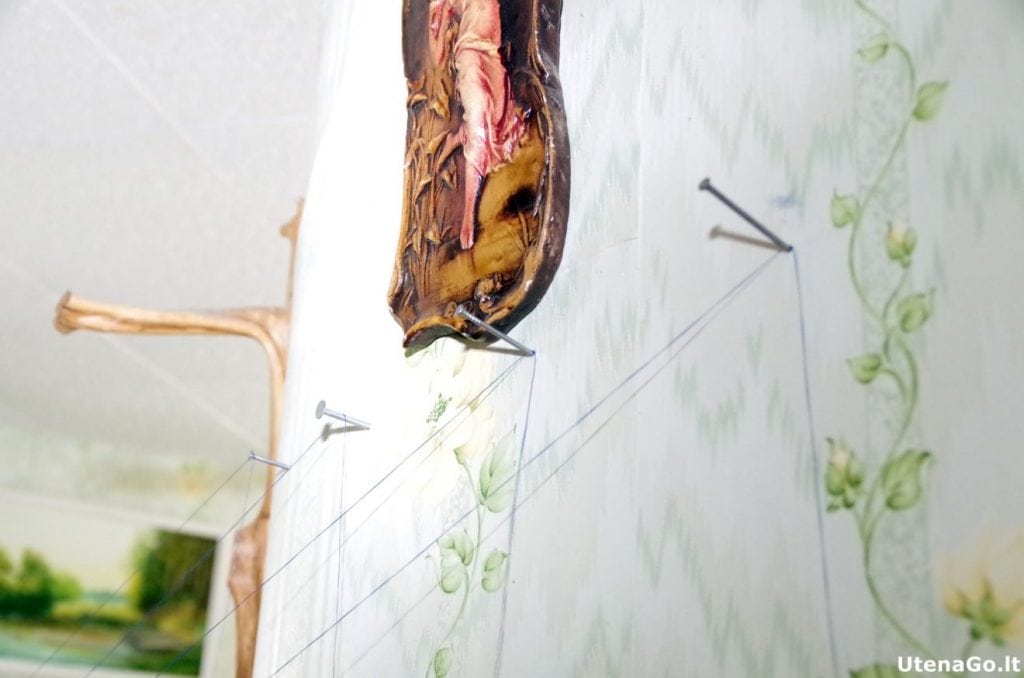
Weaving was one of the main crafts of Lithuanian girls, learned at home. Villagers used to keep sheep, grow flax, cannabis and spend long autumn and winter evenings spinning. Woven fabrics were used for clothing, bedding or as tablecloths. Women usually turned to their loom before Christmas, when they had more time left from other farm work. All women knew how to weave huckaback and the so-called “simple” fabrics. Many also made simple bedspreads, towels and tablecloths. They used to learn these patterns from others and include their own interpretations. Better-skilled weavers adorned their fabrics with complex patterns. Only well-known professionals could weave the so-called “patterned” fabrics and only a few created original patterns.
Read more
Up until the 19th century yarn used to be plant-died using blossoms, leaves, roots, moss, tree bark and bog iron ore. 19th c. introduced aniline dyes, which enriched and intensified textile colours.
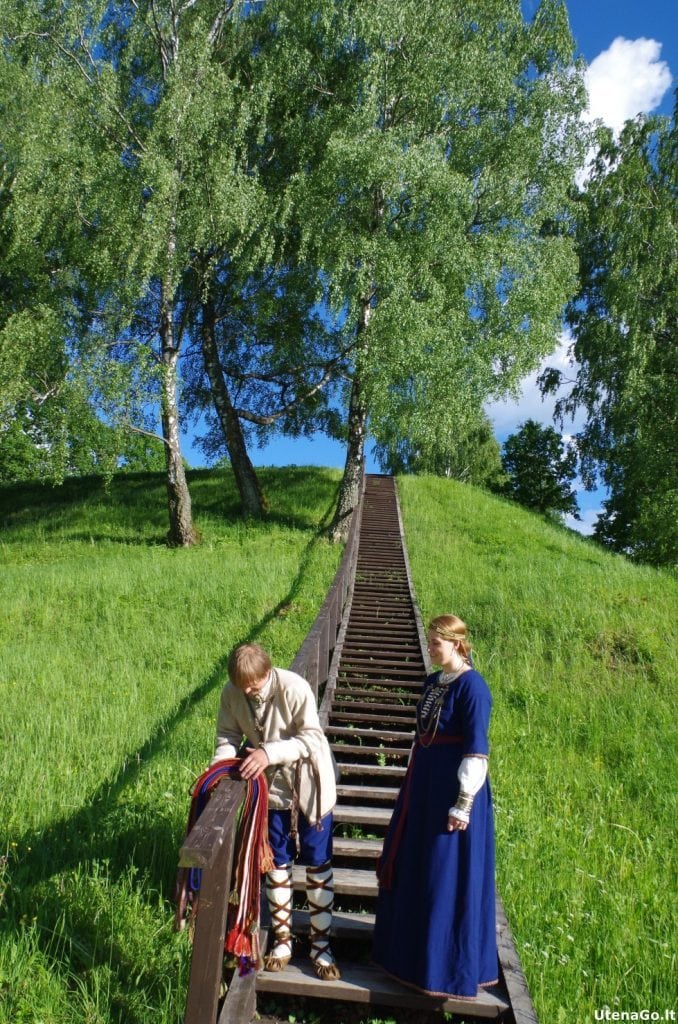
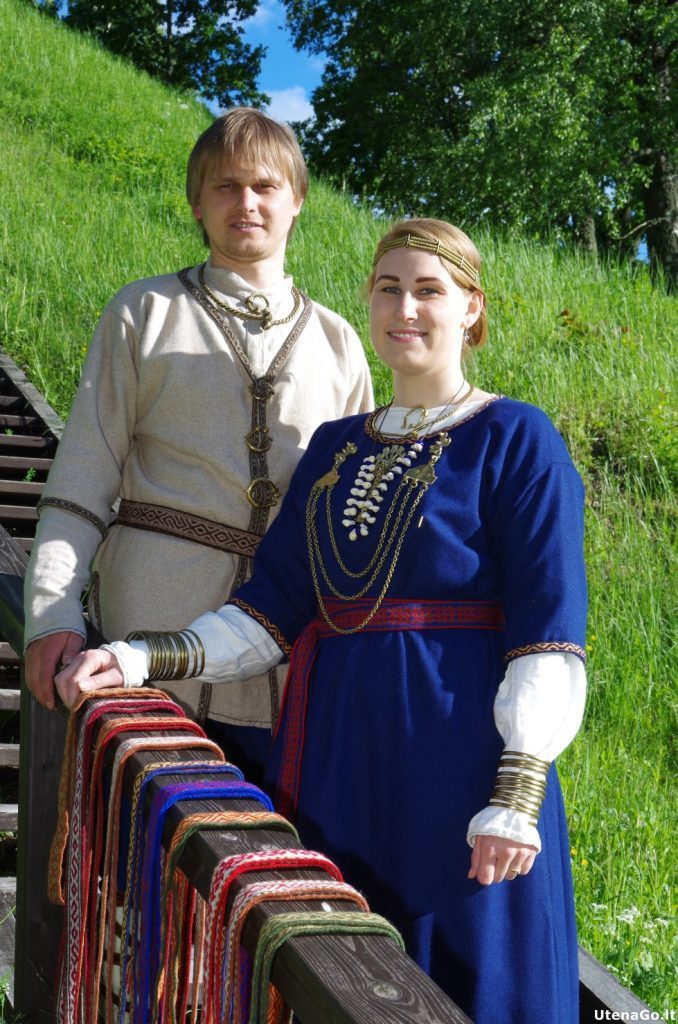
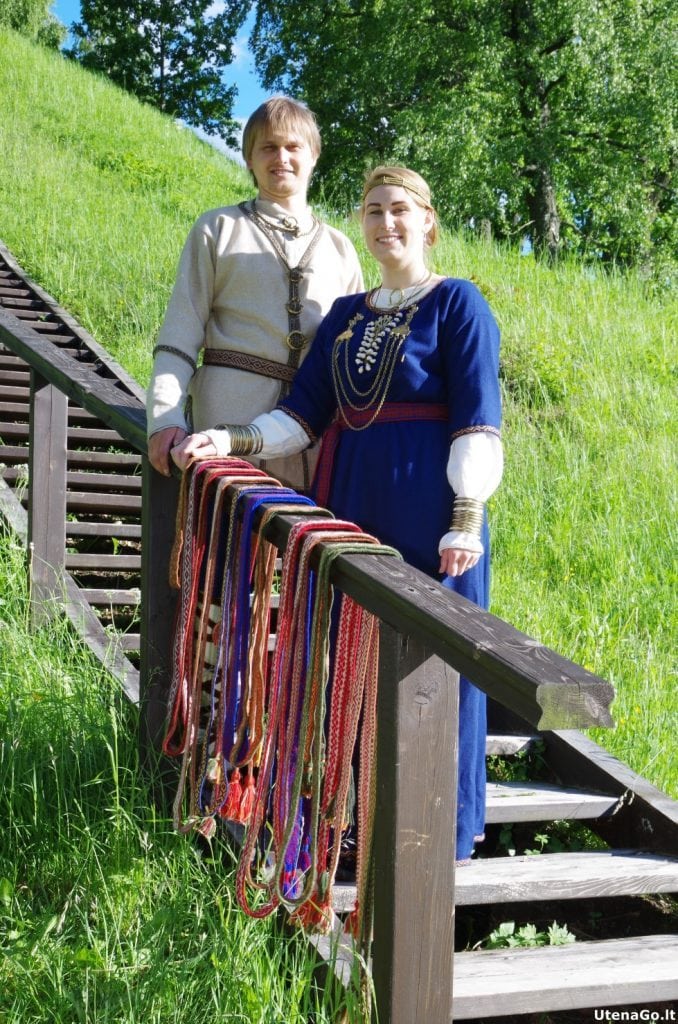
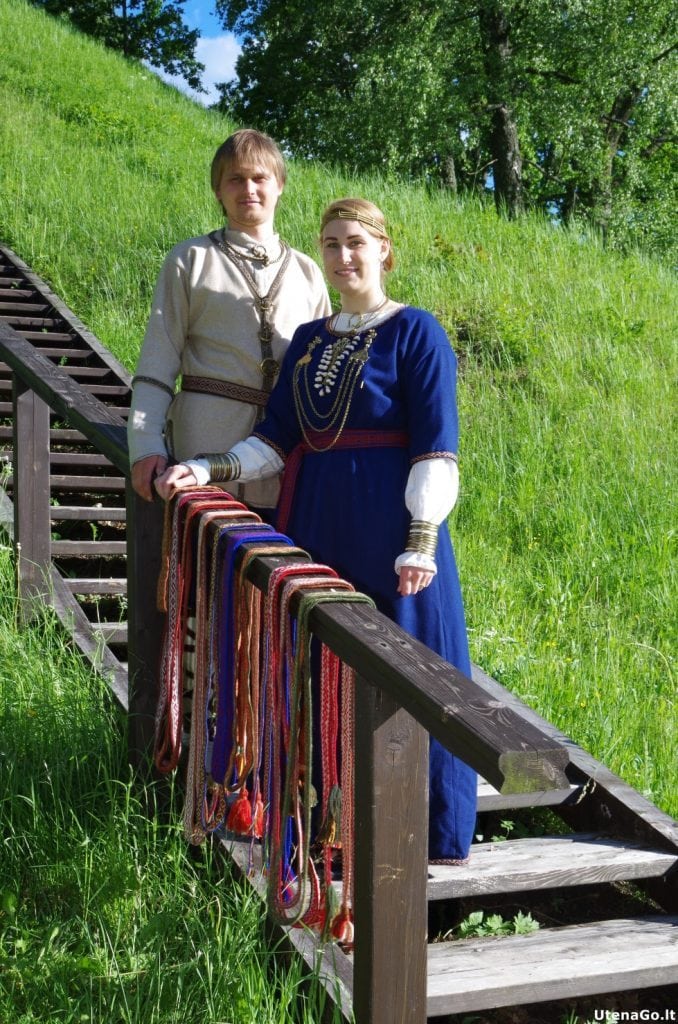
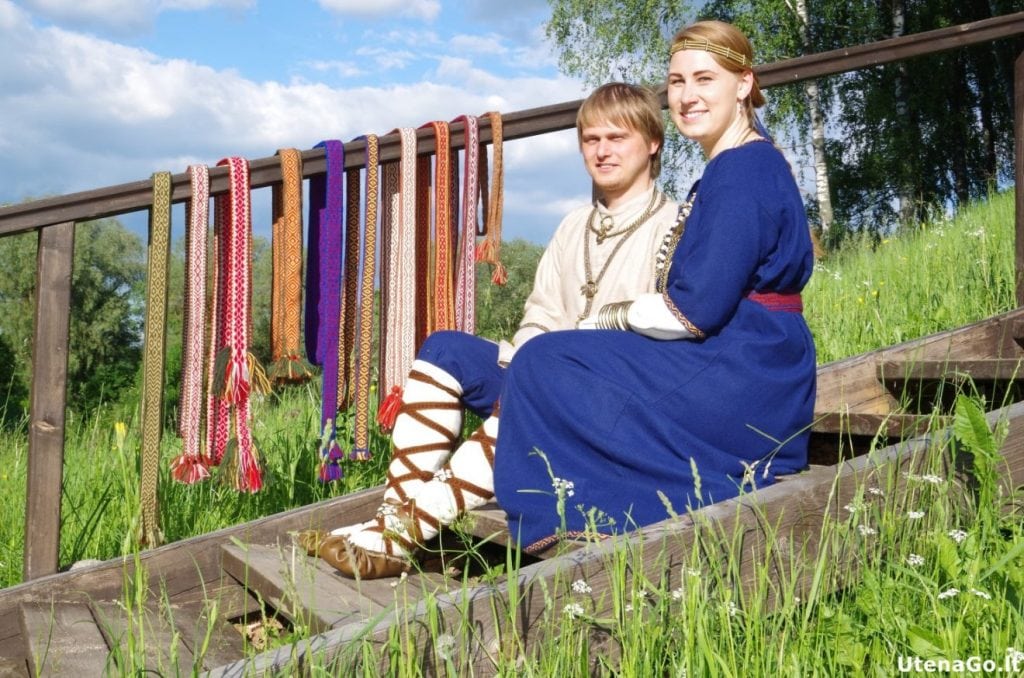
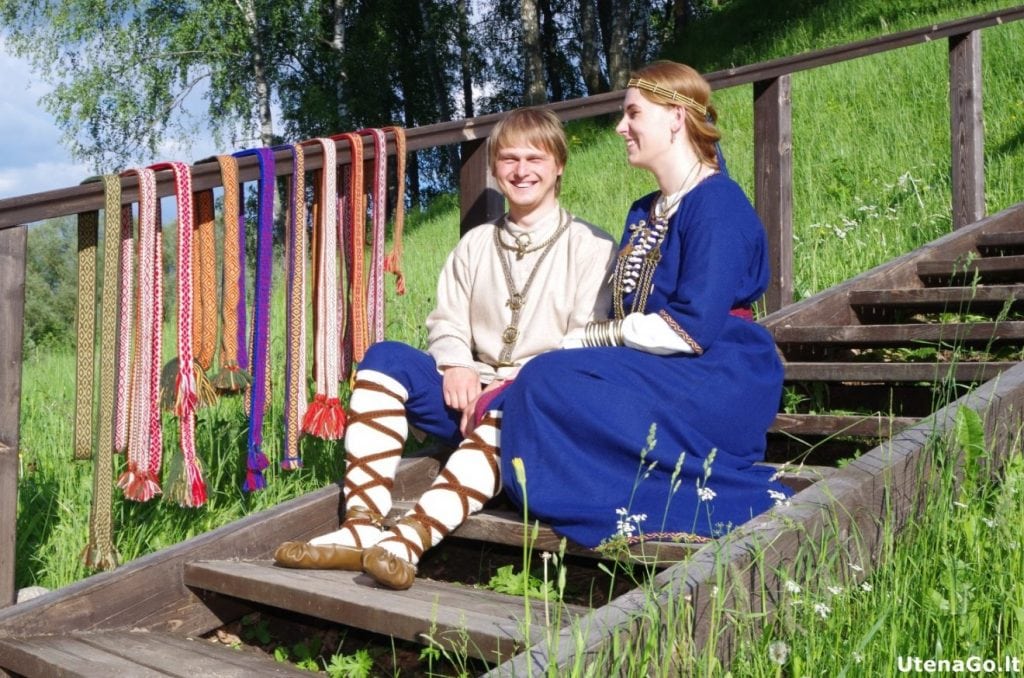
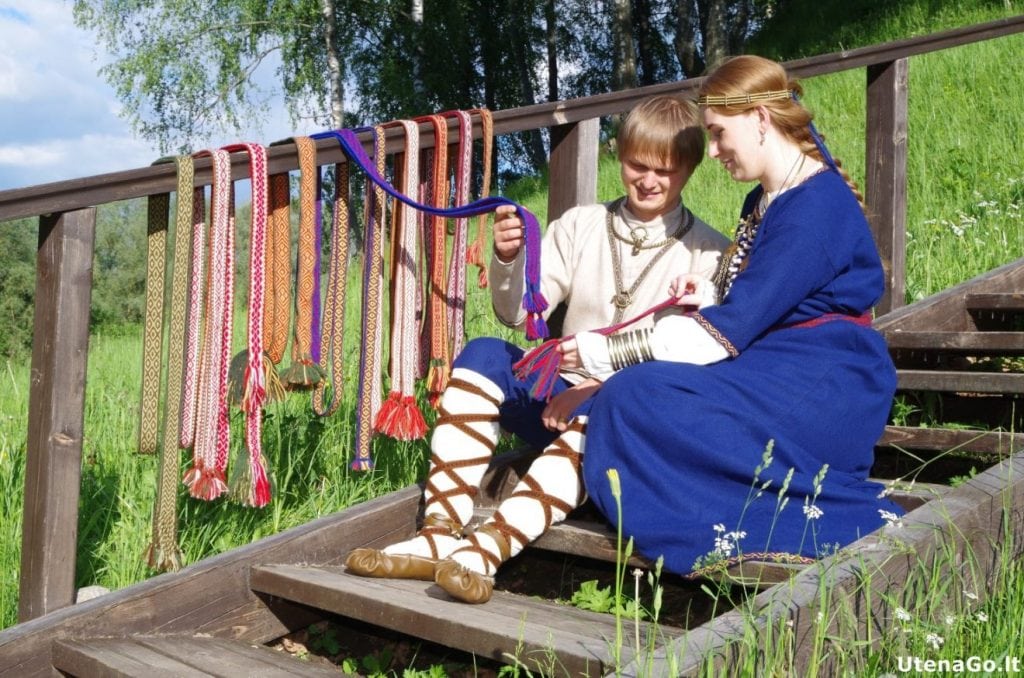
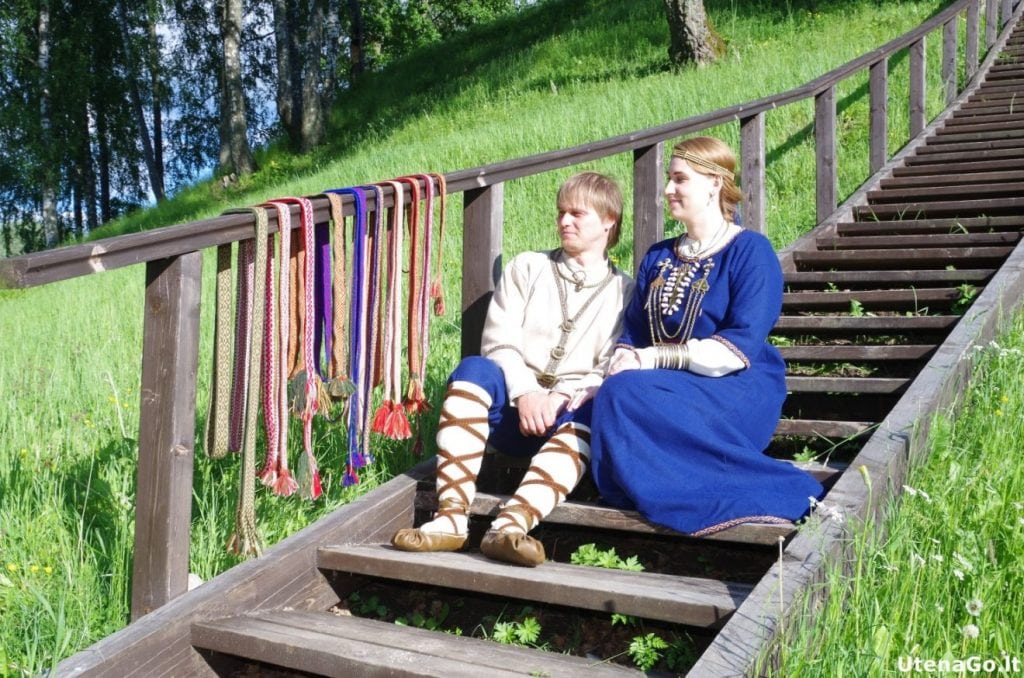
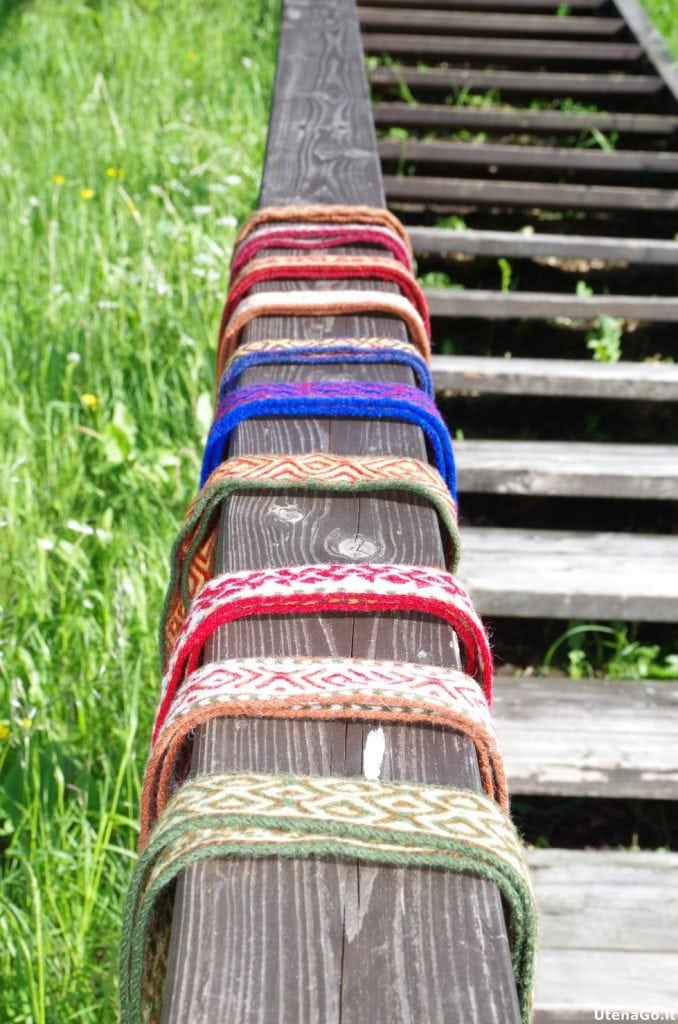
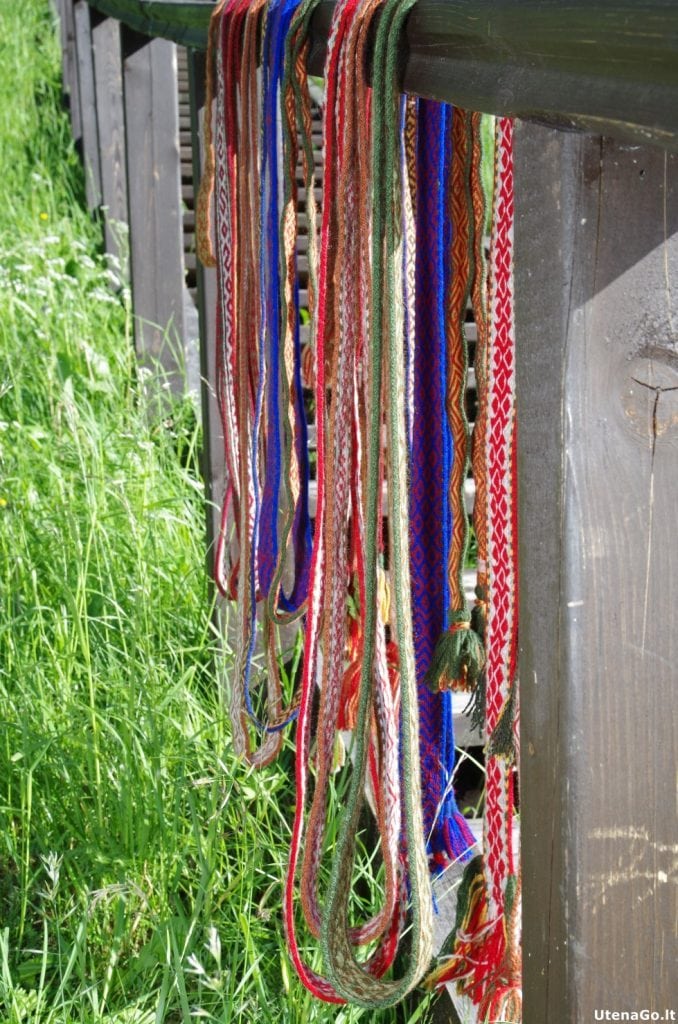
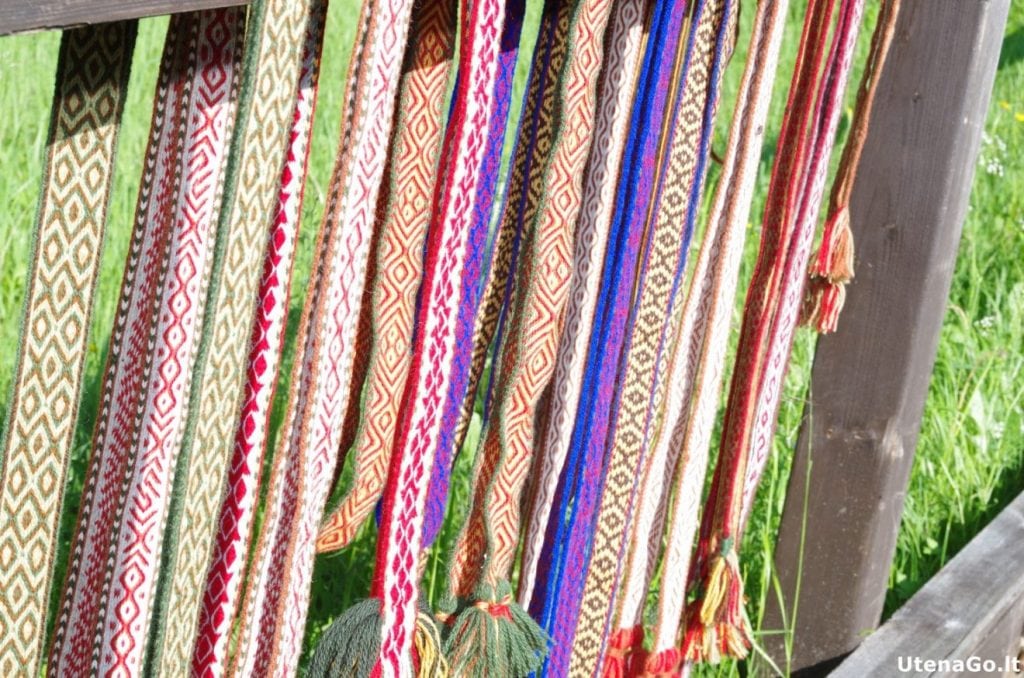
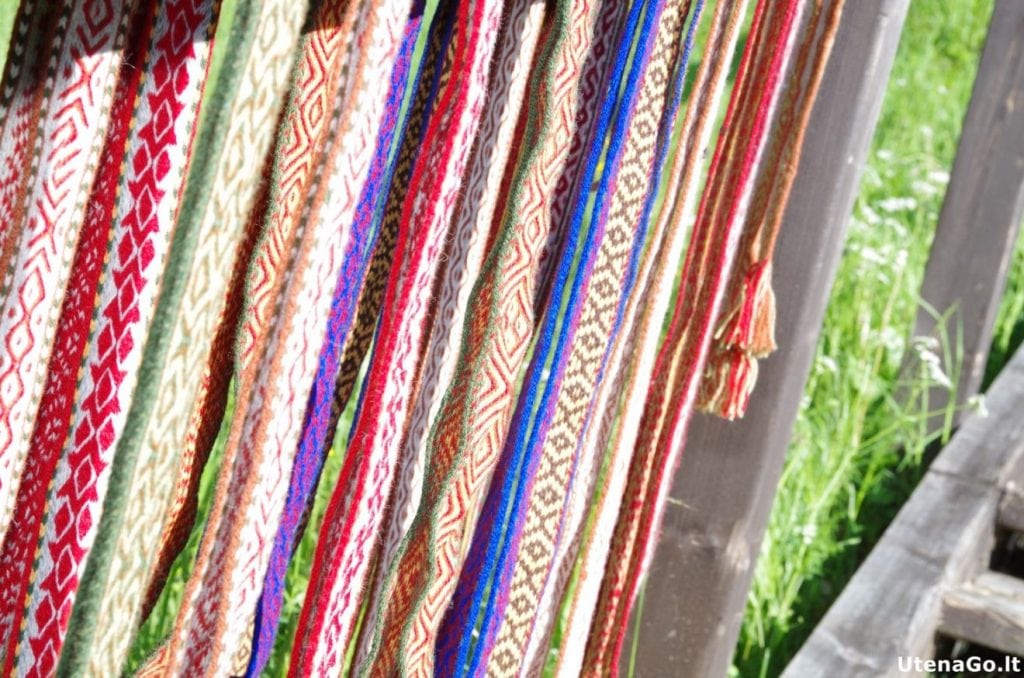
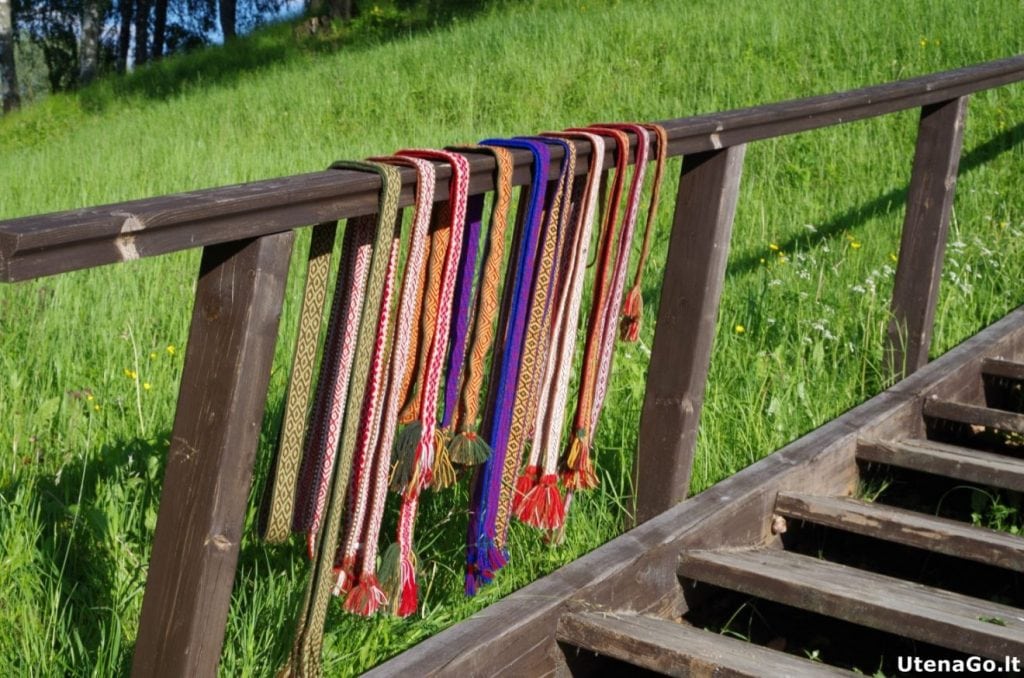
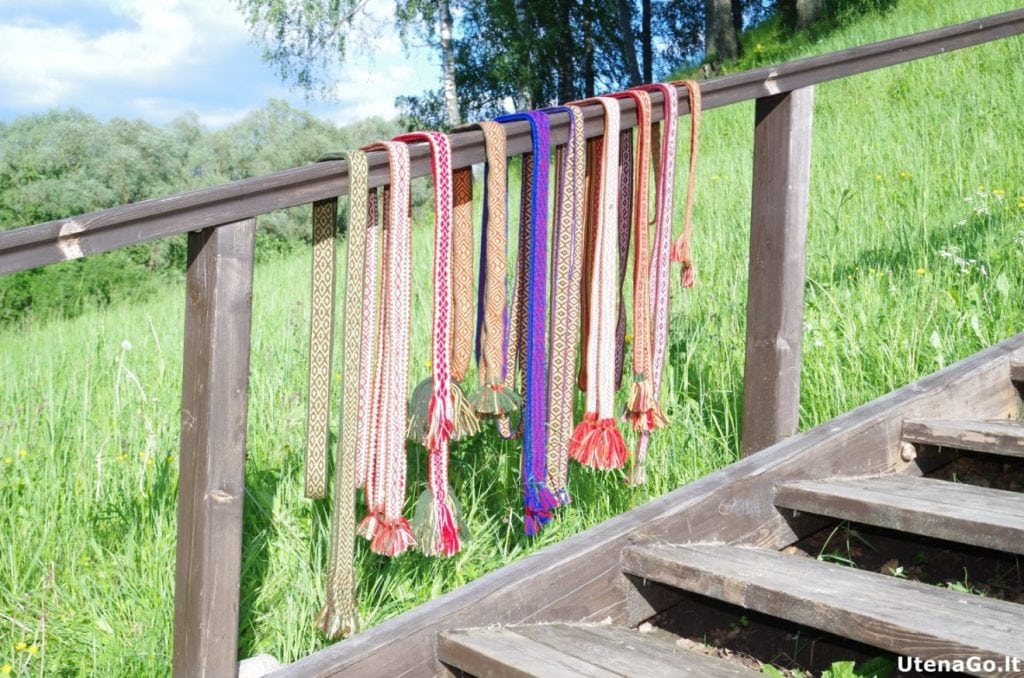
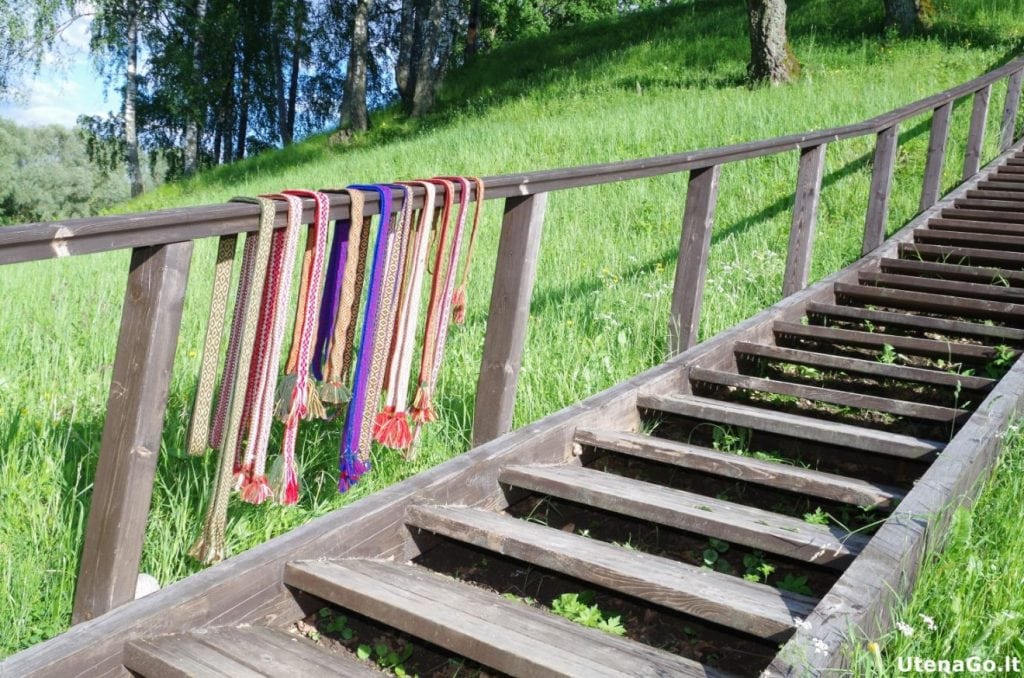
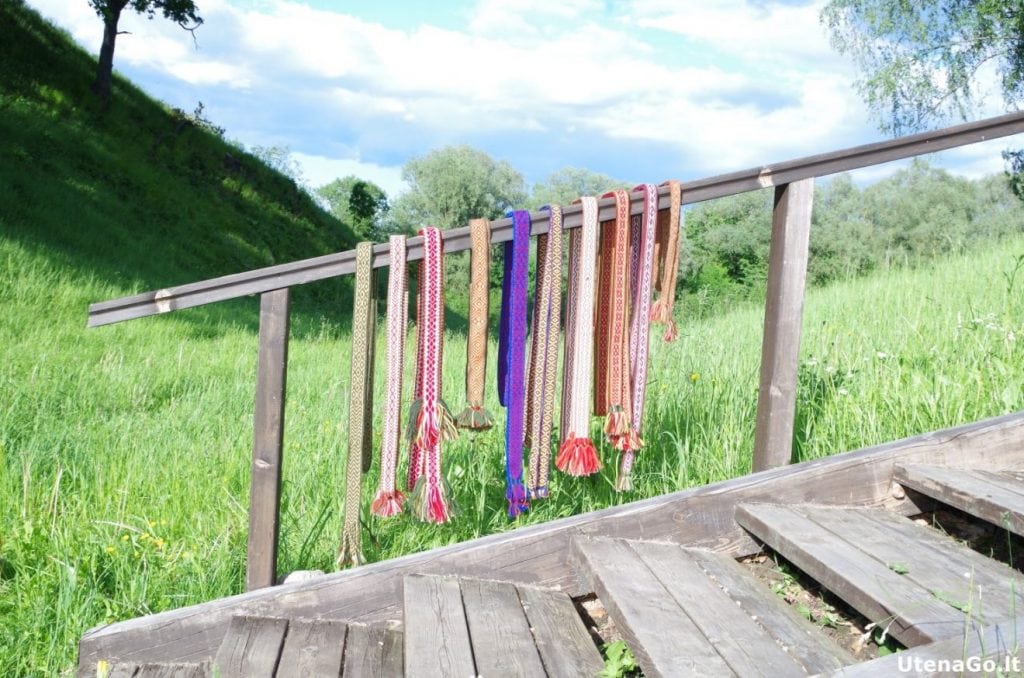
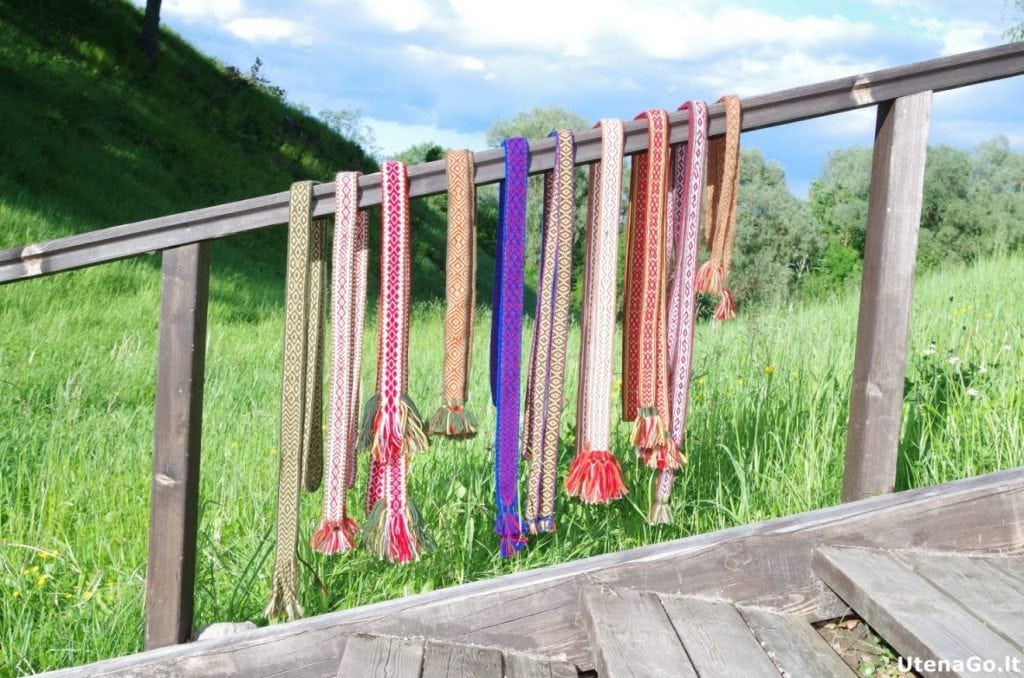
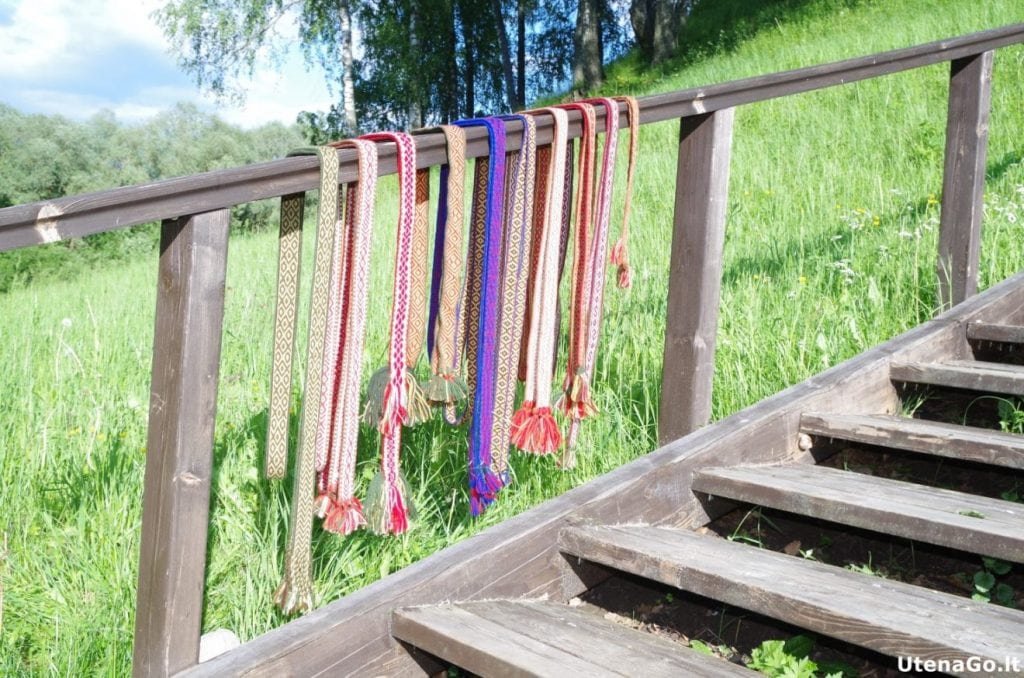
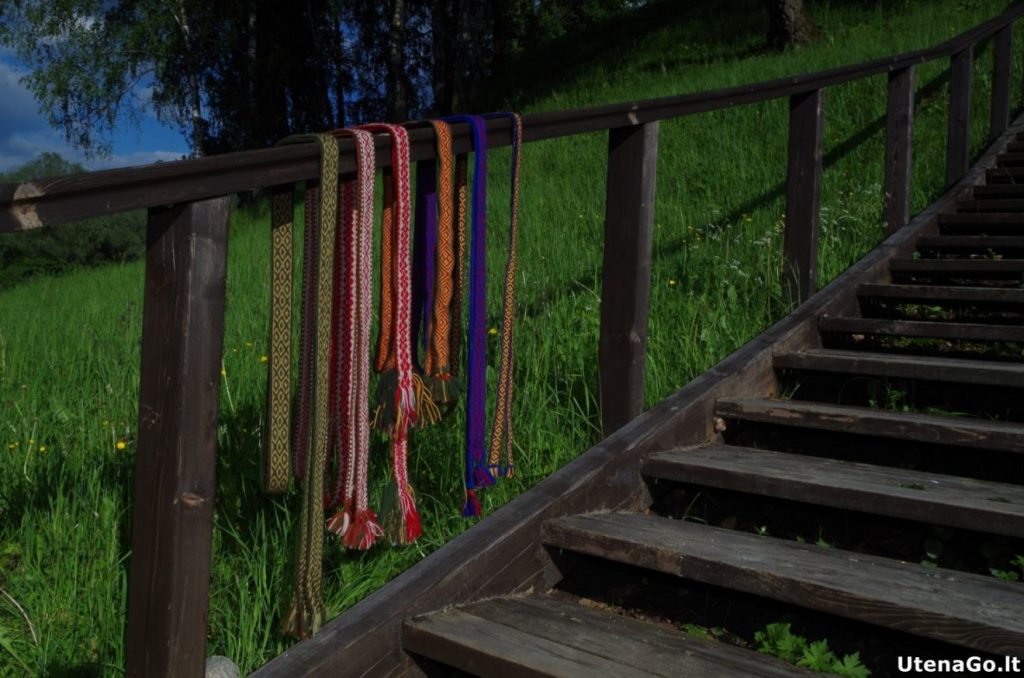
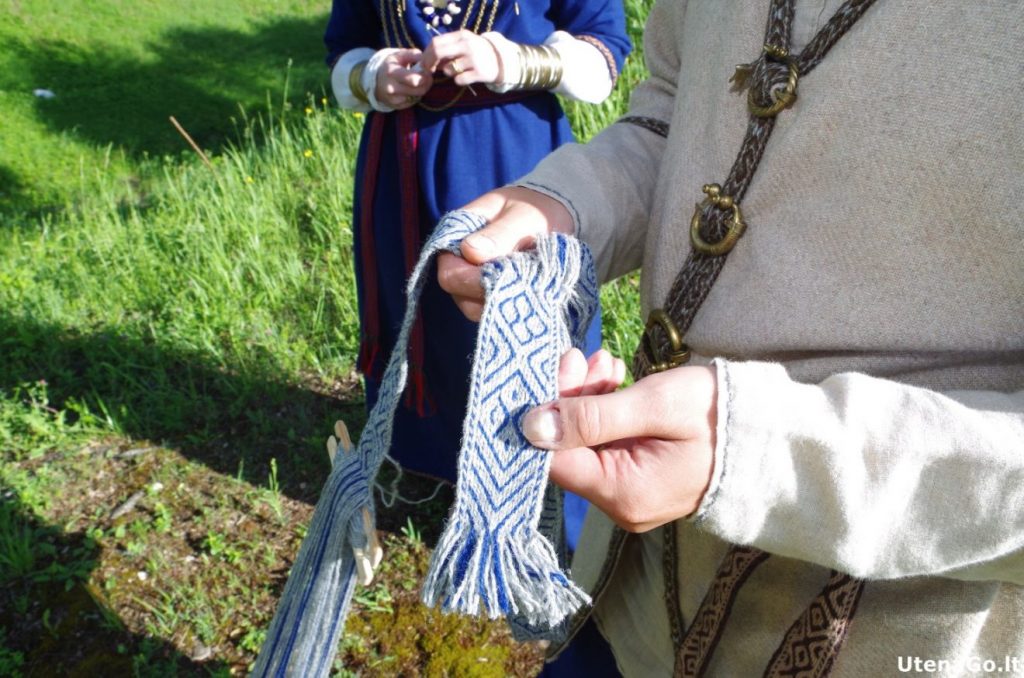
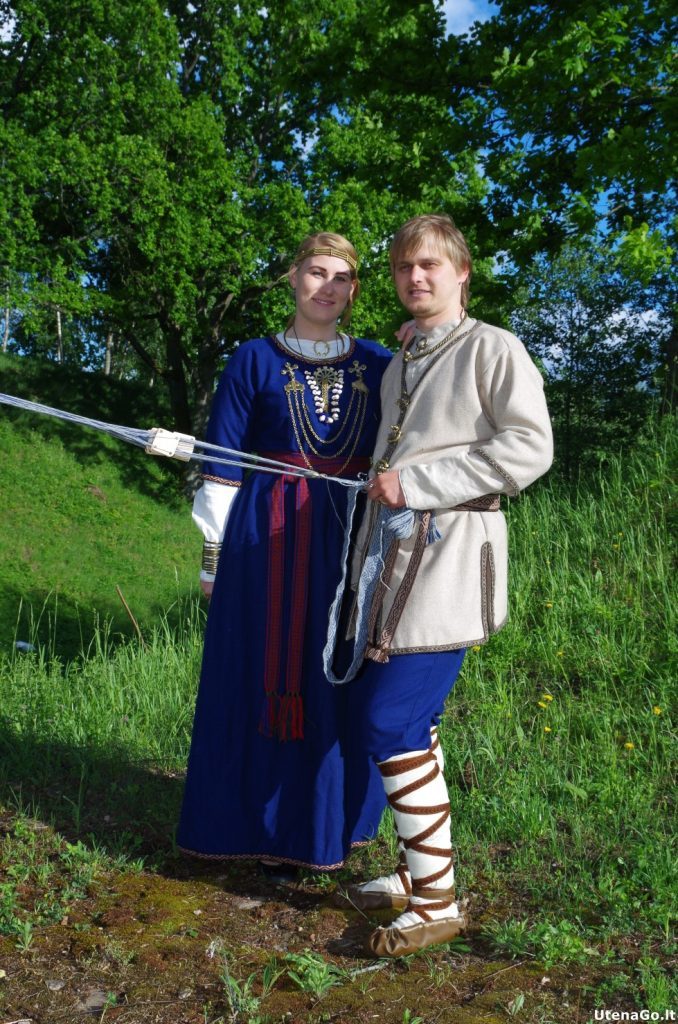
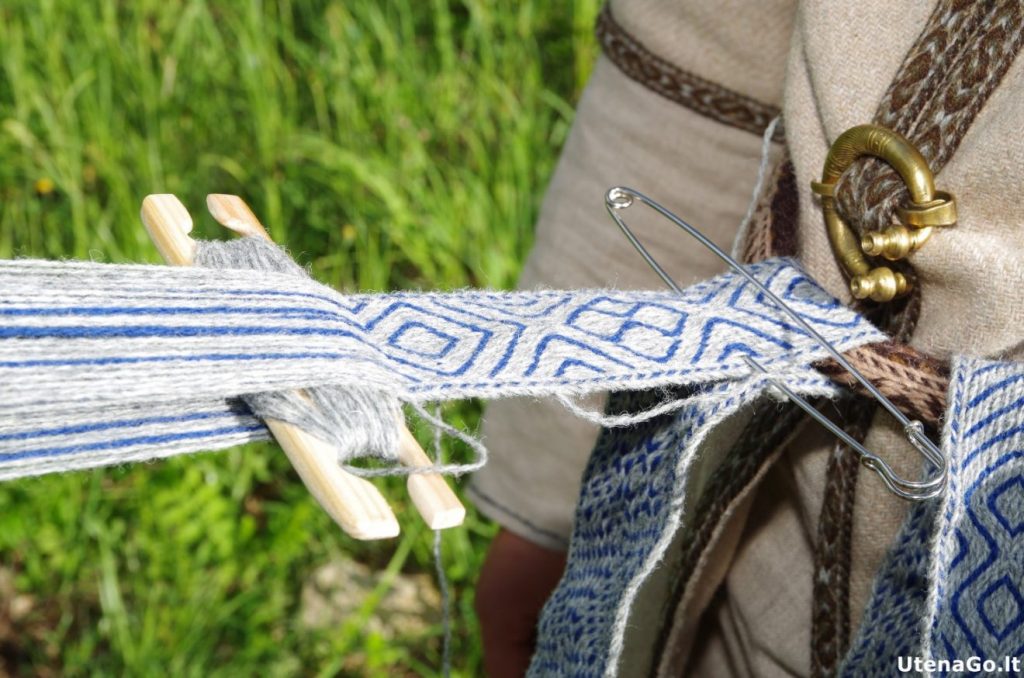
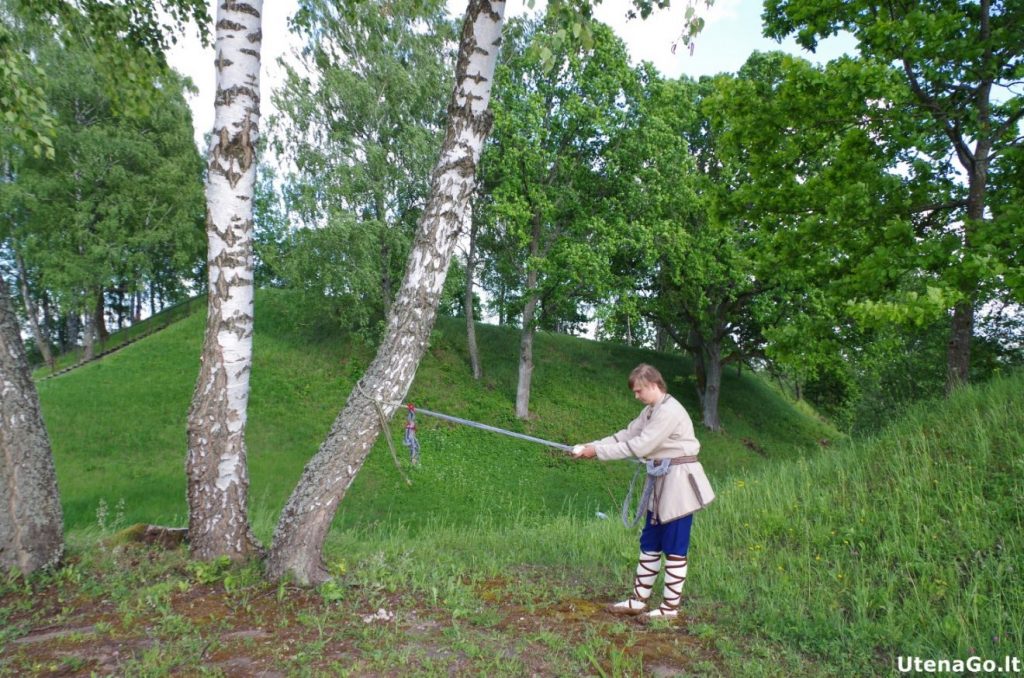
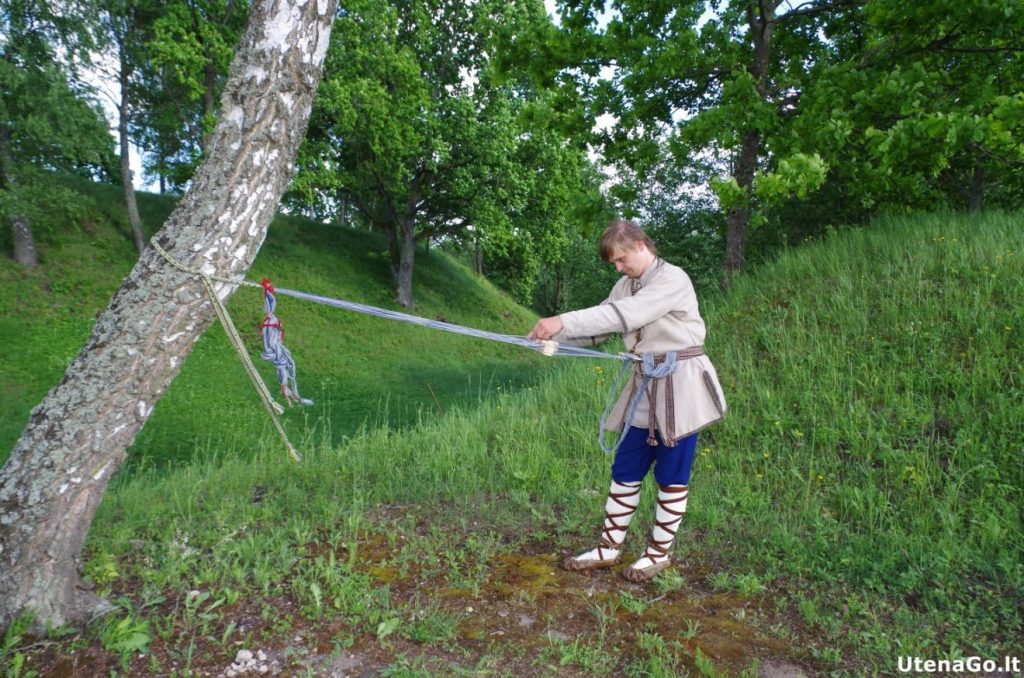
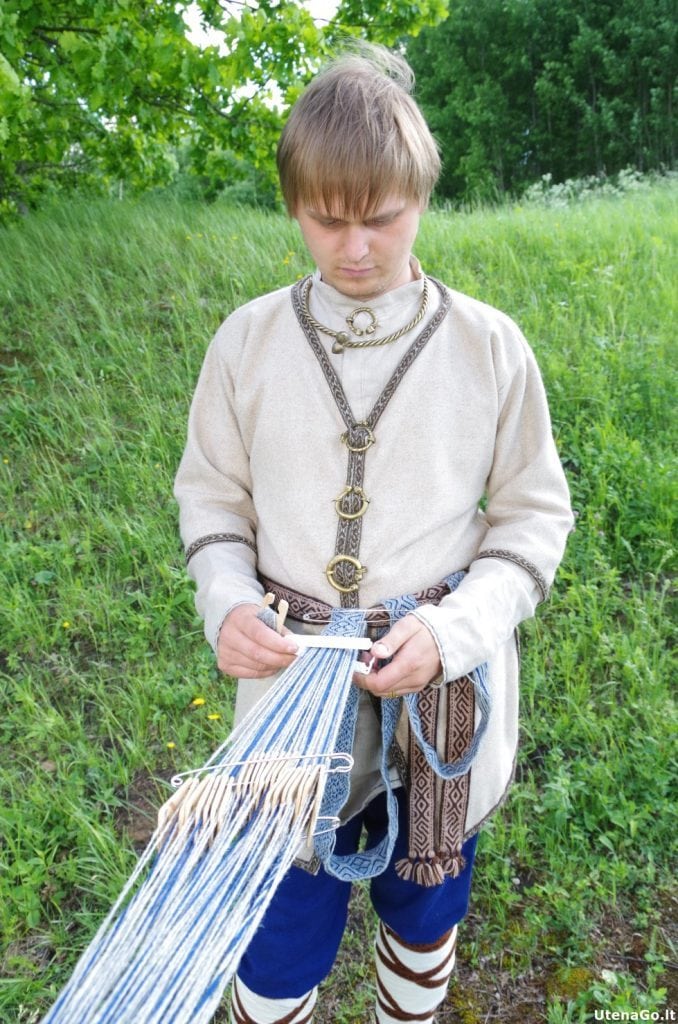
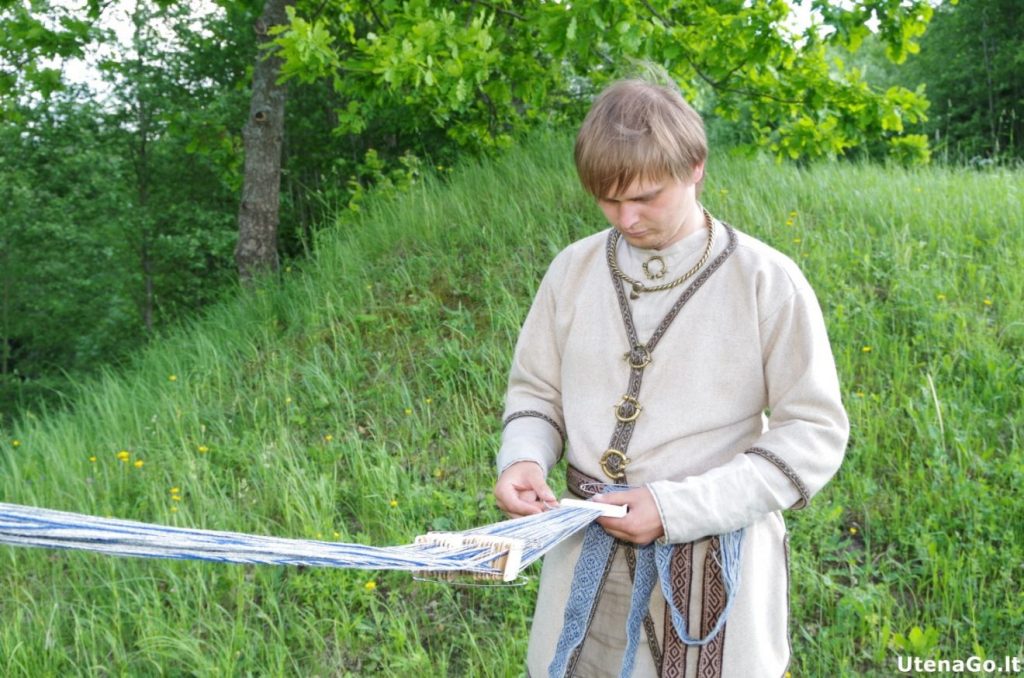
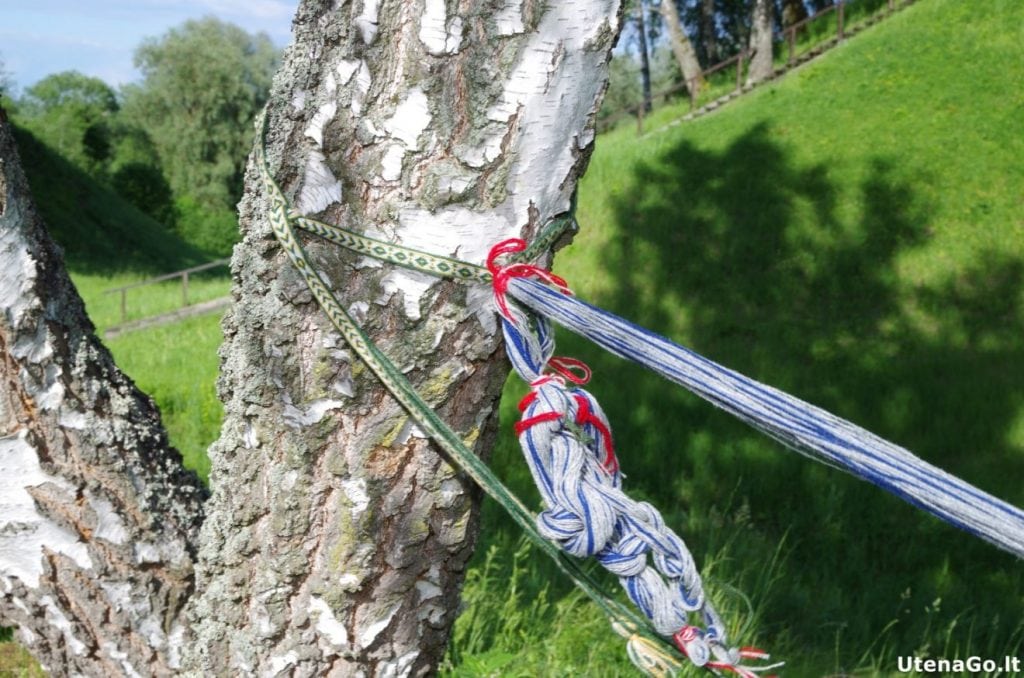
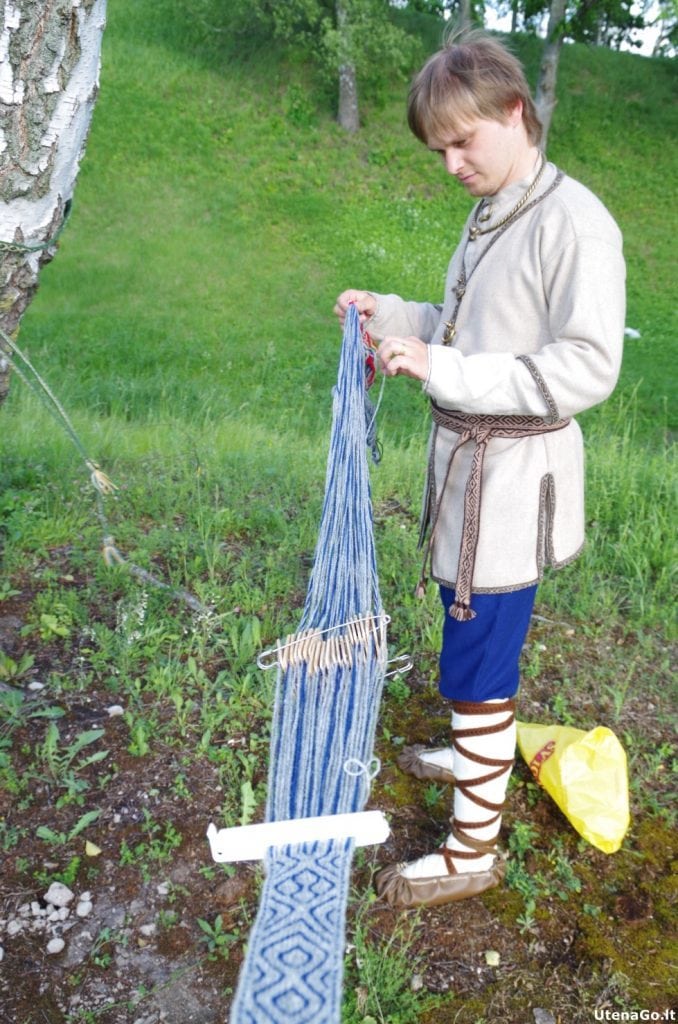
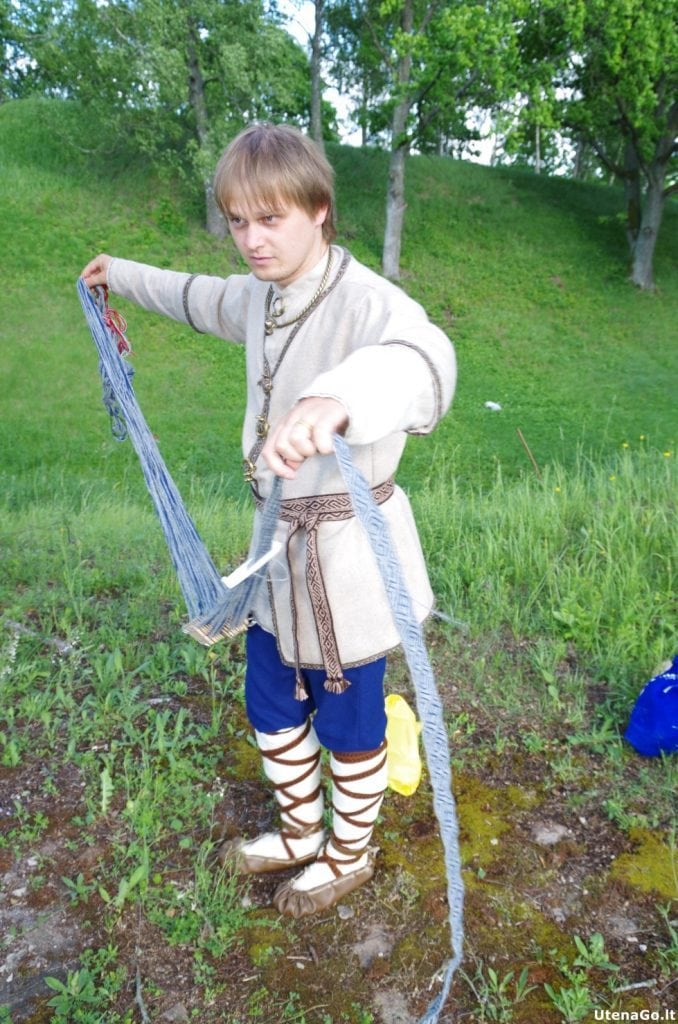
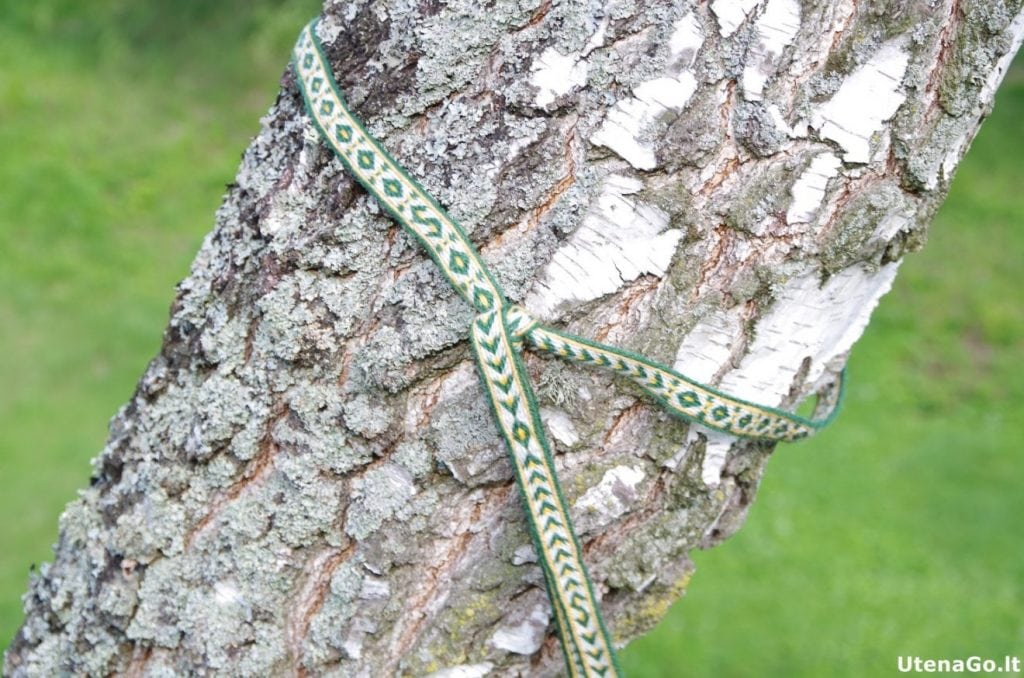
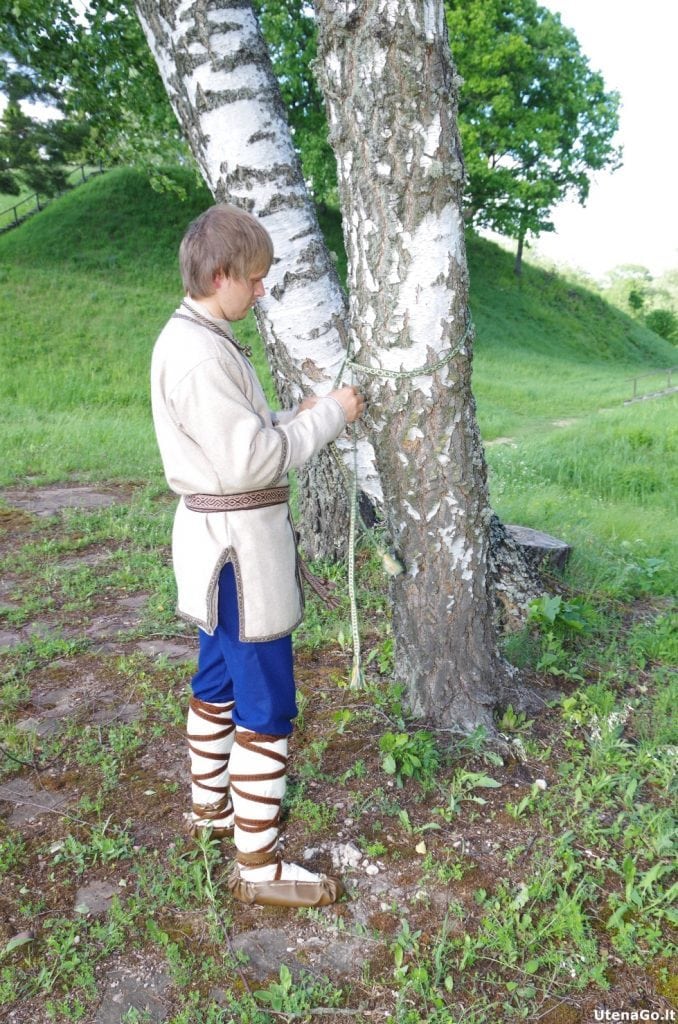
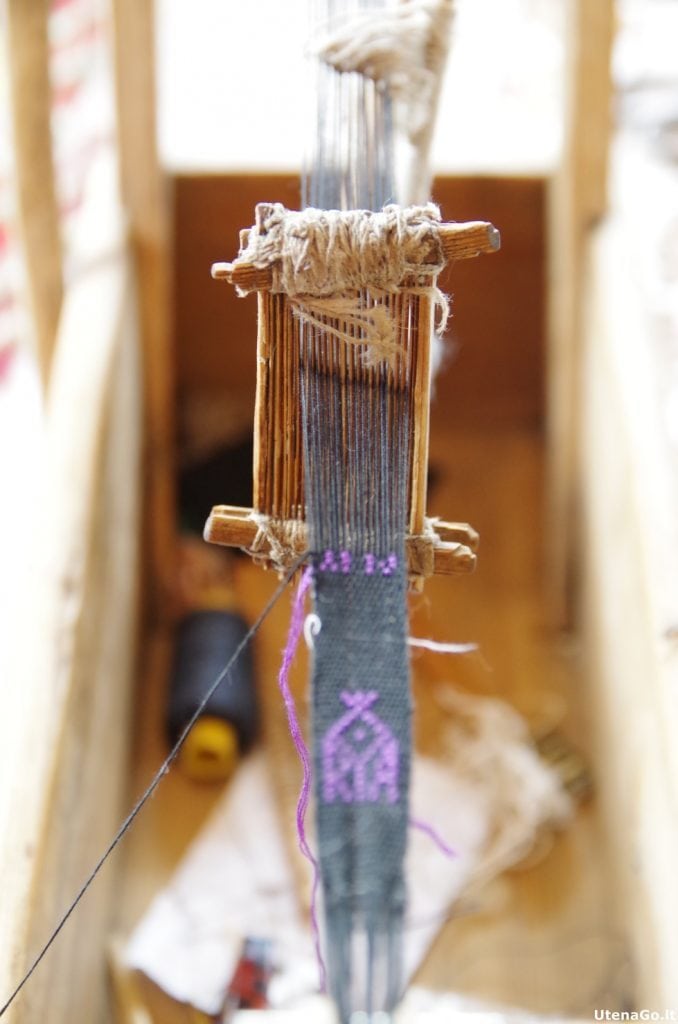
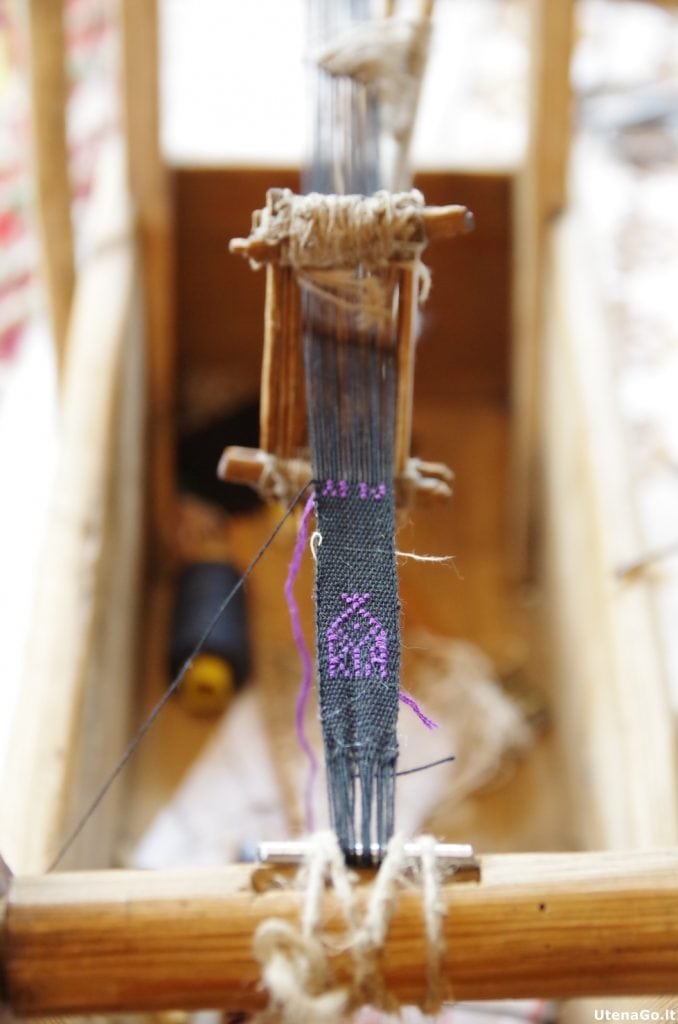
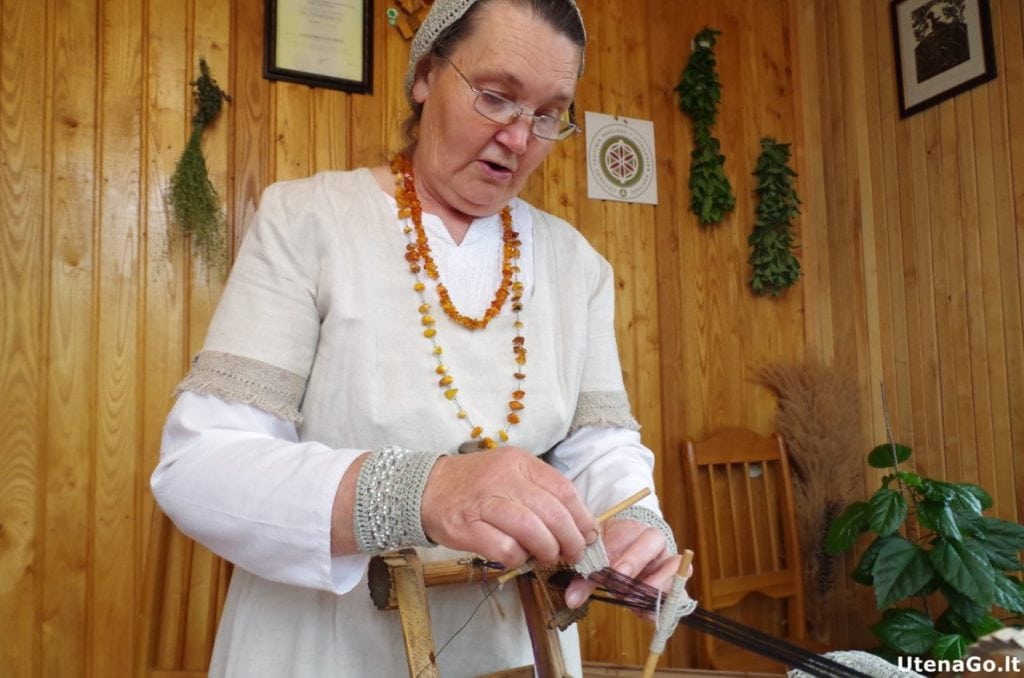
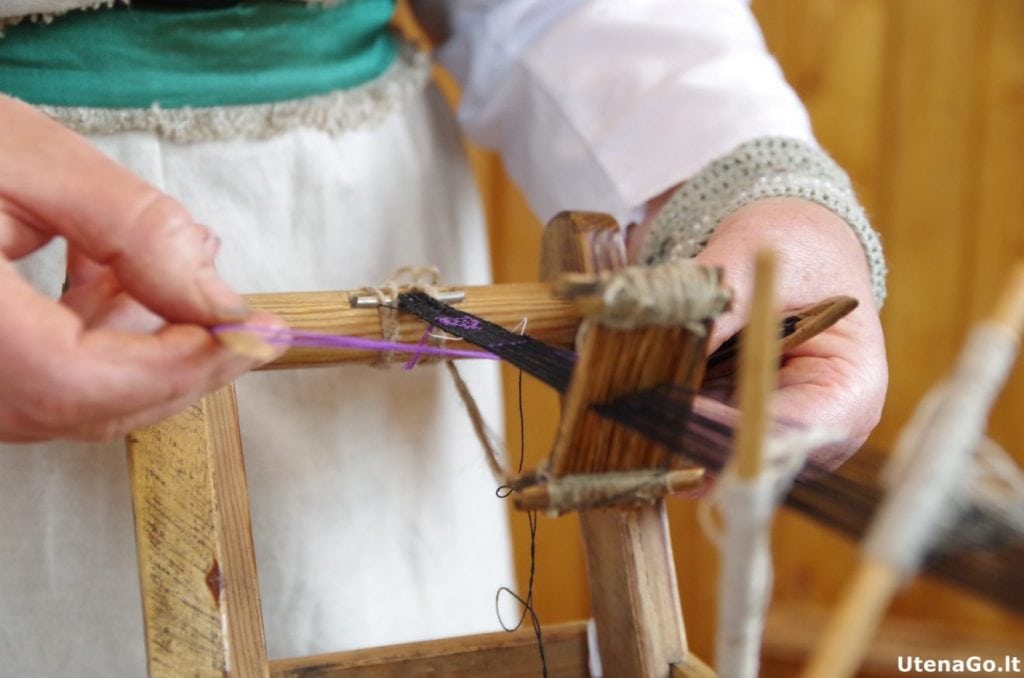
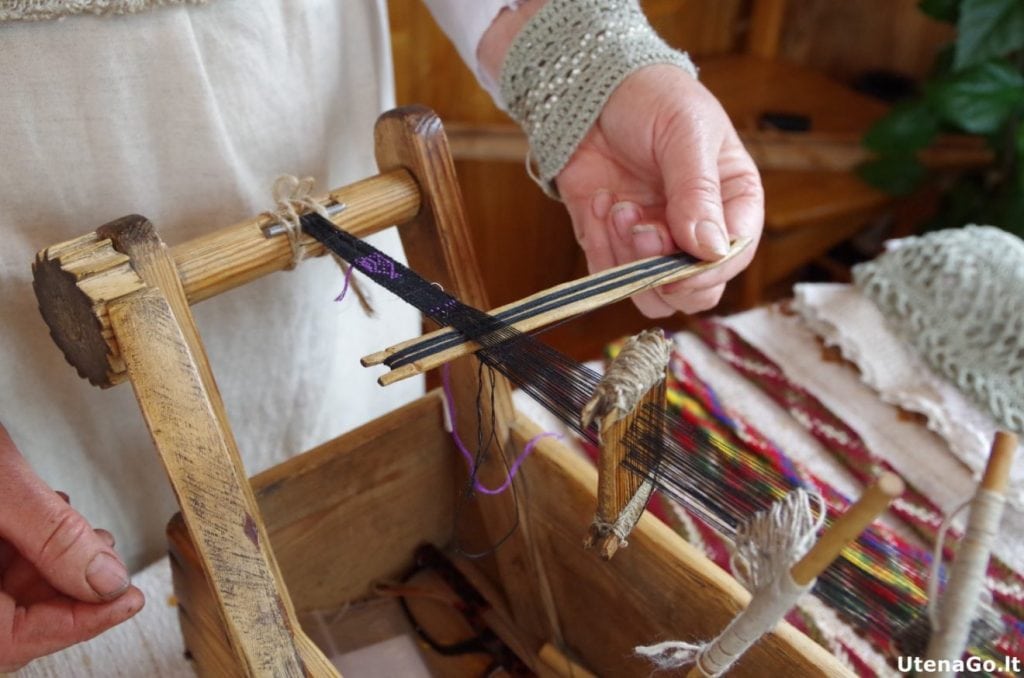
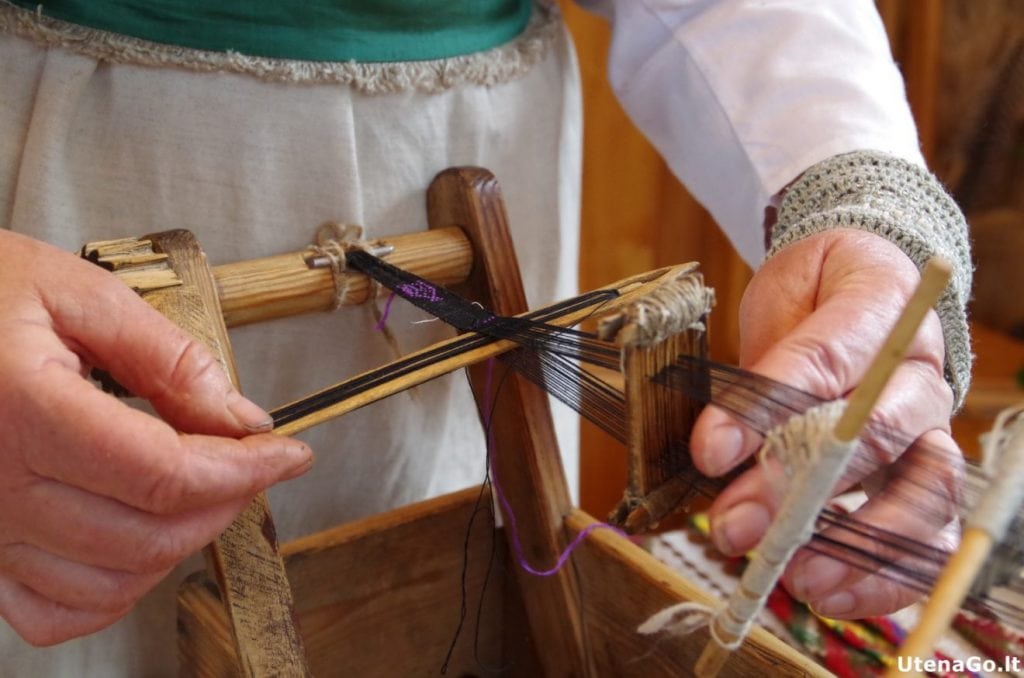
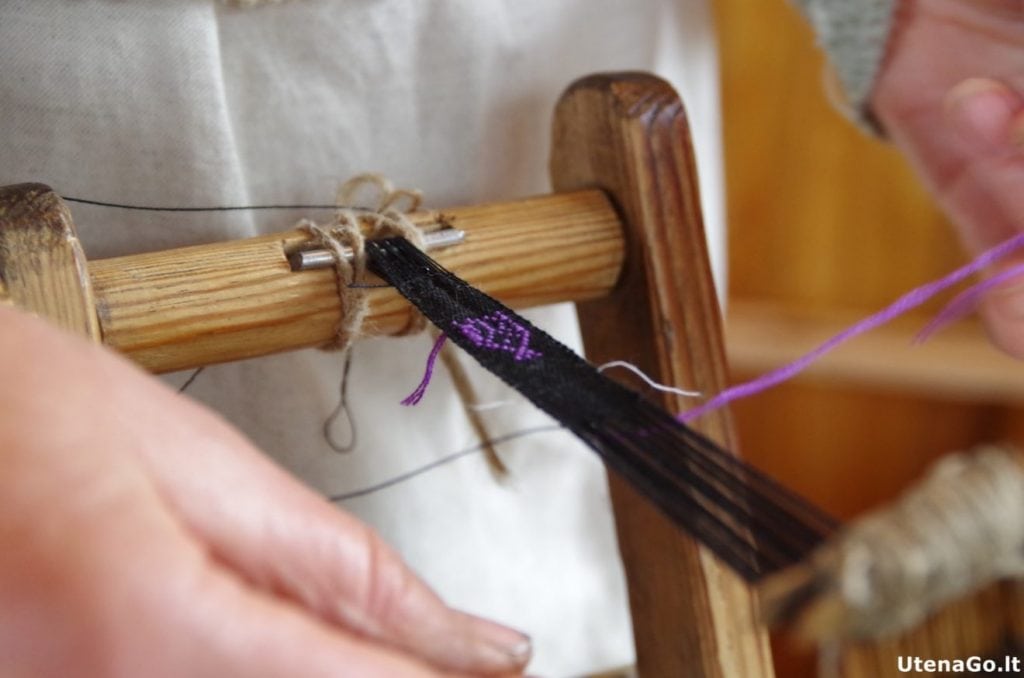
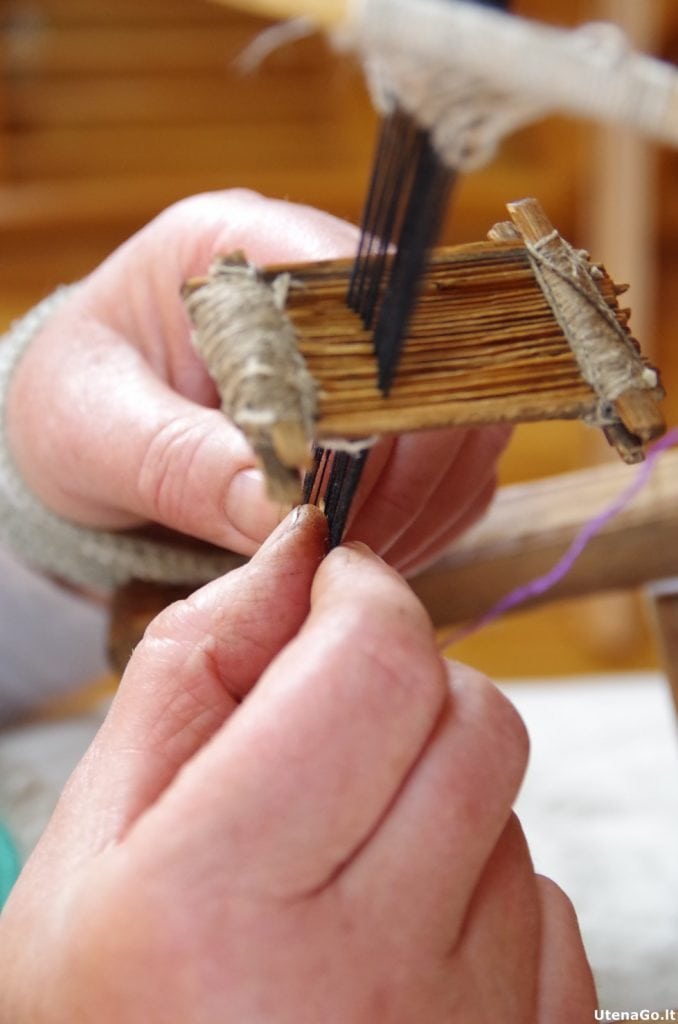
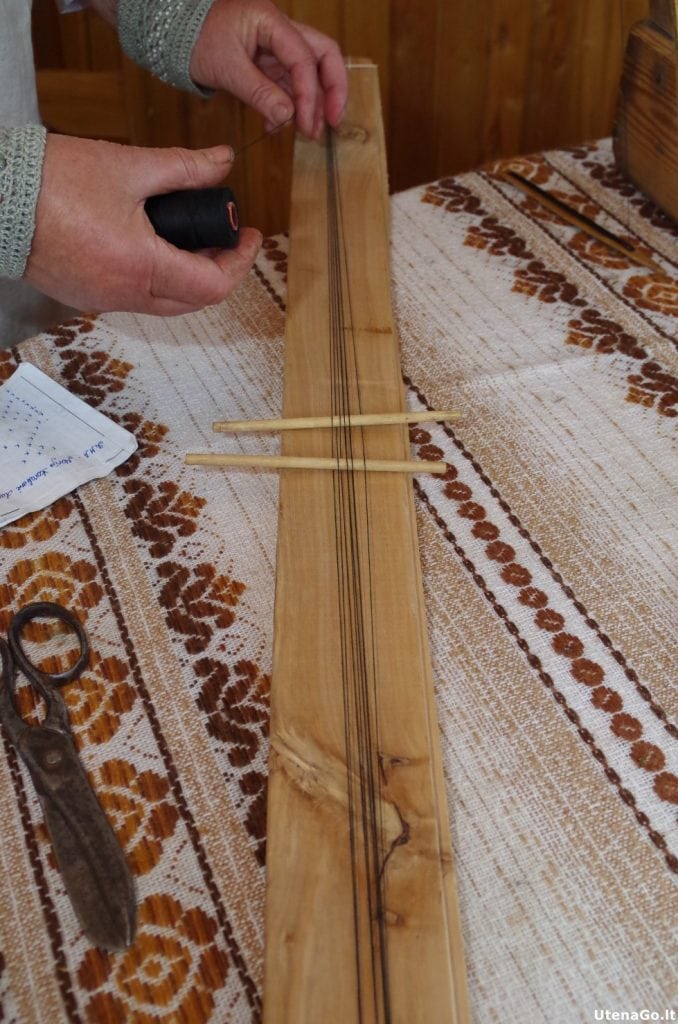
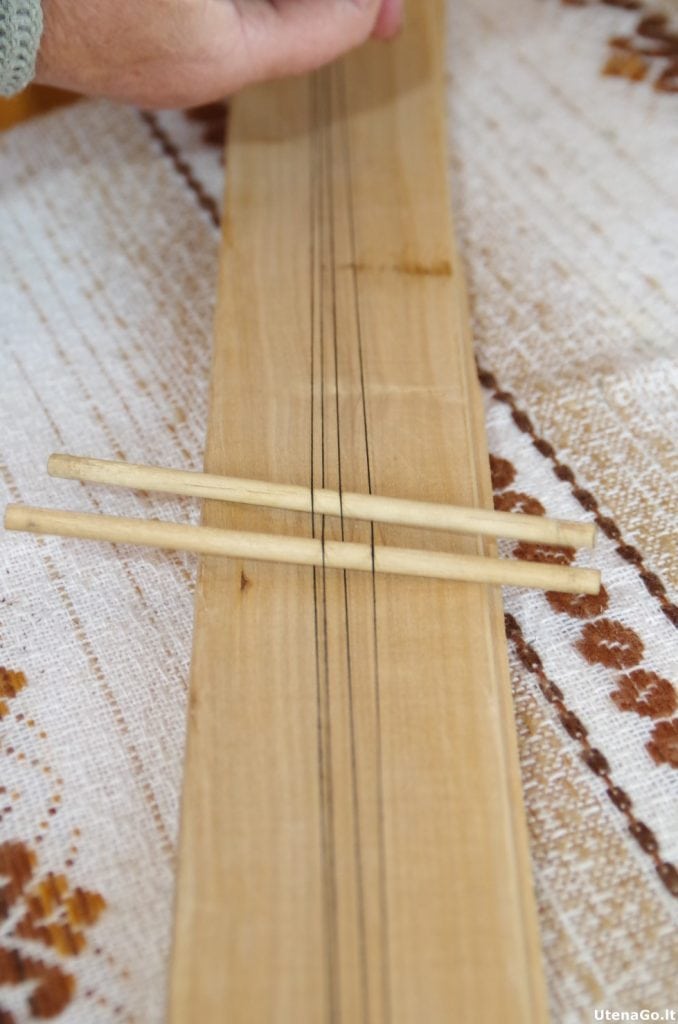
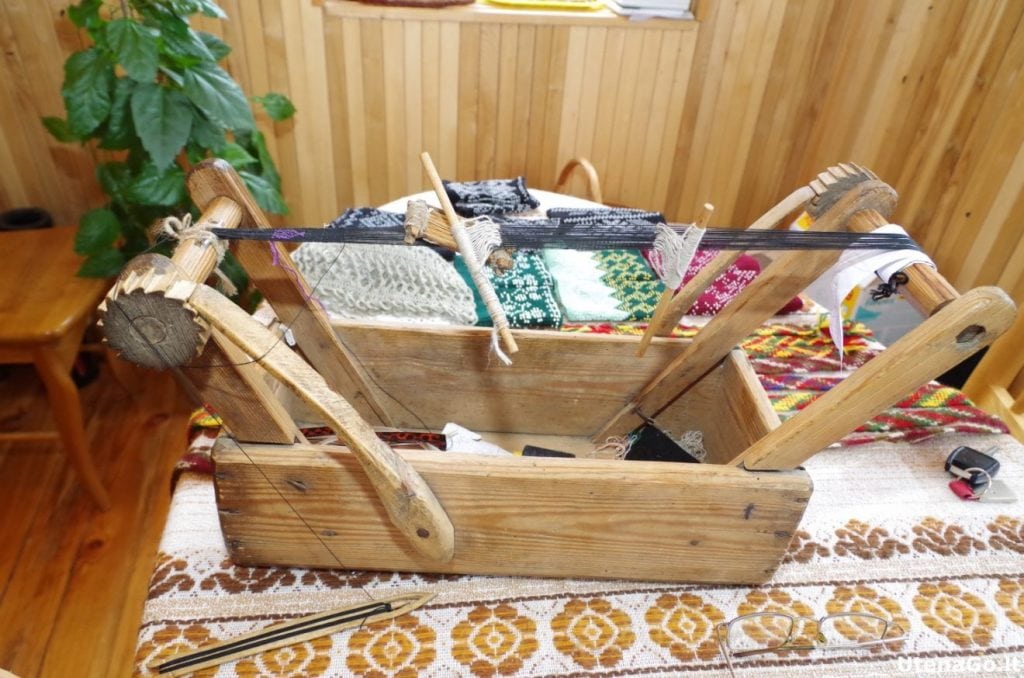
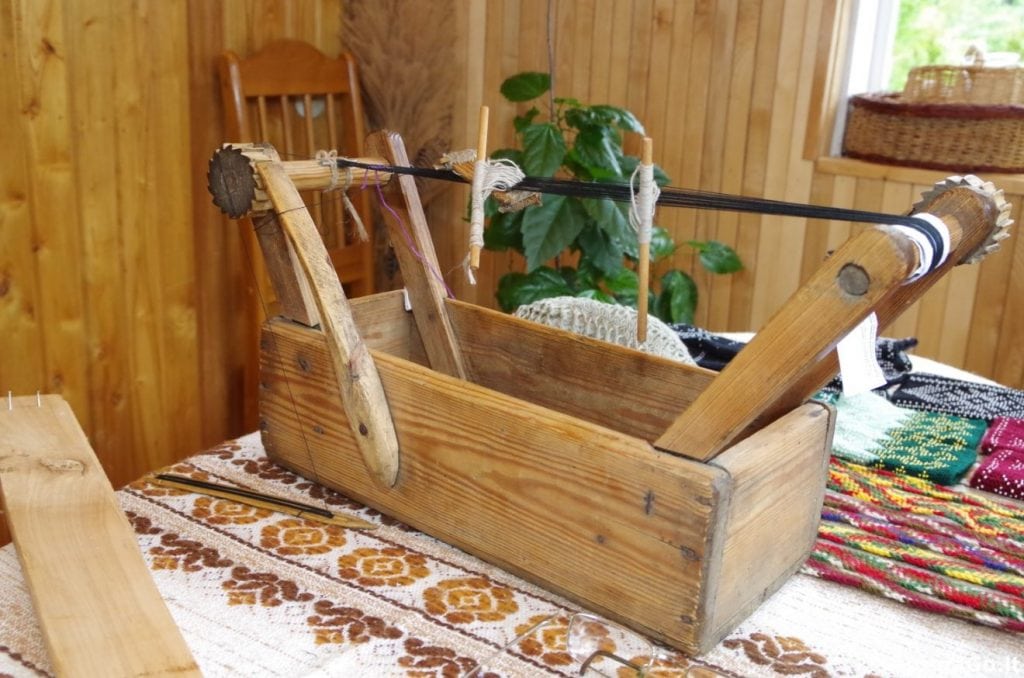
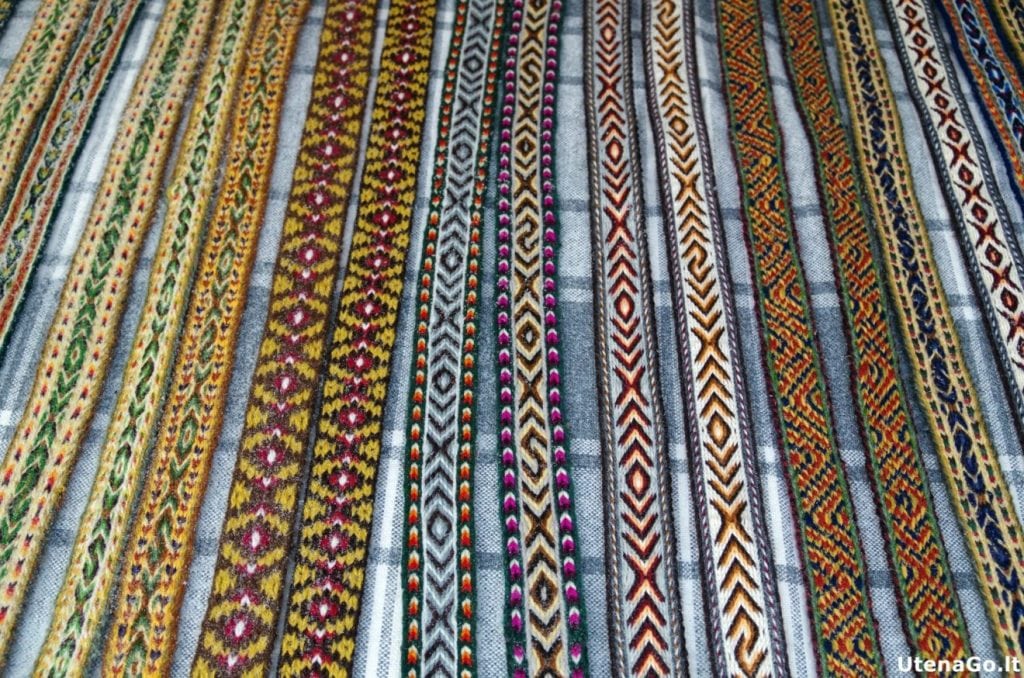
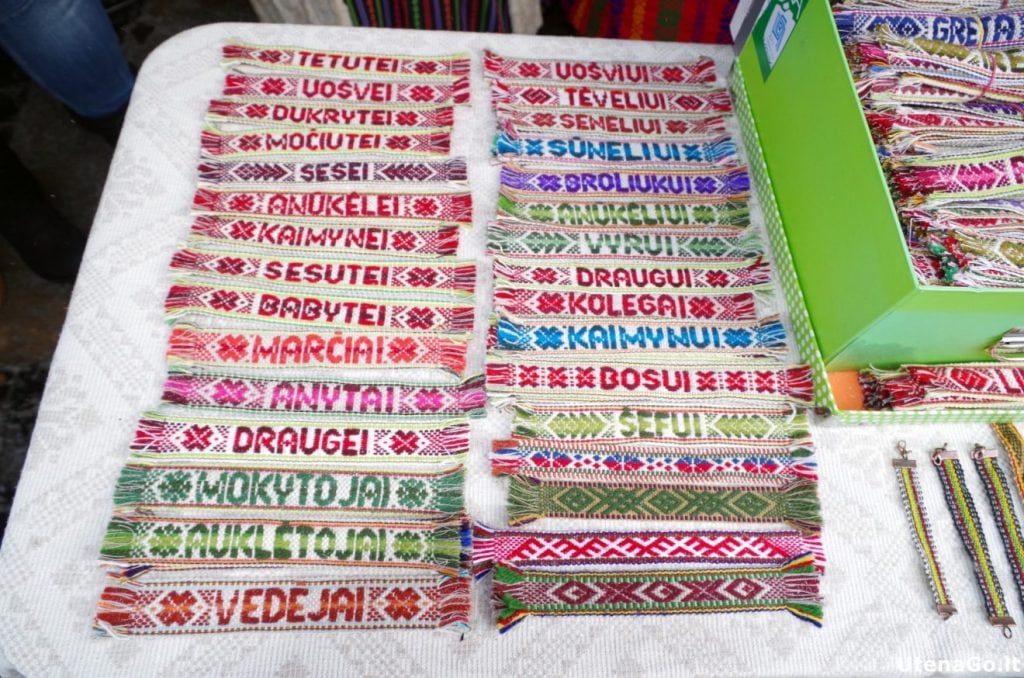
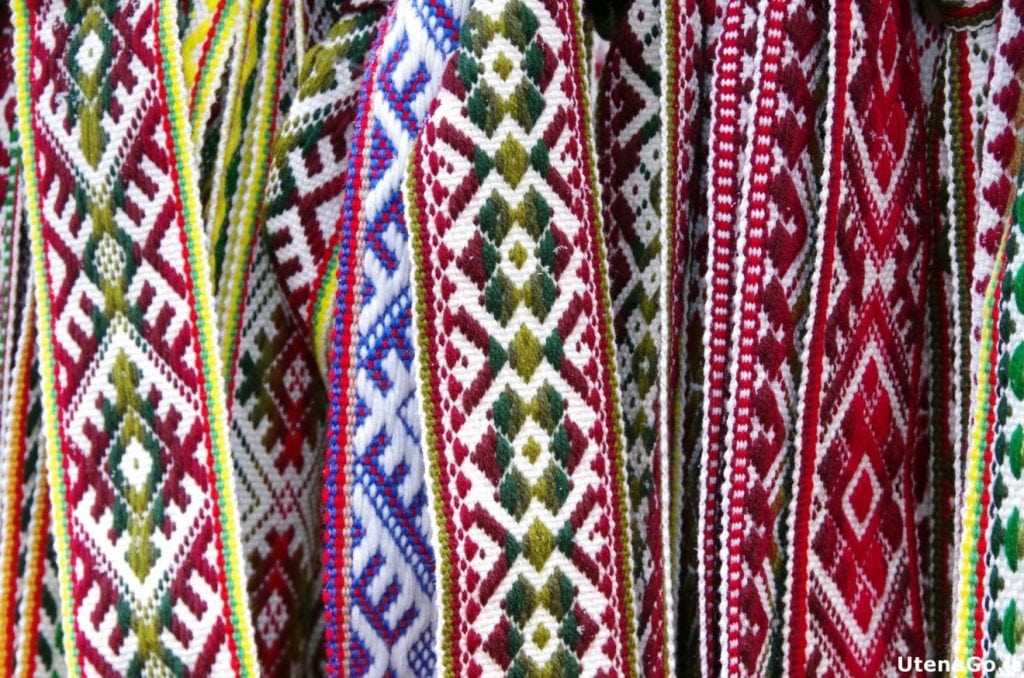
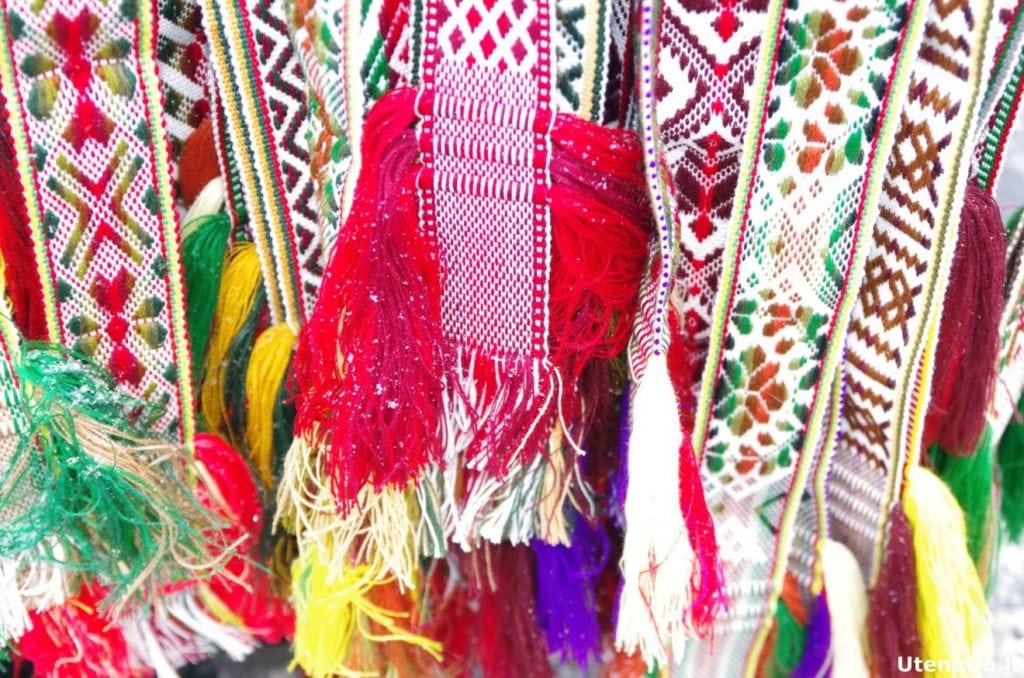
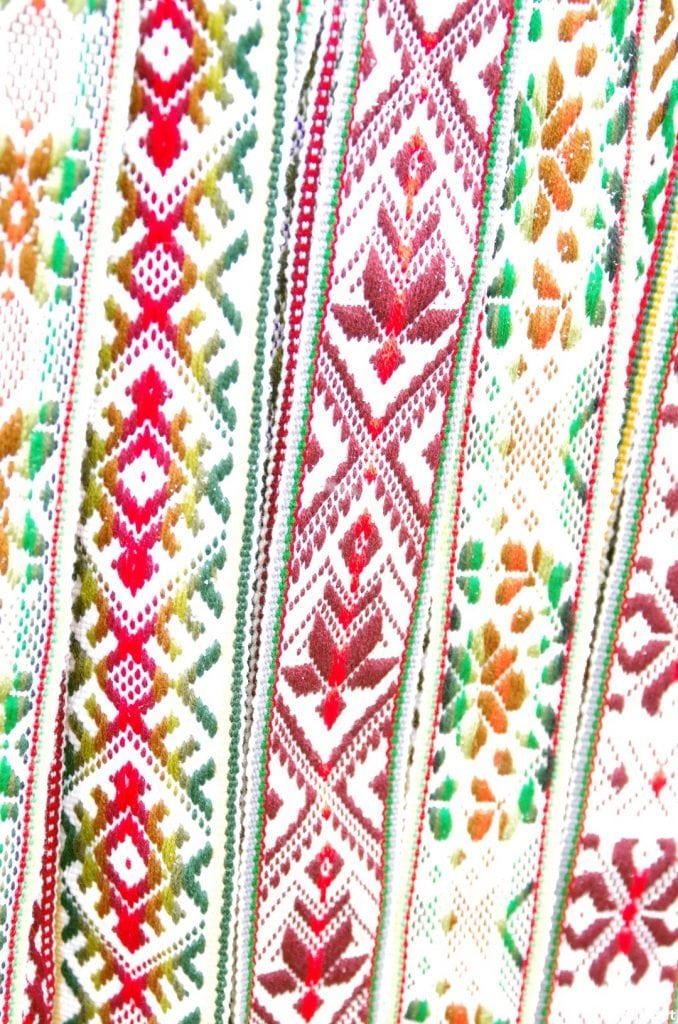
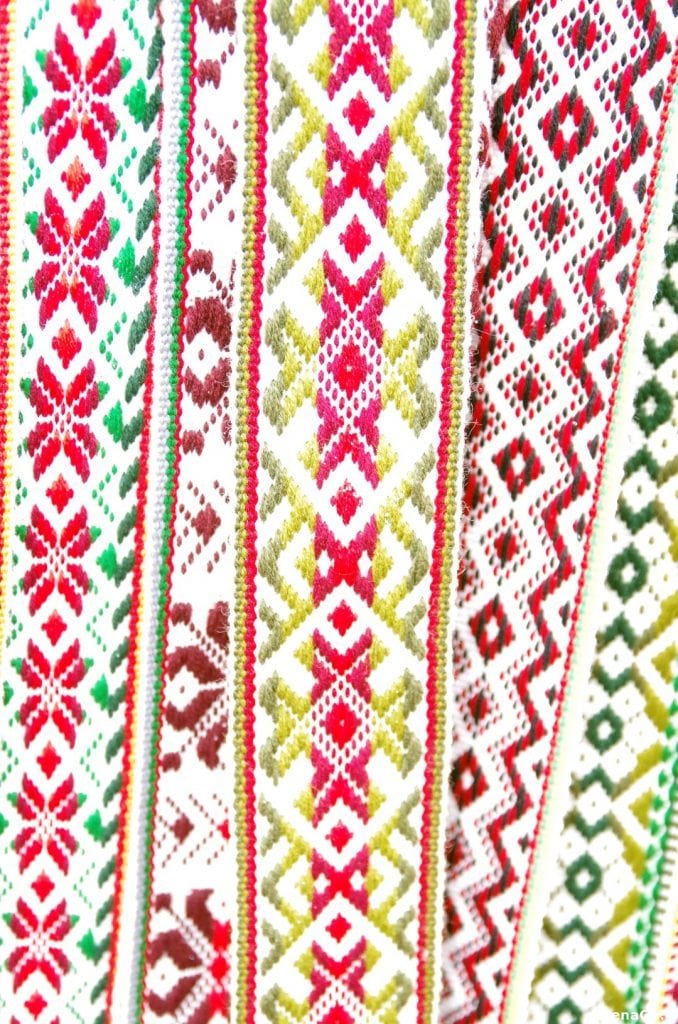
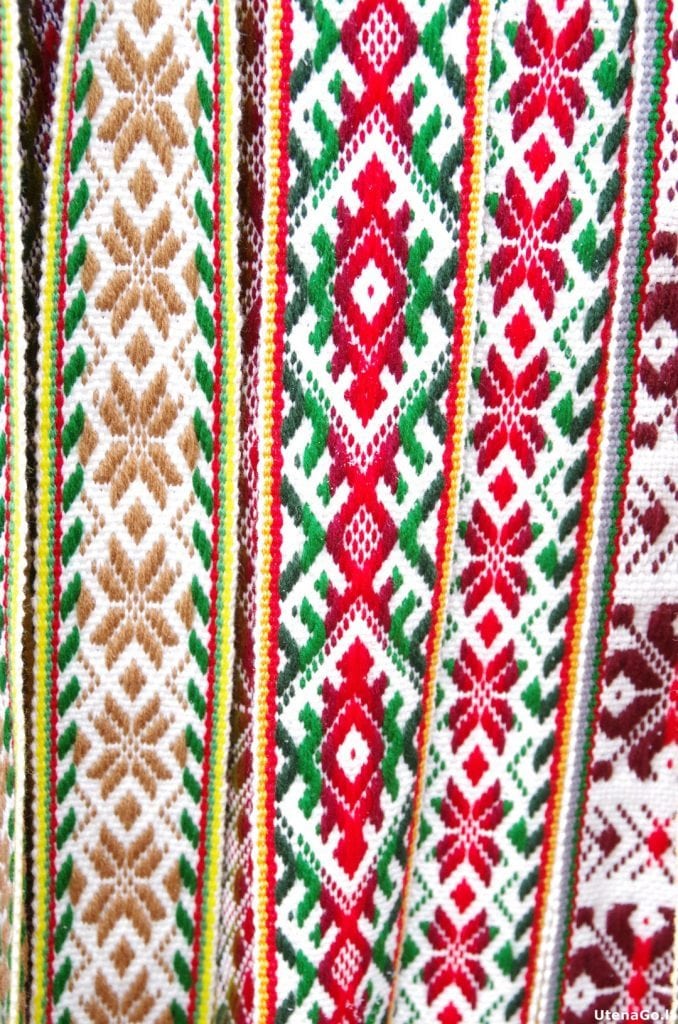
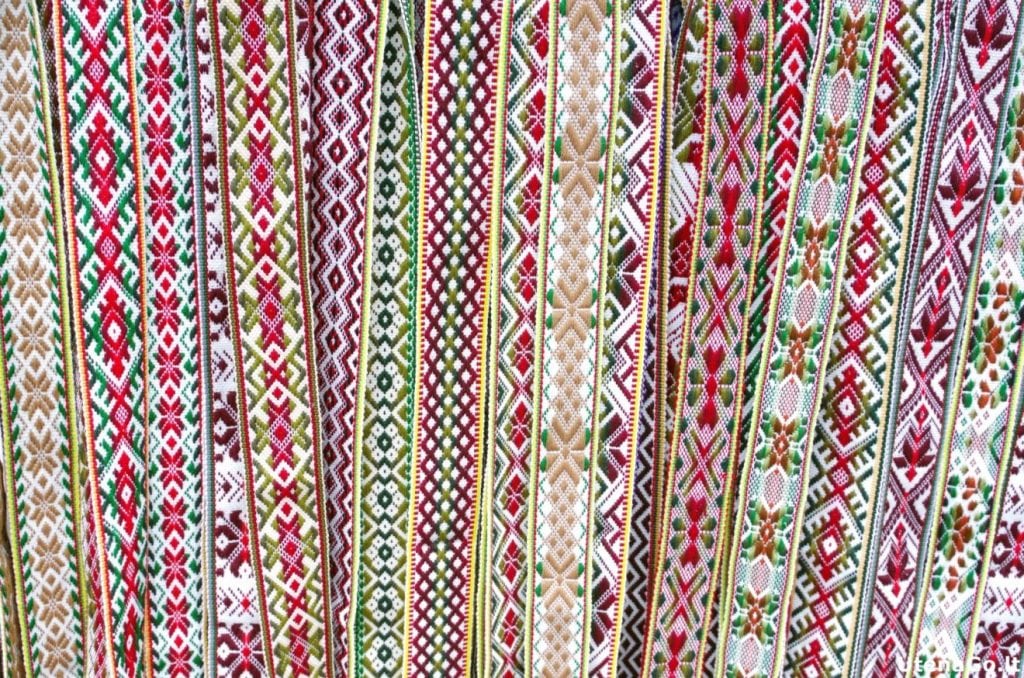
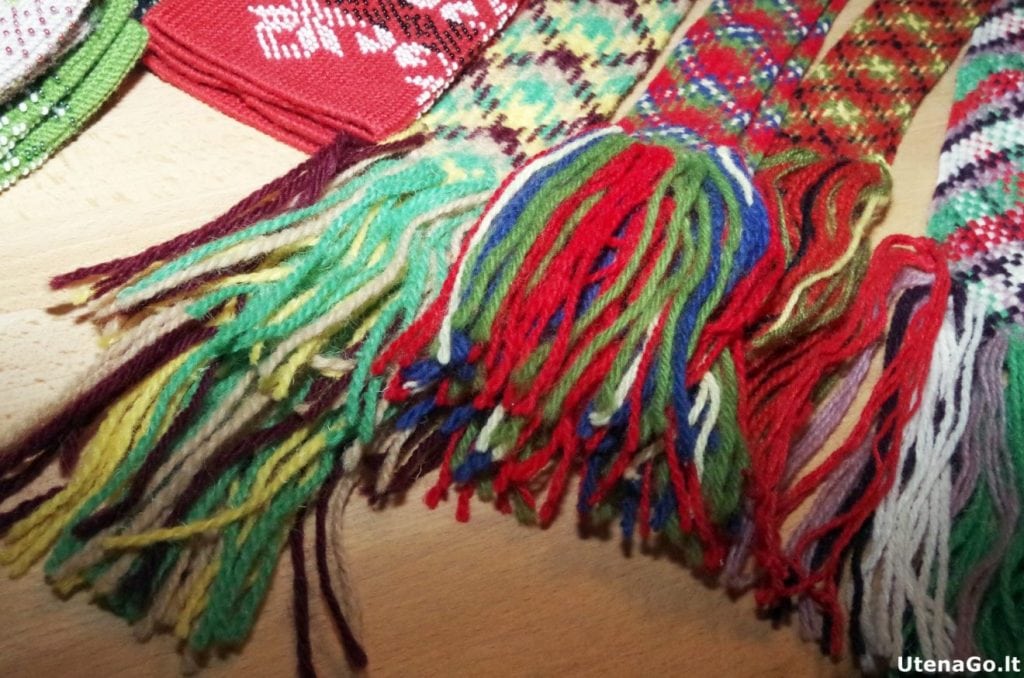
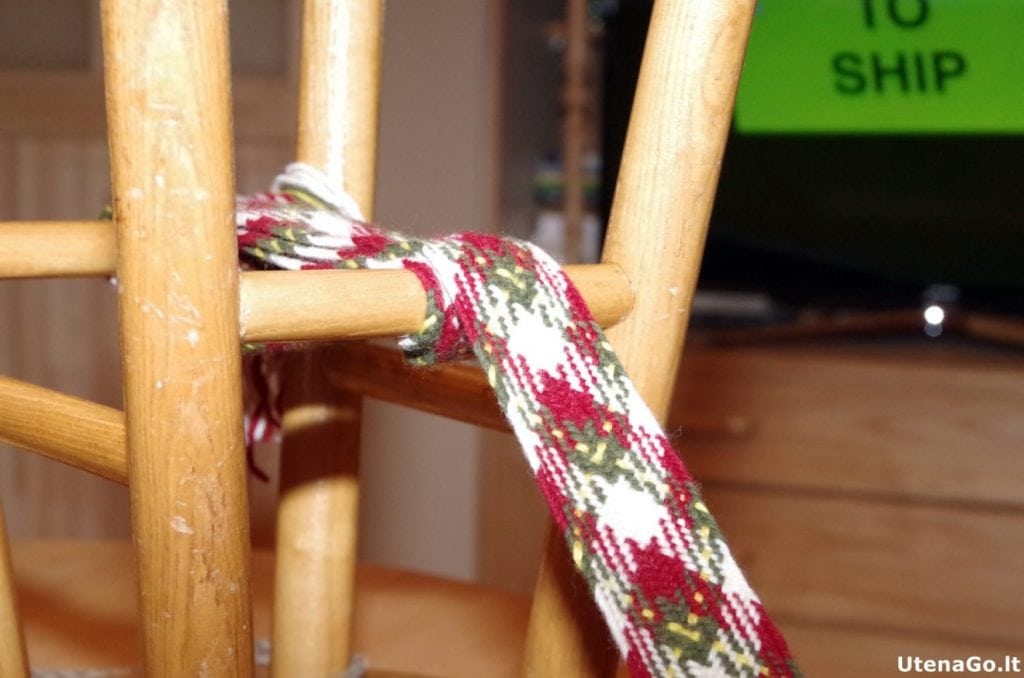
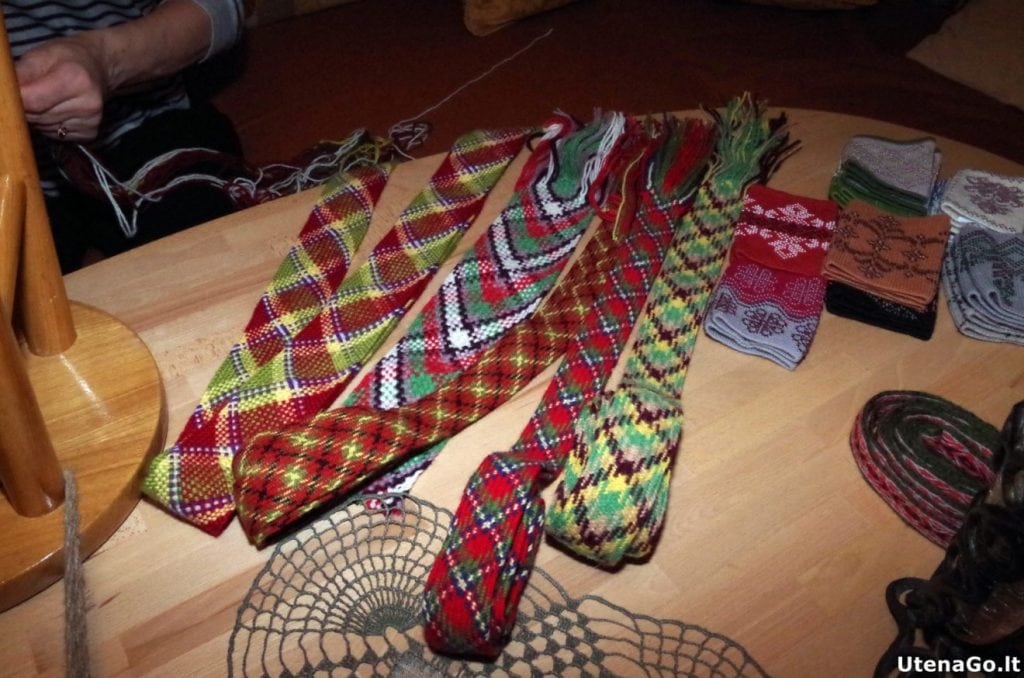
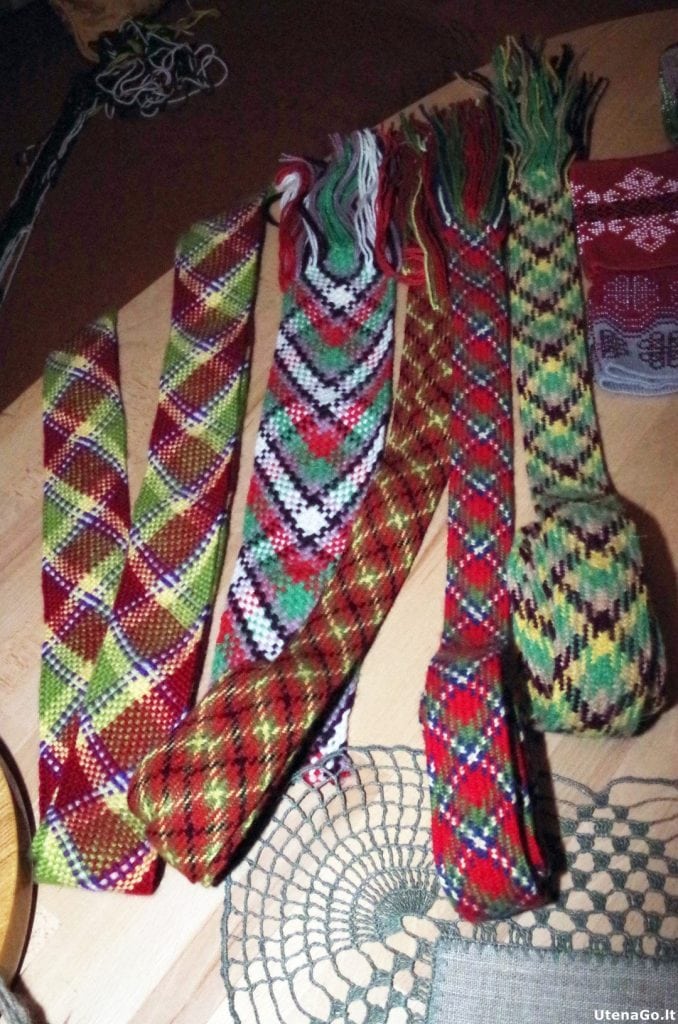
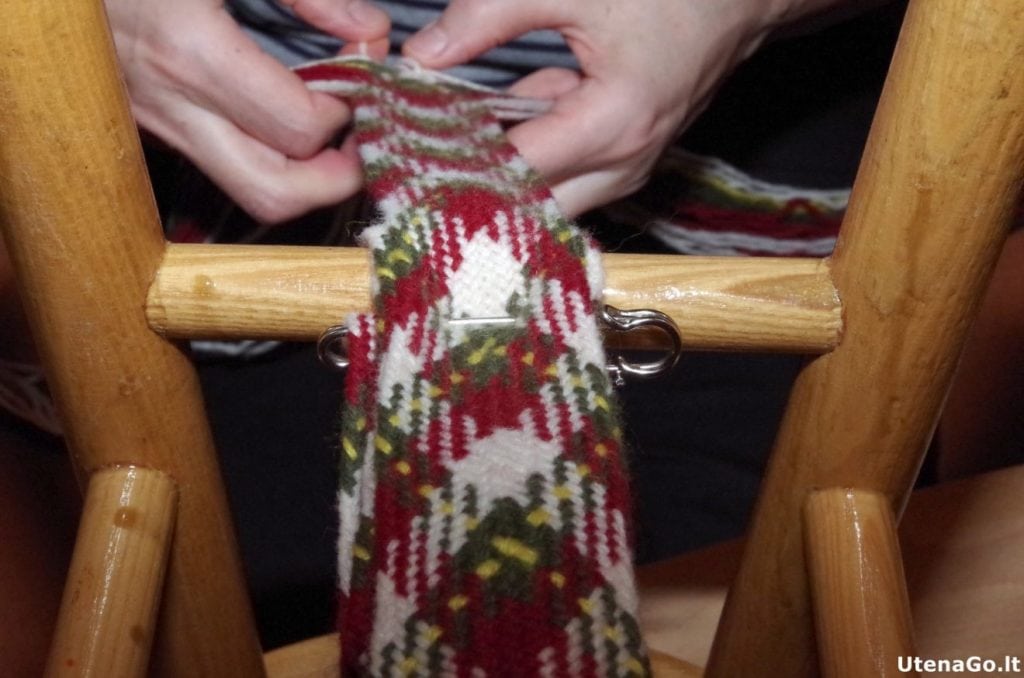
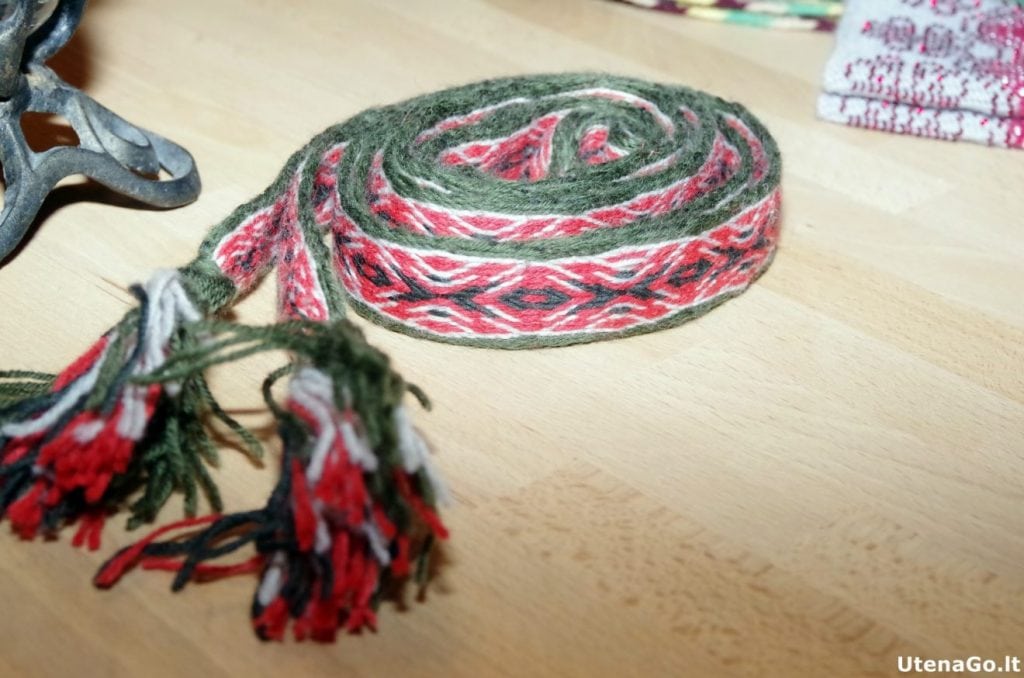
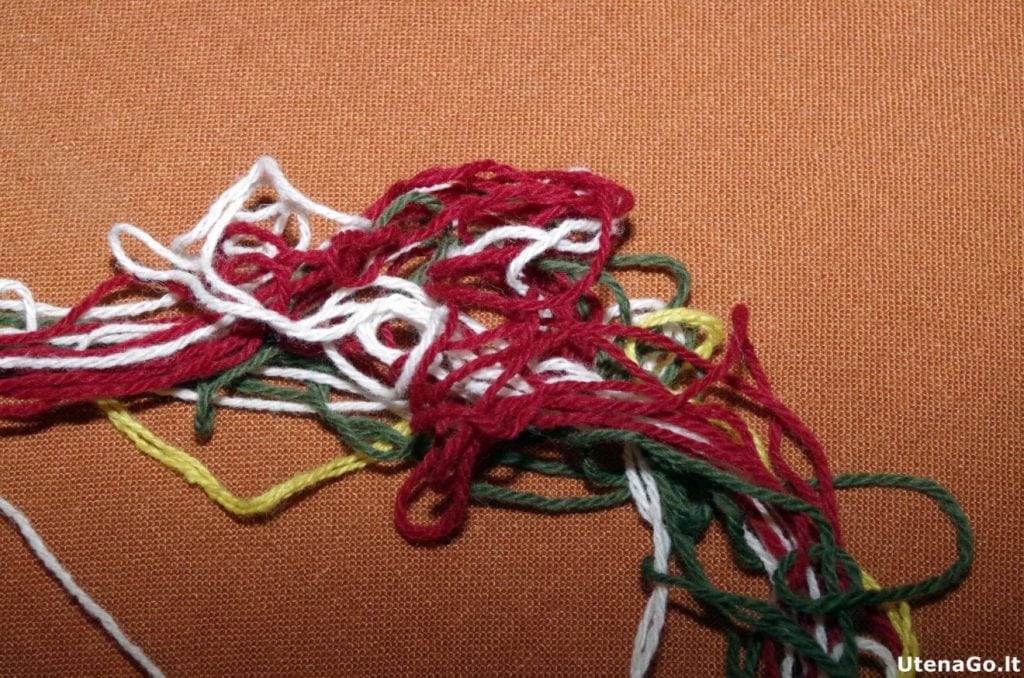
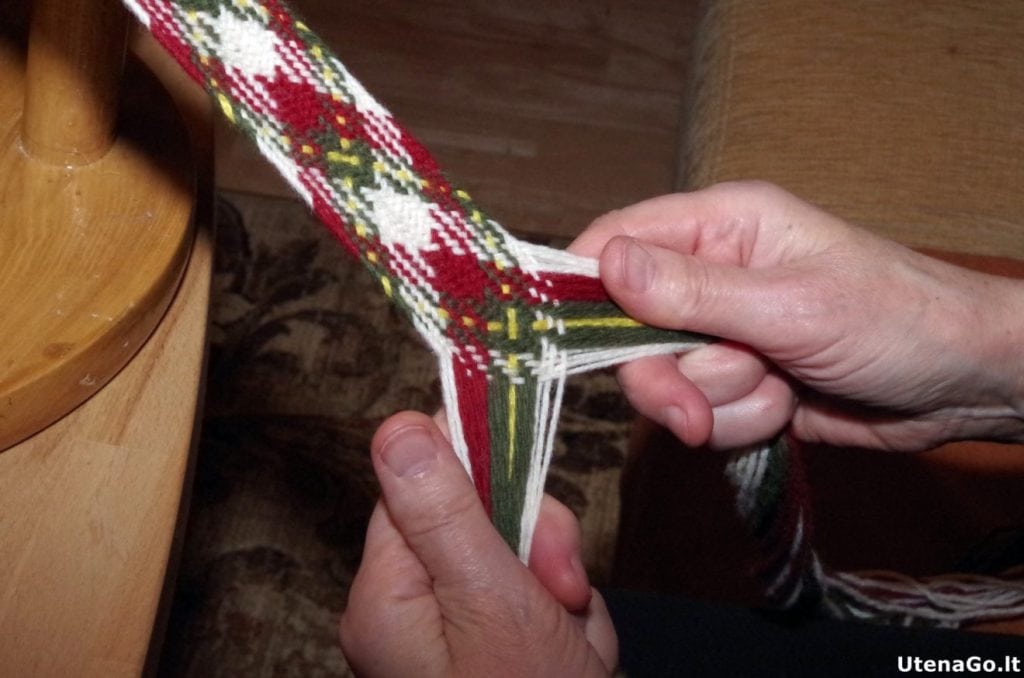
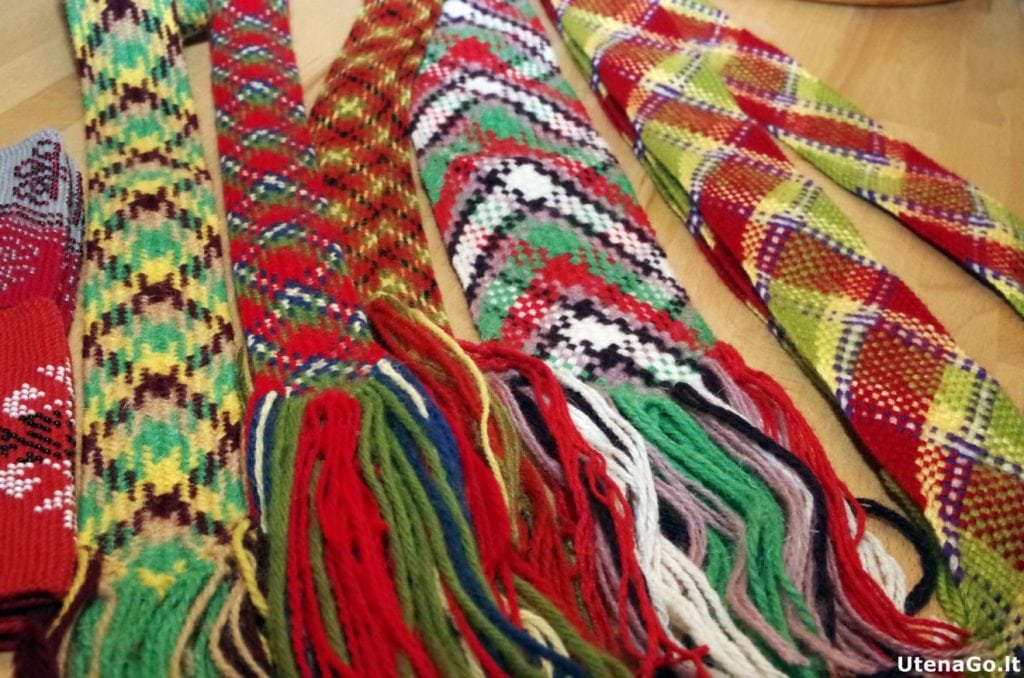
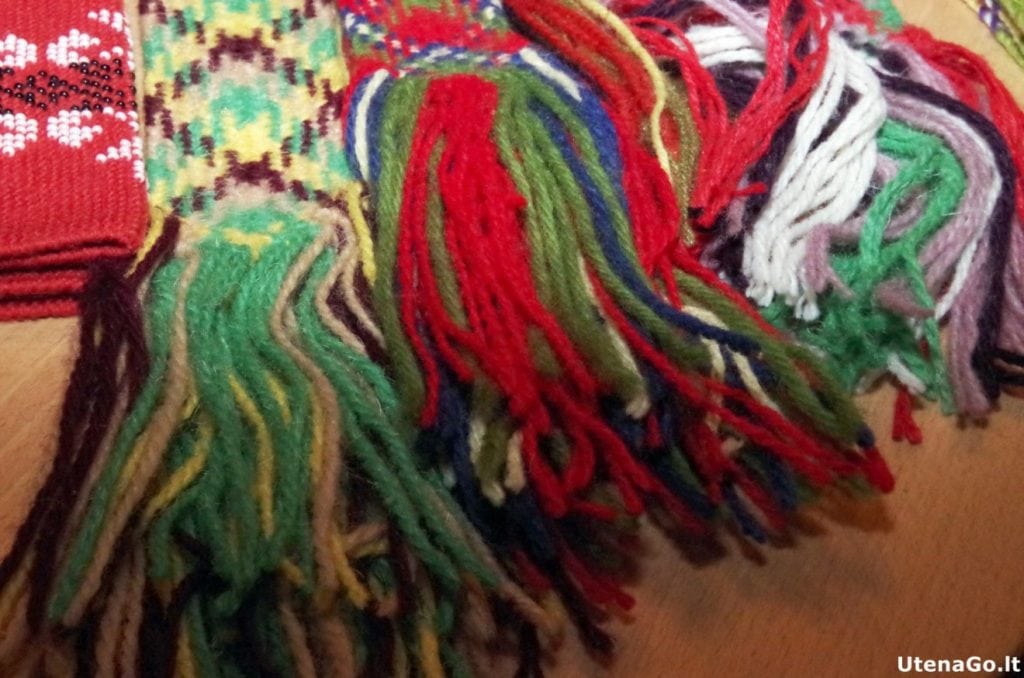
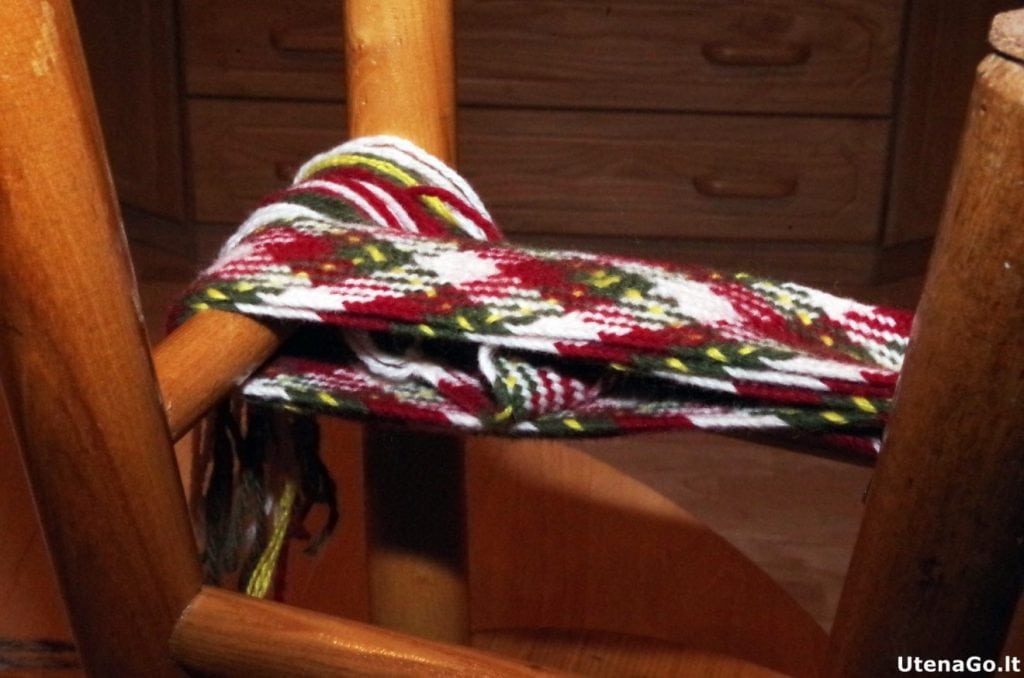
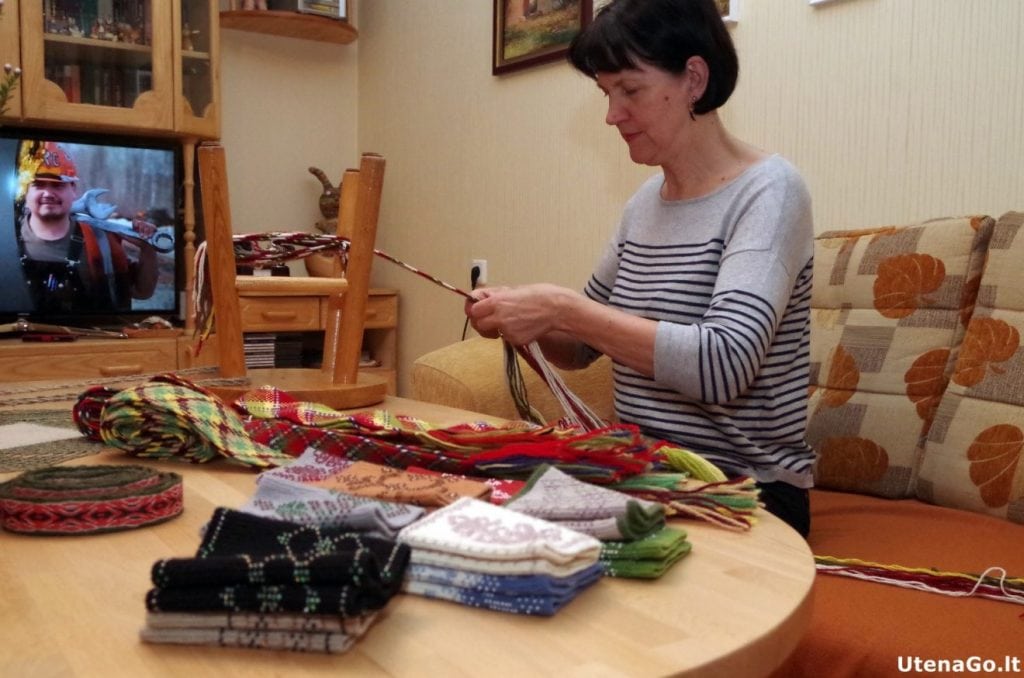
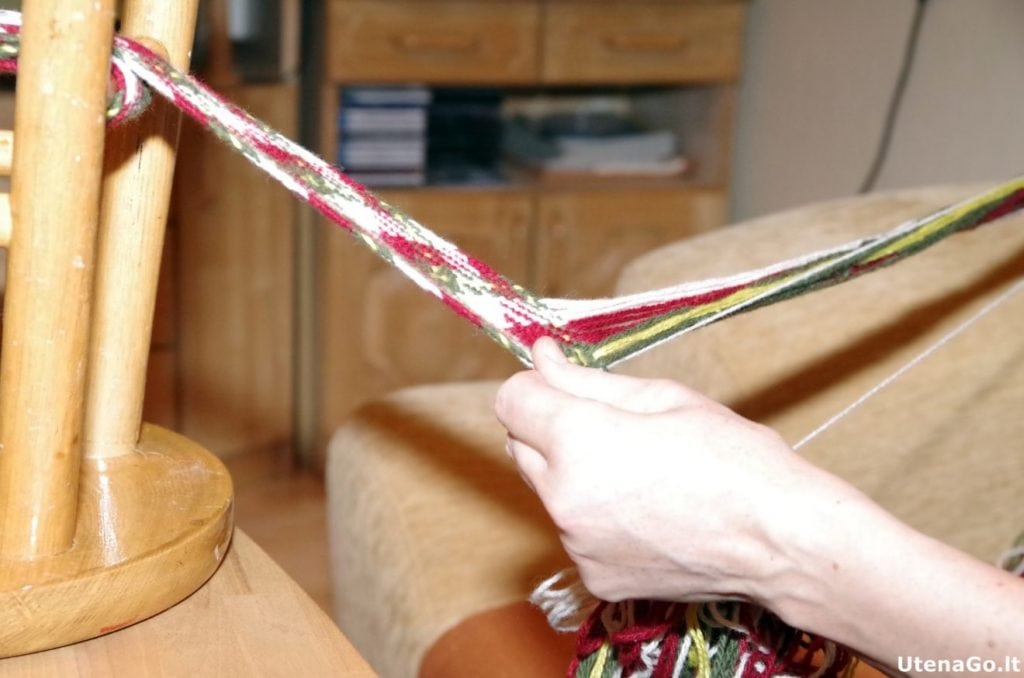
Girls used to start learning the craft of weaving from sashes. These are one of the oldest types of Lithuanian woven artefacts and they can be divided into three types: woven, tablet-woven or finger-woven sashes. They used to be made of flaxen, wool, cotton or silk yarn.
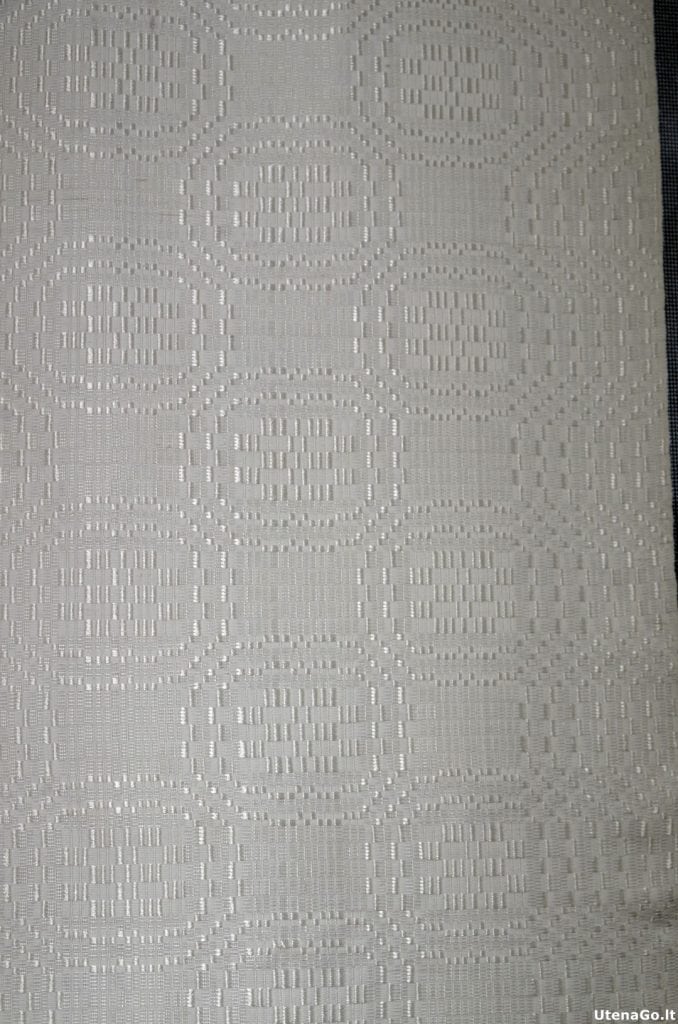
A very fine fabric (woven by male weavers in 18th c. manors) used to be used for women’s veils, tablecloths and sheets up until the 19th c. Thick, felted wool fabrics, woven with 4, 6 or 8 harnesses — kersey and thinner half-woollen or woollen unfelted fabric — čerkasas — were used for warm outerwear, blankets and bedspreads. Woollen fabrics used to be dyed or left in their natural colour.